

At the conclusion of Astro Bot, I found myself in tears. This may simply reflect my sentimental nature, but I believe it highlights a deeper aspect of PlayStation’s superb new platformer. It is fundamentally a tribute to the consoles and games that have molded me, and probably many of you. The game is brimming with joy and vibrancy, capturing everything PlayStation has meant to people over the years. It also stands as a remarkable platformer in its own right, filled with innovative ideas that suggest Asobi Team is just beginning with this utterly charming franchise. Despite all its enchantment, there’s a tinge of melancholy knowing that Astro Bot serves as a museum of PlayStation’s history, casting its legacy and spirit of innovation as artifacts to be admired rather than as catalysts to energize the games of today and tomorrow.
Astro Bot, the sequel to the complimentary PS5 title Astro’s Playroom, combines the concepts of both that tech-demo-turned-game and its VR predecessor, Astro Bot: Rescue Mission, into a singular powerhouse. Players control the titular hero, traversing worlds to rescue numerous similar robots, and occasionally some V.I.Ps. These V.I.Ps are often characters from PlayStation’s history, reimagined as adorable robots. Think of the mascots and franchises we grew up with, like Sly Cooper. He’s present, along with about 149 other nods and winks spanning the brand’s nearly 30-year existence.
I absolutely adore every aspect of it, and it certainly helps that my entire life of gaming fits neatly within those 30 years. However, Astro Bot is much more than a nostalgic homage. It is a genuinely stellar 3D platformer, nearly perfect in execution. While it doesn’t expand on Astro Bot’s moveset from the previous game, it does amplify everything surrounding them. There are many more levels spread across multiple galaxies, offering significant variety among them.
Some levels include platforms and enemies that require charged spinning moves to interact with, while others have glass floors that shatter as you walk on them. Additionally, there are numerous cleverly hidden robots to discover on each mission, encouraging players to explore the incredible levels deeply, which are so fun to navigate and investigate that you’ll naturally enjoy exploring every corner to see what surprises might be lurking there.
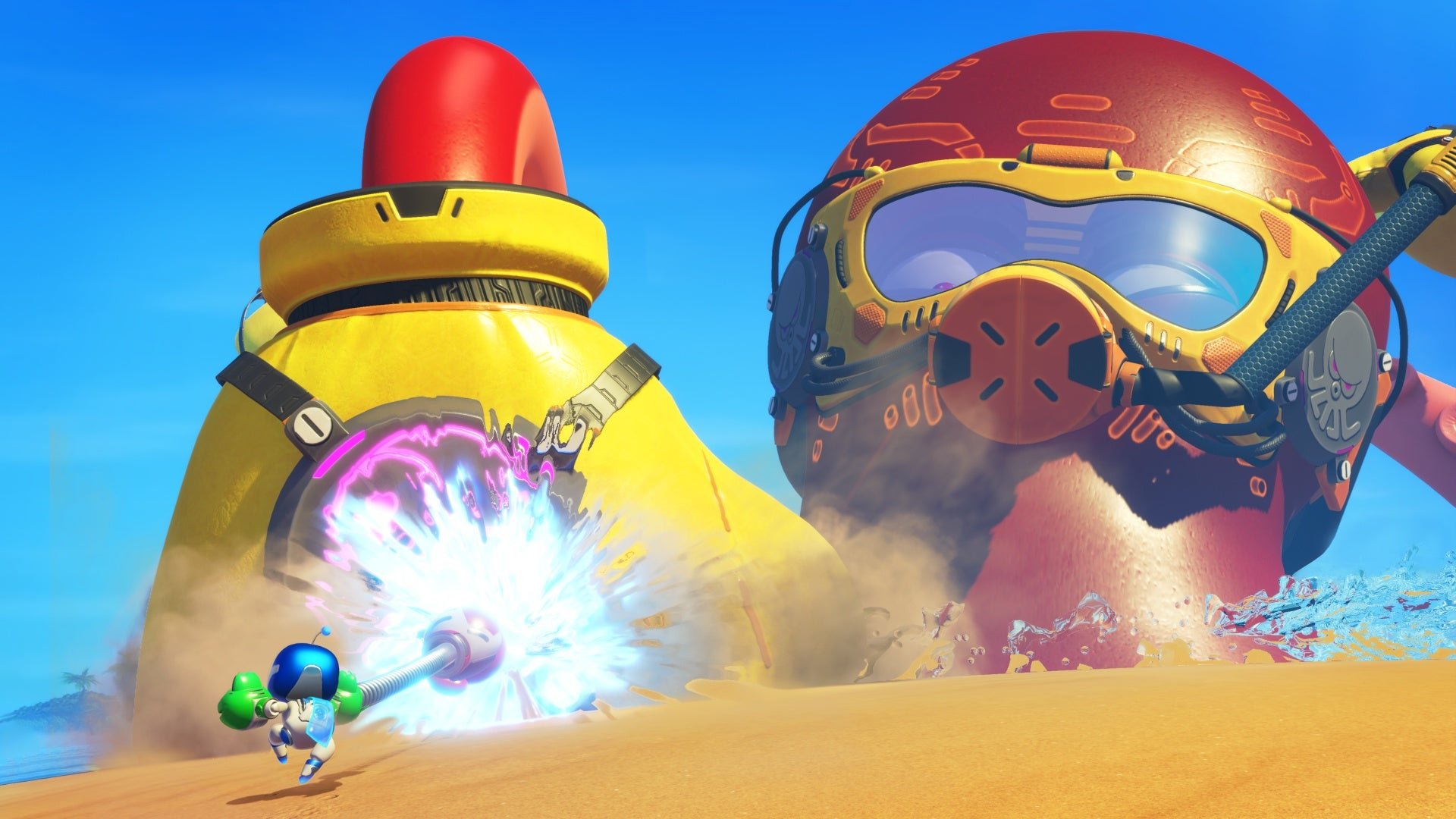
Image: Team Asobi / Sony
In true platformer style, there are even more collectibles in the form of puzzle pieces that unlock game functions and secrets, revealing further challenges. The hub world, a crash site that serves as a museum for all the collectible robots and their associated game iconography, contains its own Pikmin-like mechanics, allowing you to interact with and climb upon some of your favorite characters. There’s so much more beneath the surface, and each new layer that unfolds is magnificent.
The key word for Astro Bot is “more,” as it thoughtfully expands without ballooning into an endless adventure. If you rush through it, Astro Bot could be completed in a single marathon session, and even if you take your time, the game will amount to roughly 10 hours, or slightly more if you aim to find everything. I’m still searching for some secrets and am just shy of all 300 robots, with my playtime reaching 13-14 hours. It won’t last forever, but its reasonable length helps make Astro Bot an instant favorite that I can revisit time and again.
Throughout its 80 levels, Astro Bot shines with simplistic brilliance. It draws on many familiar biomes and tropes you’d expect from a game of its kind, such as desert, water, and ice environments, but confidently does so in its own style rather than merely imitating its influences. Most missions begin with Astro Bot receiving a power-up that they maintain throughout the level, such as a chicken-themed jump pack that propels them upwards or a dog-themed one that shoots them forward. A clock can temporarily slow time, transforming platforms from plates and cutlery tossed by a ghost, and my absolute favorite allows Astro to shrink to the size of a mouse, revealing levels hidden within levels. In its standout moments, which occur at the end of every galaxy, Astro Bot transforms into tributes to PlayStation’s past, like God of War and other titles I won’t spoil. If Astro’s Playroom was Team Asobi’s tentative first step into the genre, Astro Bot is a clear and confident leap forward.
While clearly inspired by Super Mario Galaxy (a timeless classic that deserves more influence), Astro Bot turns familiar concepts into its own creation. The former game might have made anti-gravity a core design principle, but here, Astro Bot tastefully employs it where appropriate, even though both games involve galaxy-hopping adventures. It avoids most traditional power-ups while offering its unique take on familiar ones, successfully charting its own course.
PlayStation
Astro Bot
Back-Of-The-Box Quote
"Everyone's here! Yes, even that guy!"
Type of game
3D platformer in the vein of Super Mario Galaxy.
Liked
The pitch-perfect platforming, the genuine love of PlayStation's history.
Disliked
A shallow feeling to PlayStation cameos, lack of options in settings.
Developer
Team Asobi
Platforms
PlayStation 5
Release Date
September 6, 2026
Played
17 hours, completed the main game, collected all Bots and puzzle pieces.
All the while, Astro Bot further demonstrates that the PS5 is a powerhouse in capable hands. Much of the haptic and gyro technology from Astro’s Playroom returns and is repurposed for this grander adventure. Every interaction provides some form of audio feedback or vibration from the Dualsense controller, which is clearly being utilized to its fullest in this game.
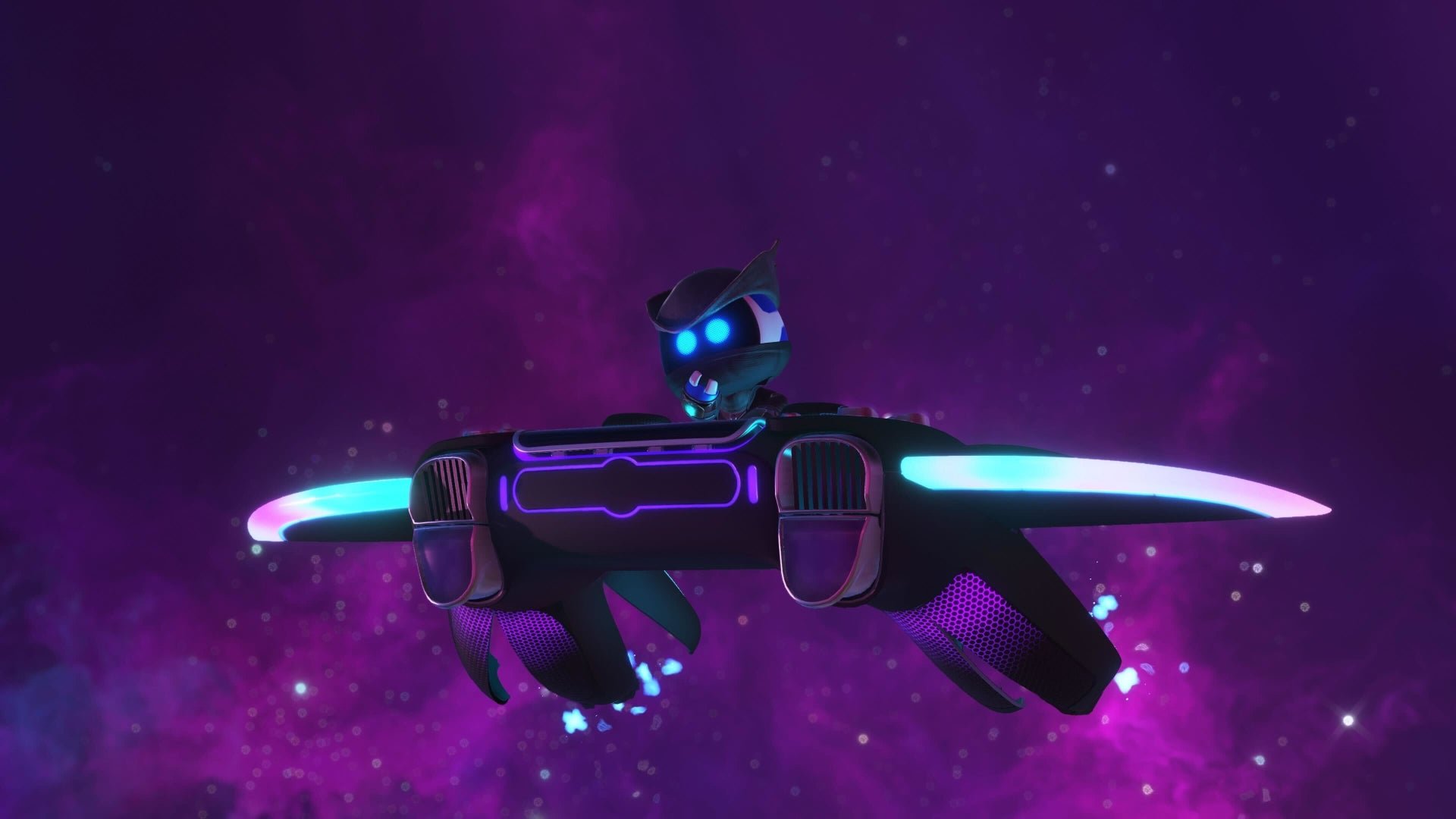
Metal footsteps on metal surfaces have never sounded so resonant. The sound and feel of a zipper being pulled down has never been so convincingly rendered. The patter of rain on the umbrella that emerges from Astro Bot’s head could convince someone of a downpour outside. The jokes about aging PS4s sounding like jet engines seem mild compared to the sound and rumble from the Dualsense when Astro Bot revs up their similarly shaped speeder. Somehow, the world fits into this controller, which is incredibly noisy while playing. Despite that miniature cacophony, it’s a delight to be greeted by the joyful sights, sounds, and sensations of Astro Bot’s exuberant and childlike universe.
Given how Astro Bot transforms even simple concepts like an alien literally tearing apart a PS5-turned-spaceship into captivating and imaginative tableaux, I see no reason why this series shouldn’t continue, free from the PlayStation branding that adorns its beautifully rendered environments. In fact, I almost insist on it, given the uneasiness of the nostalgia Astro Bot evokes. It features some truly deep references that had me laughing at their inclusion, but it also doesn’t do much with the majority of the characters it features. Iconic figures from PlayStation’s past often appear in suitable settings, like characters from a historic horror franchise in a ghost and haunted manor-themed level, but not all receive their own tribute levels at the culmination of the game’s six galaxies, meaning they’re mostly just there for you to interact with.
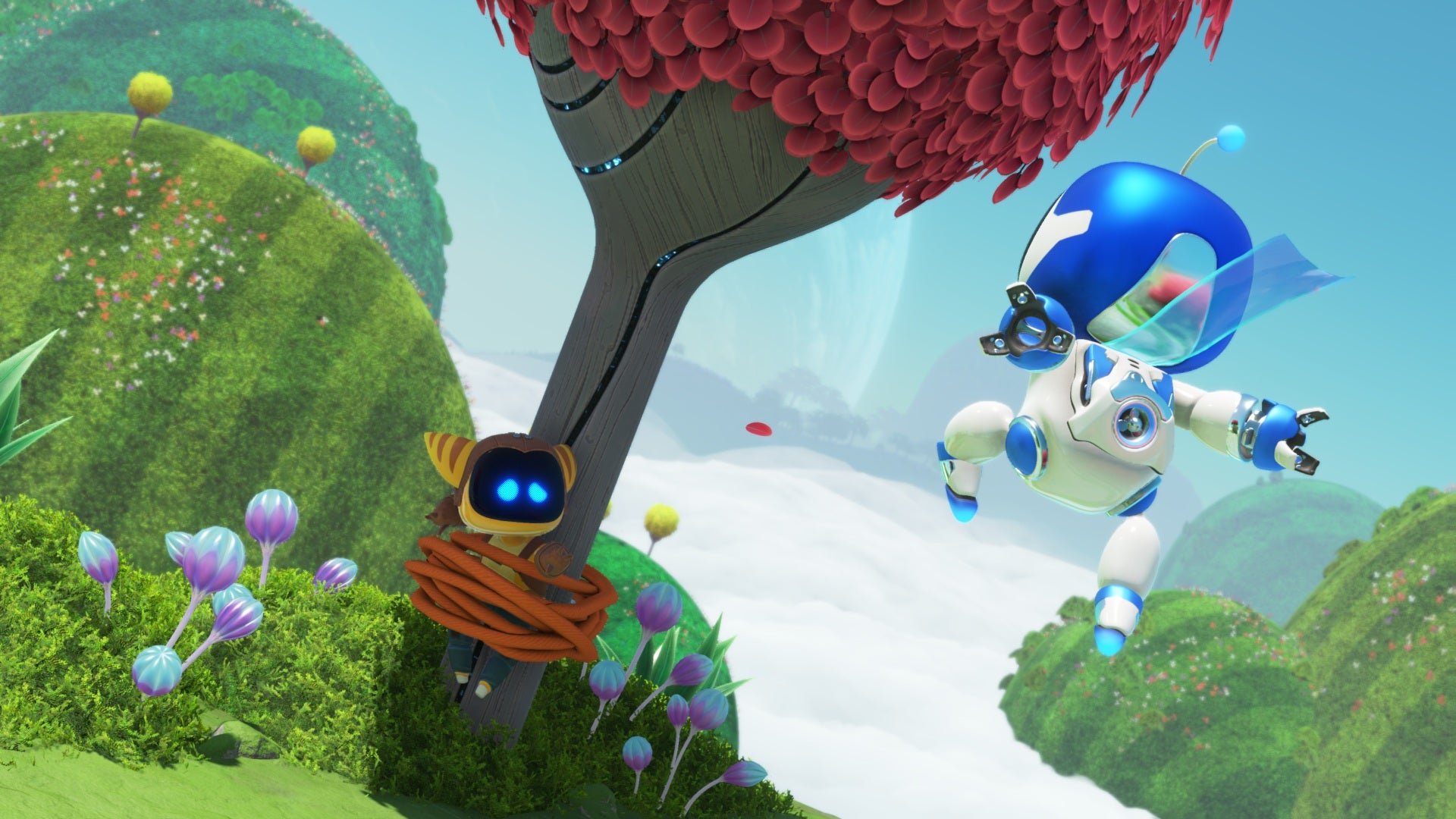
Image: Team Asobi / Sony
Their inclusion is charming, and unlocking some of these characters’ associated memorabilia from the in-game gacha machine allows for interaction. Often, these interactions are easter eggs, like the death animation of a certain PS2 platforming hero, but they primarily serve as eye candy in a self-contained area. As delightful as it is to be surprised by beloved characters from my youth, it’s all tinged by the fact that they are mainly here for display. The nostalgia’s veneer faded for me after this realization, as the crash site took on a “Look, but don’t touch” atmosphere. Astro Bot is a multitude of wonderful things, but between Astro’s Playroom and this game, it increasingly becomes PlayStation’s museum, where the brand seems poised to hold the memories of its past brilliance at a respectful distance from its current and future ambitions.
It also stings to know that Astro Bot and the brilliant team behind it, who clearly cherish this history and have historically created inventive games, emerged from the remnants of another studio that once epitomized what PlayStation was. Japan Studio’s closure still hurts, and while Astro Bot and its ingenuity soften the blow somewhat, it’s not enough. In another timeline, Astro Bot is the crown jewel atop a heap of similarly ambitious titles from passionate developers empowered to realize their wildest dreams. Currently, it lands as the broader cultural landscape yearns for stability, with teams under PlayStation’s leadership seemingly cannibalizing each other’s styles and genres or having live-service games pulled within weeks of launch, while fans and developers alike cry out for normalcy after years of turmoil. Astro Bot celebrates gaming’s history and is a beacon in the darkness, but it increasingly feels like an outlier in gaming’s narrowing future rather than a revival of what once was.
Astro Bot is a formidable game, as is its eponymous hero, but I doubt either will save the world or the industry. For what it is, however, Astro Bot is extraordinary, and that is worth celebrating here and now. I just can’t help but leave the experience with a bittersweet taste and hope that soon, we won’t have to look to gaming’s past for its best moments.