


There’s a moment in Black Myth: Wukong that perfectly symbolizes the game’s ambitious rise as China’s major entry into the Western AAA game market. Sadly, we can't discuss that moment as it's under wraps.
Black Myth: Wukong presents scenes of captivating beauty, poetic visuals, and mythmaking that stand out in today's AAA gaming landscape. Unfortunately, we're unable to share or discuss these moments.
The game is rich with lore, mythology, parables, and morality tales, all intertwined with fantastical and imaginative character work and design, adding depth to the complex narrative of Black Myth: Wukong. However, we are unable to delve into these details.
It's worth noting how the goddess Guanyin, a prominent figure in the original texts, plays a minor role in the game’s storyline. But to explore this further would require discussing specific story elements, which we cannot do.
This leaves us with two significant points about Black Myth: Wukong: It is visually stunning, and it doesn’t mimic FromSoftware’s work as much as one might expect. These aspects are the game’s major strengths.
A legendary story, retold for those who already know it
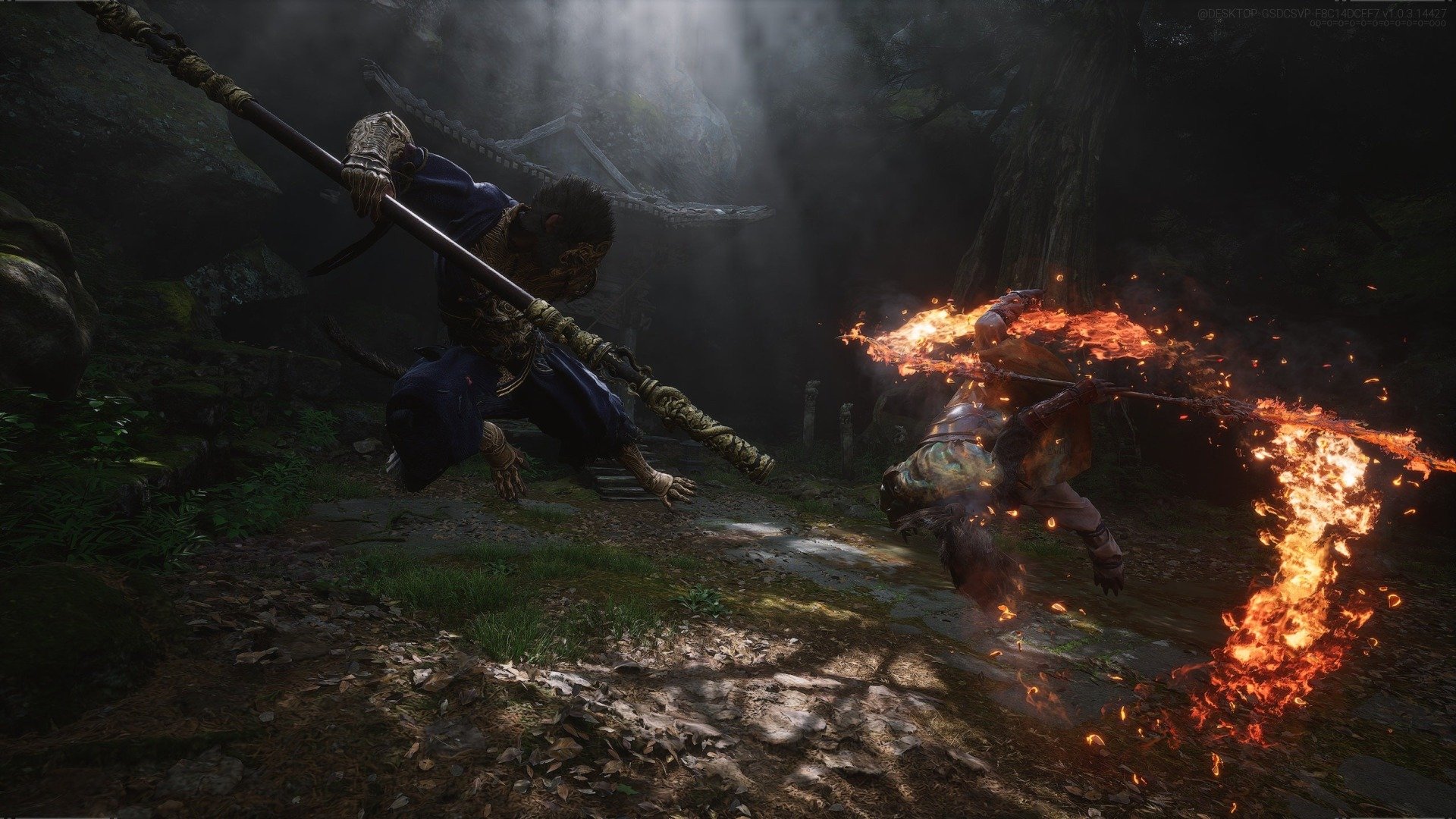
For those unfamiliar, Black Myth: Wukong is an unconventional retelling of Journey to the West, a cornerstone of Chinese literature. Imagine if Tolkien had penned The Lord of the Rings 400 years earlier, intertwined with Crusades and Bible stories, with Jesus’ apostles as anthropomorphic creatures on a divine mission, and you’ll grasp the novel’s significance in China.
Screenshot: Game Science
The novel’s themes have occasionally permeated other cultures. Akira Toriyama’s Dragon Ball is filled with its references. In gaming, Ninja Theory’s Enslaved: Odyssey to the West offers a direct adaptation, while influences are also found in Capcom’s Son Son and Ubisoft’s Beyond Good & Evil. GameScience’s decision to create a high-budget interactive version of this classic as an evolution from mobile and gacha games is logical. It’s just a pity that the game doesn’t reach out to a broader audience.
Black Myth: Wukong narrates Journey to the West in a manner that might confuse anyone not well-versed in the original text. It’s possible to adapt it accessibly; Enslaved did well, and Stephen Chow’s film adaptation offers a fun interpretation, available on Prime Video.
The game focuses on a humble ape warrior, the Destined One, who embarks on a quest to gather elements of the legendary Monkey King Sun Wukong in hopes of resurrecting him. However, Black Myth: Wukong doesn’t guide players through this journey cohesively. There are companions providing commentary, some endearing, and abundant lore. Almost every enemy the Destined One faces comes with a lore entry, often delightful reads, yet largely disconnected from the immediate game events.
Multiplatform
Black Myth: Wukong
back of the box quote
"GameScience’s unexpected journey into the West against the Five Armies of the Rings."
Type of game
Linear action-adventure with Souls-lite elements.
Liked
The graphics, the transformations, the graphics, the unique touches in combat, the graphics, the presentation of the mythology, the graphics. Oh, almost forgot: the graphics.
Disliked
Crafting, the lack of a map, some terrible checkpointing, how much this adaptation of Journey to the West requires that you’ve already read Journey to the West.
Developer
Game Science
Platforms
PlayStation 5, PC
Release Date
August 20, 2026
Played
34 hours and counting.
Moreover, when interesting characters with compelling stories appear, their development is often cut short by chapter breaks, which disrupt the narrative flow and place the Destined One in new settings with unfamiliar characters.
While Souls games have always been enigmatic with their storytelling, they integrate the narrative into the world, its landmarks, and the enemy designs. In contrast, these beautiful biomes in Black Myth: Wukong do not organically convey stories or reasons to fight. There is lore and respect for the land, but the storytelling is missing. It feels like an extensive collection of appendices rather than a cohesive narrative, leaving fans of the original novel to fill in the gaps, but failing to introduce new players to the magic of Journey to the West.
Truly awe-inspiring visuals
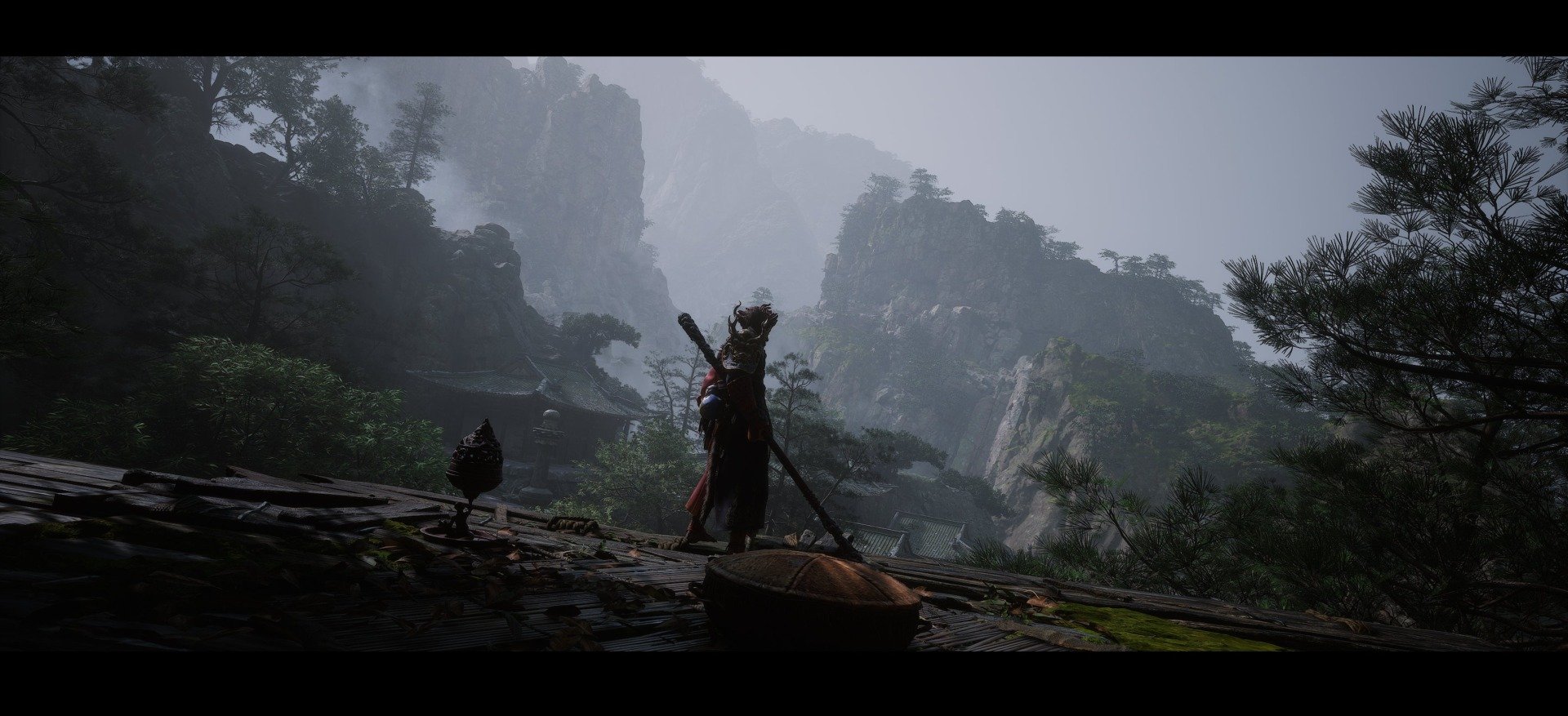
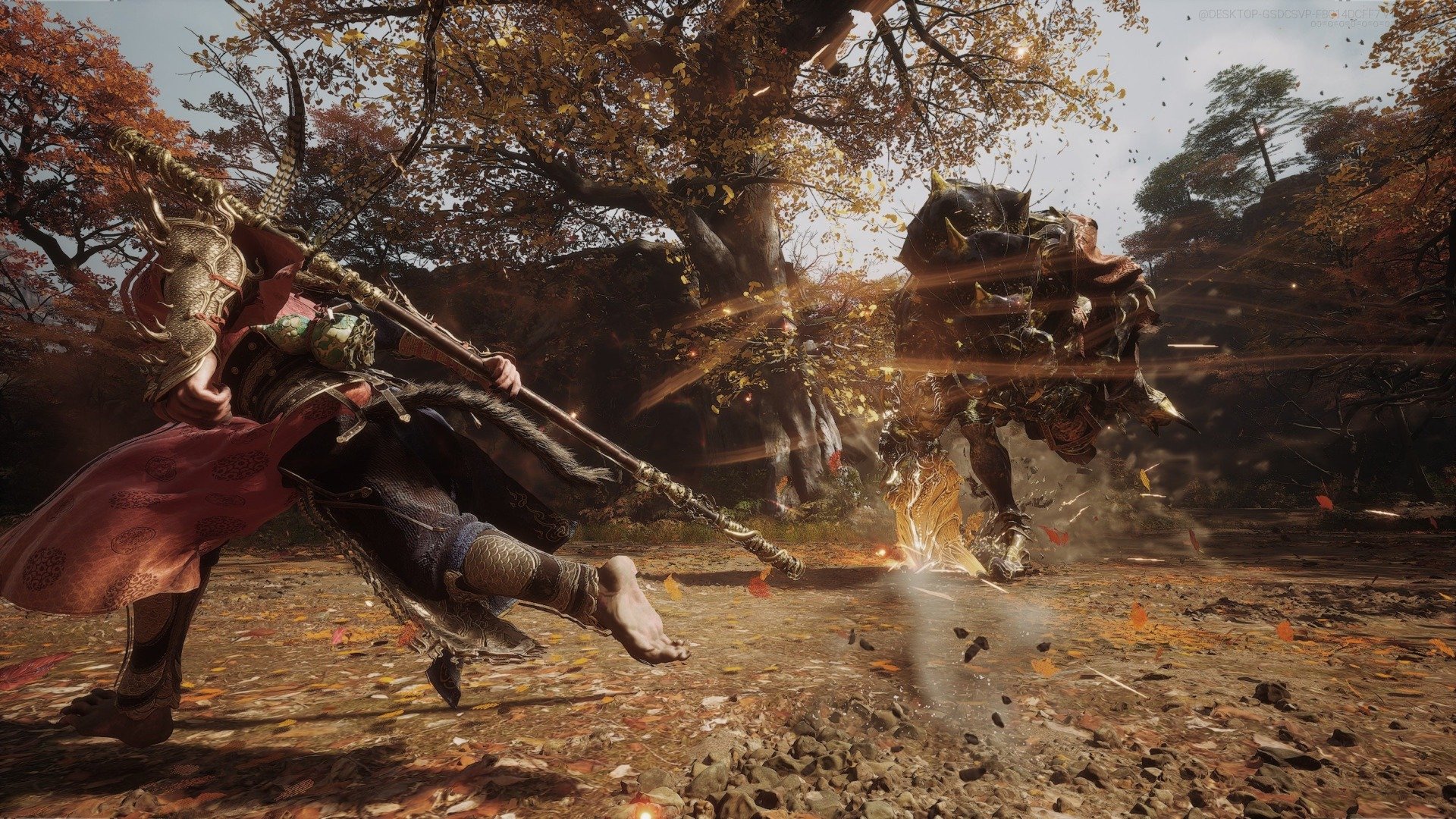
However, the game is undeniably stunning. It takes you on a visually breathtaking journey through ancient China, from forests to deserts to snowy peaks. Even the simplest scenes of untouched nature are captured with incredible fidelity. The creature design is exceptional, achieving a level of realism where the anthropomorphized enemies become believable characters. Unreal Engine 5 shines here, offering visuals that truly awe in this generation.
Screenshot: Game Science
However, achieving this beauty comes at a cost. Even on a laptop with an RTX 4090, max settings with Ray Tracing pushed it to the limit. While the game still looks impressive on an RTX 3080 with High settings and Ray Tracing off, later areas may experience stutters. Running the game smoothly on a PS5 above 30fps could be challenging.
Fresh ideas, numerous frustrations
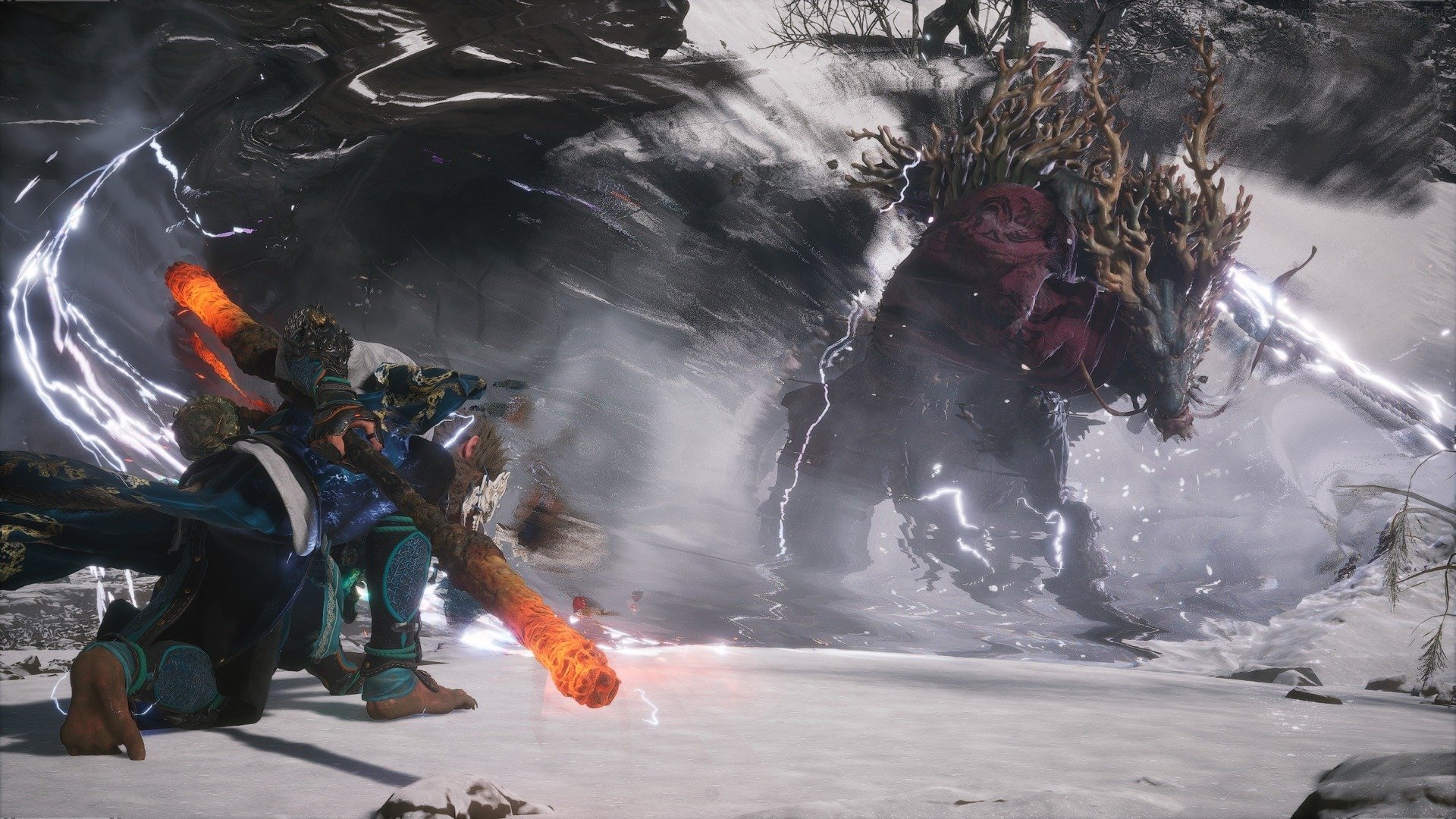
For players seeking a FromSoft-style challenge, Black Myth: Wukong offers a unique combat experience. The Destined One’s basic moves include running, jumping, and staff attacks. Heavy attacks require building up the Focus meter. There are three stances, but basic combos remain the same, despite an extensive skill tree. Stamina management is crucial, and the game features shrines for upgrades. While it seems to resemble a Souls game, it struggles to make basic combat impactful over time.
When a boss landed a devastating hit, sending my character into the shadow realm, I felt the familiar sting of failure. But then I realized that Black Myth: Wukong doesn’t penalize death; you keep all your progress.
This leniency is refreshing, especially compared to tougher games like Shadow of the Erdtree. The game allows freedom to experiment, particularly with the Destined One’s magical powers. The Transformation system, inspired by the source material, lets players embody enemies or perform powerful moves, adding variety to combat.
Despite its creative magic system, the game’s combat doesn’t reach the desired heights. It remains unbalanced, with enjoyable powers contrasted by lackluster basic combos. Beautiful environments and major landmarks captivate, but exploring off the path is limited, and landmarks don’t guide players effectively.
Screenshot: Game Science
This issue is exacerbated by the absence of an in-game map, and in later chapters, checkpoints become more spaced out, leading to lengthy gameplay stretches. The game features brilliantly realized foes, some rivaling FromSoft designs, but enemy placement lacks consistency, affecting gameplay flow.
I wish I could tell you that the journey is rewarding, that maximizing settings on your rig is worth it, that engaging stories await, and that the adrenaline rush from bosses is gratifying. These aspects hold true, but without detailing them, we can only highlight the less compelling parts, which other games like God of War, Final Fantasy, and Elden Ring offer more satisfying experiences from the start.
A game at odds with itself
There’s a clear love for culture and myth here, encased in a decent Souls-lite that bears too much weight alone. Stripped of its ambition to vividly bring a Chinese myth to life, Black Myth: Wukong is an enjoyable experience if you simply want to be a magical monkey in a boss rush. Its combat system presents intriguing ideas, making it worth exploring as a unique Souls-like. However, those seeking that experience will find it hindered by the game’s epic aspirations. While good storytelling enhances games, here it becomes a cumbersome obstacle, and there’s a lot of it.
Black Myth: Wukong targets two distinct audiences, both requiring extra effort to uncover its treasures, as the game omits essential context. It remains big and bold for its own sake, overshadowing the most exquisite, quiet, and dream-like aspects. Ironically, Sun Wukong’s journey in Journey to the West involves shedding grand illusions for a life of service and meaning, yet we can’t delve into how the game portrays this. It’s a shame, as there’s little else to say. Consequently, Black Myth: Wukong risks becoming another forgettable entry in a crowded genre. Gamers don’t need to hear more.
There is no war in Black Myth: Wukong


