


As a “definitive” edition of the phenomenal 2006 RPG, 2026’s Persona 3 Reload lacked some key features, such as the 2009 PSP port’s female protagonist route. However, perhaps the most glaring omission was the absence of The Answer, the substantial, playable epilogue that was part of the 2007 Persona 3 FES re-release. Although there has been some debate about Atlus offering it as a paid DLC instead of including it in the main game, I find this method of adding new characters, storylines, and dungeons at the end of a game I’ve already played preferable to the way Atlus repackaged Persona 4 and 5. The sequels’ “definitive editions” added new stories and characters woven into the original plot, requiring you to repurchase and replay the game to discover what was new. Back in the PS2 era, The Answer was a controversial addition to a stellar ending that some still argue didn’t need an epilogue. Many of the reservations I had with the original have been faithfully recreated in Reload. Yet, as a coda to Persona 3, I’m still captivated by how The Answer delves into the less glamorous realities of what the original game conveyed. Spoilers for the original game follow.

How do you follow up an ending as good as Persona 3’s?
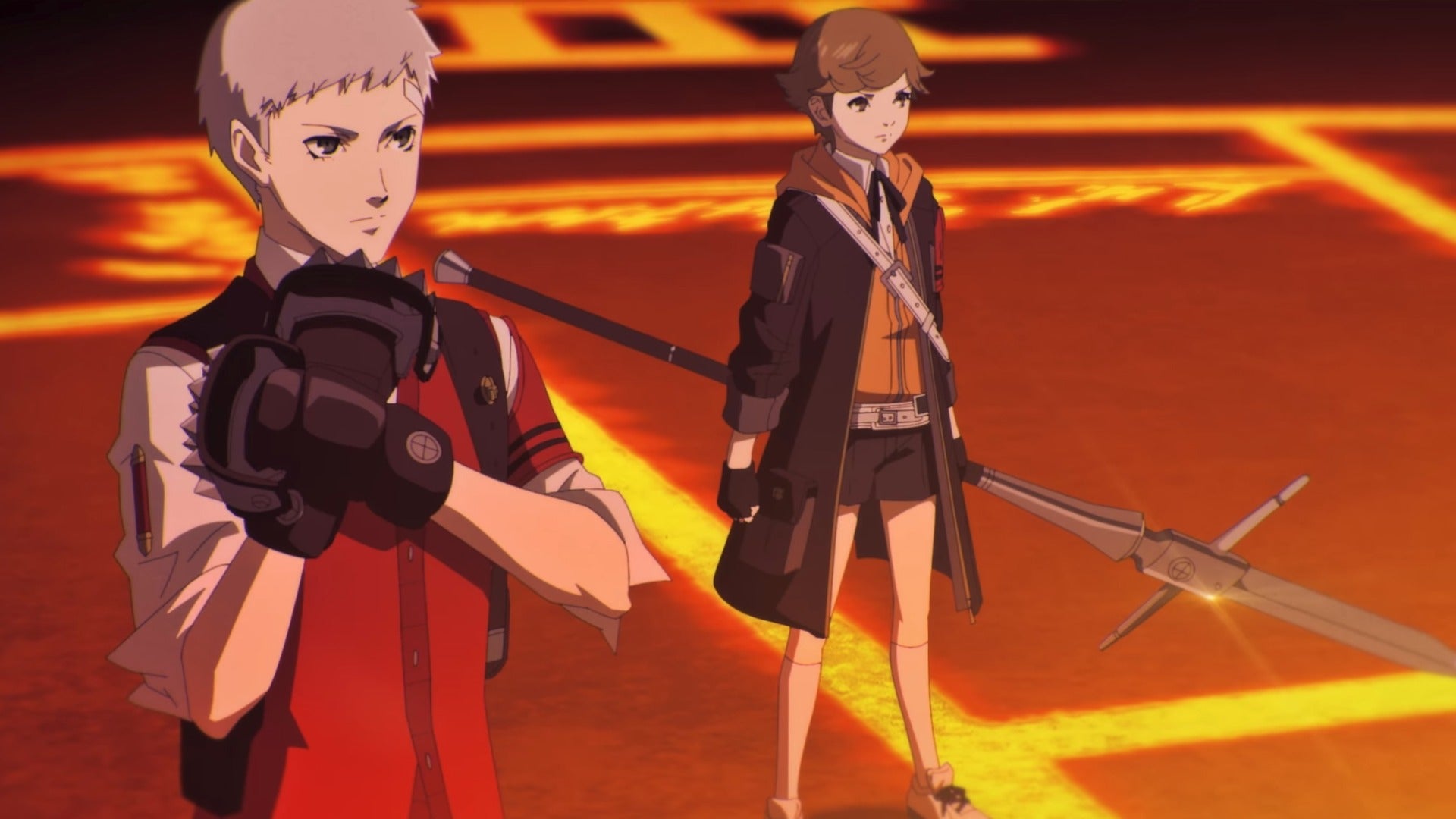
The Answer begins weeks after the conclusion of Persona 3, during which the protagonist, Makoto Yuki, sacrificed his life to defeat Nyx, a malevolent entity bent on destroying the world. The epilogue starts quietly, as the demon-fighting high school students of the Specialized Extracurricular Execution Squad can barely look at one another. They relinquish their Persona-summoning tools, mourning not only the loss of their leader and friend but also the time they spent together in the Iwatodai Dormitory over the past year.
Screenshot: Atlus / Kotaku
The original ending of Persona 3 is remarkable because it concludes with a group of friends joyfully uniting, proclaiming that their love for each other has given them purpose throughout their journey, all while their leader gradually falls into a deep sleep from which he will never awaken. It loudly asserts that human connection gives life meaning, despite its impermanence, as the centerpiece that binds them is slipping away before their eyes. On its own, it perfectly encapsulates everything Persona 3 has to say, but one naturally wonders how a group so invigorated would react to such a devastating blow. The Answer thoughtfully explores this question and is careful not to undo something that was already perfect.
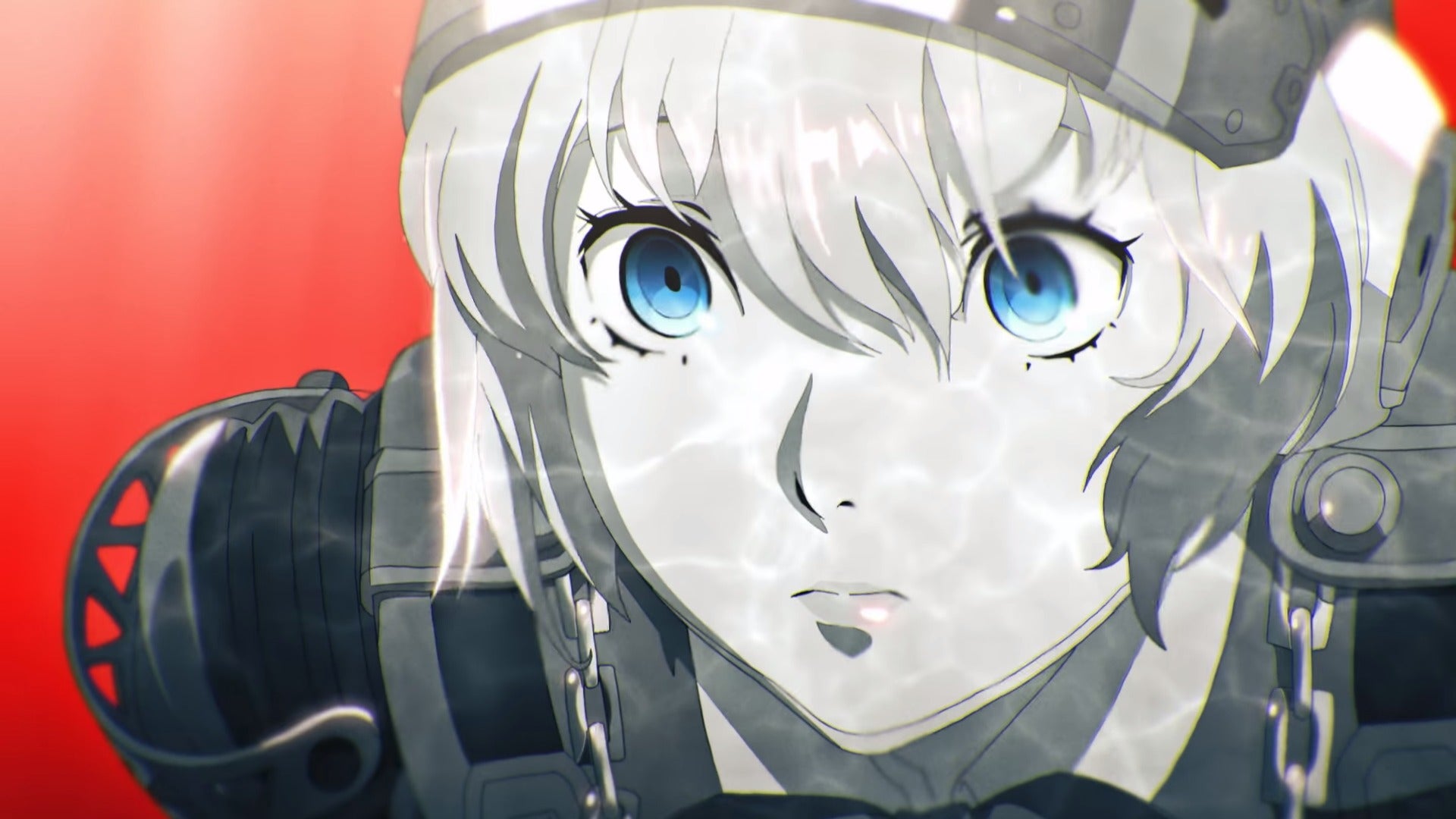
Aigis, the Persona-using android of the group, was the last to speak to Makoto before his passing, and she is taking it especially hard. She believed she had found a reason to live in protecting their team leader, and now that he’s gone, she’s trying to find a reason to continue living with all these human emotions she’s adopted. She is the star of The Answer, but everyone in SEES is processing this differently. While some are trying to find reasons to bring the group together as the school year ends, others are actively avoiding the friends they’ve made to escape the pain of losing another piece of their collective puzzle. Yet, circumstances bring these teens together, forcing them to confront each other and their grief once more.
SEES finds themselves trapped in a time loop within their dorm as a new, shadow-infested dungeon emerges below the building. The phenomenon is reminiscent of the base game’s Dark Hour, where the real world is overtaken by a paranormal horde of demons. They can’t leave the confines of their old home until they face the horrors below, now with the aid of a new android named Metis claiming to be Aigis’ sister. The time loop mostly serves as a reason for The Answer to distill the Persona formula to its core elements, shedding the life simulation and time management aspects for a more streamlined story. Ironically, the time loop is a fitting framework considering how repetitive and grindy The Answer feels compared to the main game.
Screenshot: Atlus / Kotaku
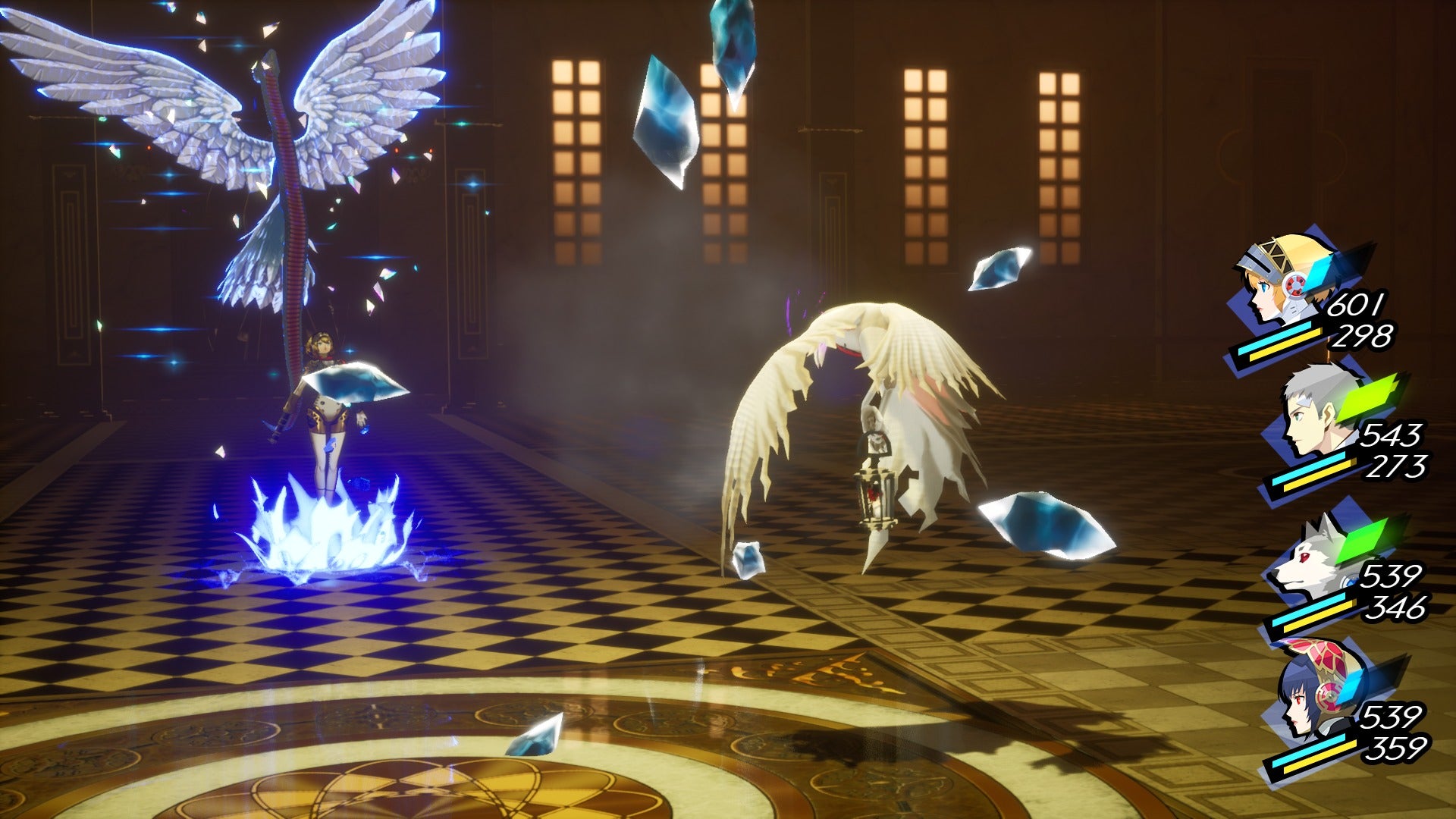
Aigis and her companions spend most of The Answer navigating procedurally generated dungeons, battling high-level shadows. As a combat skill test, The Answer is a solid, often challenging, occasionally monotonous examination of your understanding of Persona 3’s systems. While you can technically access The Answer without a save file from the base game, it assumes you have knowledge not only of the story of Persona 3 but also of the intricacies of its turn-based battles. Aigis gains Makoto’s ability to collect and summon multiple Personas, but you start from scratch with her. Without the social links and other real-world elements to rely on, The Answer is all about dungeon crawling and shadow slaying.
If, over the years, that part of Persona has taken a back seat for you compared to the social elements, The Answer may not satisfy you. Its dungeons are far more repetitive than those in the base game, but it offers a concentrated, challenging combat check that will appeal to those who enjoy building an arsenal of demons for battle. Though the difficulty spike in the eleventh hour is as jarring now as it was in the original, Reload’s quality-of-life improvements make it more tolerable this time around. Despite my grievances with The Answer’s structure, there are still great character moments to be found between dungeons, and I was truly captivated by the story that unfolds in the margins.
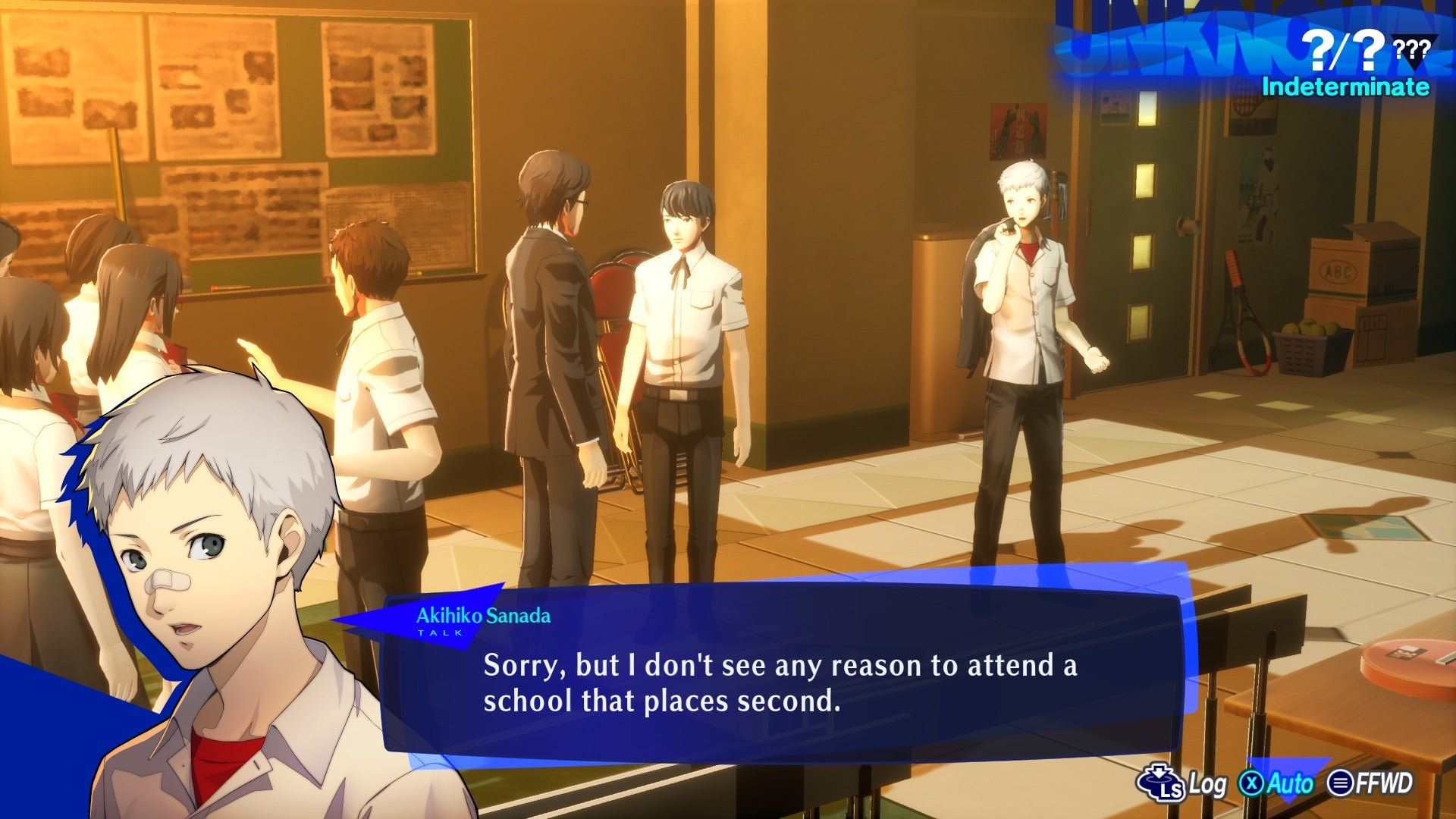
At the end of each dungeon, a member of SEES is confronted with a moment from their past. For some, this is recent, with a few flashbacks occurring during Persona 3 itself. For others, it’s from years before meeting their teammates. These memories are displayed for all to see, and in most cases, they stem from a painful time in their lives. The members of SEES have all endured tragedy, and that pain has drawn them into this line of demon-hunting extracurricular activities.
Screenshot: Atlus / Kotaku
Persona 3 posits that human connection helps us carry our burdens, but throughout these memories, we see how those same bonds expose us to more hardship. Before any of them had even met one another, most of the members of SEES had either lost someone important to them, whether it was a parent or a sibling, or they felt like they had someone to cherish in the first place. Then they faced more loss during their quest to stop the Dark Hour as the broody loner Shinji died protecting one of their own. When all was said and done, they saved the world, but at the cost of their leader. How many times must these kids endure loss just to keep on living?
Well, the hard truth is, they will continue to lose people. Death is a natural part of life, and every reminder of that never stops hurting. Persona 3 emphasizes that even though death comes for us all, life has meaning because we find people who make even the hardest day worth living through. The Answer challenges Persona 3’s team to its limit, urging them to put that belief into practice.
The Answer can be frustrating, but its message is worth the grind
There’s a compelling argument that Persona 3 didn’t need an epilogue. It’s fascinating to look back on the original game’s ending and find forum threads of people trying to decipher what happened before The Answer set it in stone. However, after the original strongly asserted that even in the face of death our bonds give life meaning, it’s perhaps necessary for The Answer to illustrate that process.
Multiplatform
Persona 3 Reload - Episode Aigis: The Answer
BACK-OF-THE-BOX QUOTE
“When there's a beginning, there's an ending too“
TYPE OF GAME
From-the-ground-up remake of Persona 3’s playable epilogue originally released in the FES re-release, now added to Reload as DLC
LIKED
A lovely reflection on the nonlinear experience of grief, some bangin’ new tracks, some challenging fights, SEES is still an excellent cast
DISLIKED
Pretty monotonous structure, repetitive environments that get reused across multiple dungeons, and a few of those fights are some bullshit
DEVELOPER
P-Studio
PLATFORMS
PC (played on), PlayStation 4, PlayStation 5, Xbox One, Xbox Series X/S
RELEASE DATE
September 10, 2026
PLAYED
~20 hours
If you’ve lost someone important to you, whether through death or circumstance, you know that grief is not linear. We learn lessons each time it happens, but it doesn’t alleviate the new pain we feel when we lose someone again. Shinji’s death could not prepare SEES for Makoto’s, just as every other loss could not prepare them for the new, altogether different pain they’d feel each time someone slipped through their fingers into whatever comes next. No matter how many times you accept that loss is a part of life, you fall into the same stages of denial, anger, bargaining, depression, and acceptance. The Answer grants Persona 3’s cast and the player the grace to feel these emotions, dive into the ugliness of the worst of them, and emerge on the other side ready to heal and move forward.
Structurally, The Answer is an often frustrating epilogue that trims some of the best parts of Persona games. Thankfully, Reload’s quality-of-life updates make the grind more tolerable, and the remake adds enough small social elements like reading books and watching movies with your friends so it doesn’t feel entirely business-like. But as a meditation on grief, it feels like a kindness extended to characters who once had to dwell in the ambiguity of the original ending. It would have been easy for Persona 3 to end on a nihilistic note, showing the entire group fall apart without their leader and denying all the lessons they learned. But grief never truly disappears. We just learn to help each other live with it a little more each day.