


Do you recall the first game that captured your heart? For me, it was The Legend of Zelda: Ocarina of Time. Some of my earliest memories involve sitting in front of a small CRT TV in our living room, watching my brother explore the expansive fields of Hyrule. Even before I held the controller myself, Ocarina of Time ignited what would become a lifelong passion for video games.
This affection for video games is vividly evident in The Plucky Squire, an enchanting platformer that seamlessly blends 2D and 3D elements from the medium's rich history. Developed by All Possible Futures, this charming tribute to the games that defined a generation not only serves as a nostalgic journey but also stands out as an enjoyable experience on its own. Despite some minor rough edges, The Plucky Squire is brimming with heart, constantly reminding players why games hold a special place in our lives.
Leaping off the page
The team at All Possible Futures, much like myself and countless other gamers, are evidently admirers of classic Zelda games. At its core, The Plucky Squire is a Zelda-like adventure, drawing inspiration from the NES and SNES golden era—think of the original 1986 Zelda or 1991’s A Link to the Past. In a top-down 2D view, you guide Jot—the plucky titular Squire—as he battles foes and unravels puzzles.
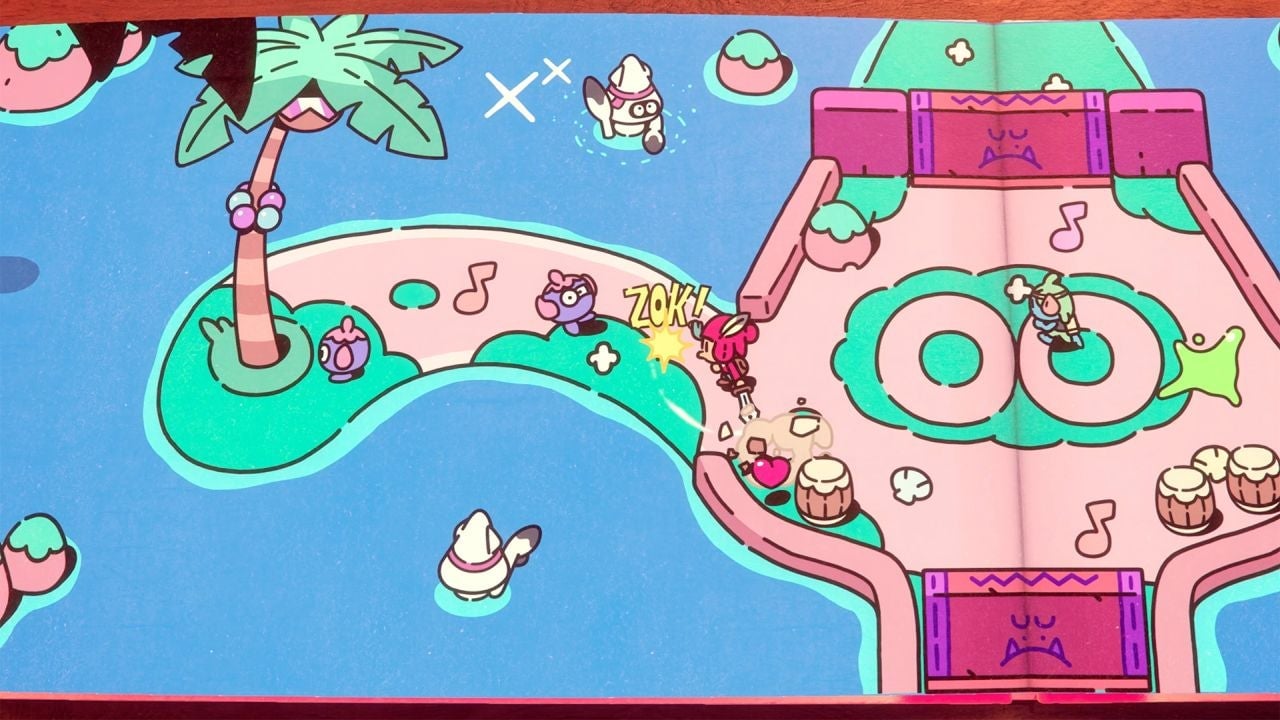
Image: Devolver Digital
The unique twist of The Plucky Squire is that Jot and all other characters you meet exist within a children's storybook aptly named The Plucky Squire. To highlight this, the game transforms the classic screen-to-screen transitions of early Zelda games into the turning of a page, unveiling the next segment of the map. These charming touches enhance the allure of The Plucky Squire. The game’s approximately ten-hour journey kicks off when the villainous Humgrump becomes aware of his literary confinement and devises a plan to expel Jot from the book, aiming to rewrite the narrative for his own gain.
When Jot is ejected from his tale, you find yourself on the desk of a young boy named Sam, an avid fan of The Plucky Squire. The gameplay then shifts from a 2D Zelda-like to a 3D platformer, drawing inspiration from another era of gaming. Here, you engage in more combat, solve puzzles, and navigate platforms in an effort to return Jot to his world, which you achieve rather swiftly. From this juncture, The Plucky Squire evolves into a multi-dimensional puzzle that requires you to jump in and out of the storybook to overcome the obstacles Humgrump throws your way.
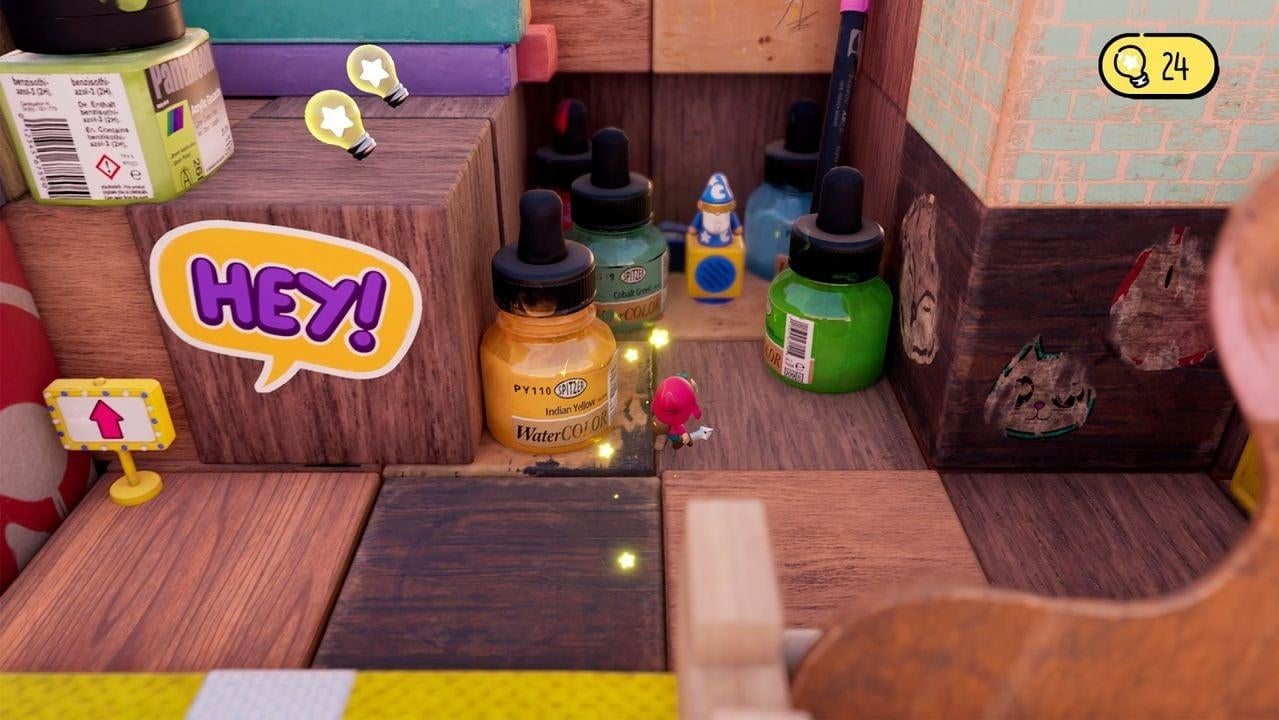
Image: Devolver Digital
Jot accomplishes this with the help of an expanding array of tools that allow him to manipulate the metatextual aspects of his adventure. This results in some truly delightful levels, like one where I had to freeze an item on the page and then close the book to move that item to the opposite page to unlock a door. While combat is present and functional, it's the intricate puzzles where The Plucky Squire truly shines.
A link to the past
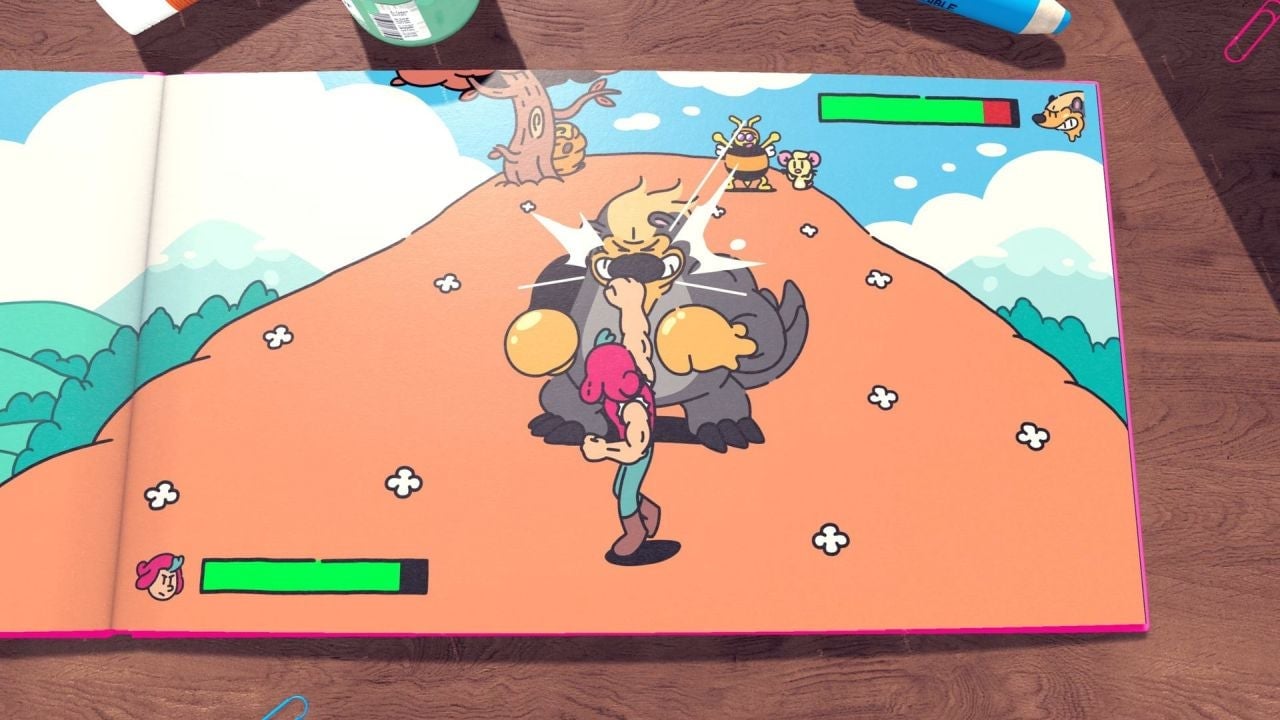
The Plucky Squire doesn’t merely pay homage to classic 2D and 3D games through its core gameplay—you'll encounter numerous minigames clearly inspired by iconic past titles throughout your adventure. An early boss battle transforms into a boxing match reminiscent of Punch-Out!!, complete with dodging, jabbing, and uppercuts. A later section focused on stealth seems to draw from a more recent game, requiring you to navigate a short dungeon in sync with the rhythm, similar to 2015’s Crypt of the NecroDancer. I won’t spoil every tribute for you, but know that the list is extensive, and each is crafted with evident affection.
Multiplatform
The Plucky Squire
Back Of The Box Quote
"A brief history of video games... for kids!"
Type Of Game
2D and 3D puzzle platformer
Liked
Gorgeous art style, inventive multi-dimensional puzzle design
Disliked
Controls can feel unresponsive during certain segments, pacing drags in the middle
Developer
All Possible Futures
Platforms
PlayStation 5, Xbox Series X|S, Nintendo Switch, and PC
Release Date
September 17, 2026
Played
10 hours to roll credits
Despite the stunning visuals of these homages, rendered in charming 2D illustrations or 3D models, they all feel slightly off. This is quite literal—the controls for each minigame, and to some degree the overall game, tend to be somewhat unresponsive. I first noticed this during an early 2D platforming level that mimicked the side-scrolling style of a Mario game, where Jot's jumps didn't quite respond as anticipated, often causing me to fall short due to the unexpected sluggishness of his movements. A similar issue arose in a rhythm-based minigame where the input timing felt out of sync with the beat. Thankfully, a variety of accessibility options, including the ability to skip challenging minigames, mitigate these frustrations. However, I do wish the controls were more consistently precise.
It's somewhat surprising to see such a rich tapestry of gaming history in The Plucky Squire’s DNA, considering how child-friendly the game is. It's an ideal choice for parents to introduce their children to the joys of gaming, hoping to spark a love for the medium in the new generation—even if they may not fully grasp all of The Plucky Squire's references. Kids are likely to enjoy the delightful puzzle-solving, while parents watching over their shoulders can appreciate the nostalgic nods. The storyline itself is straightforward, sweet, and easy to follow. While this might occasionally bore more seasoned gamers, there are enough witty moments and clever elements to maintain interest. Beneath it all lies a message about the significance of art in early life and its inspirational power. The Plucky Squire is crafted for children, and that's its greatest asset.
Forward thinking
Image: Devolver Digital
The enchantment of classic games successfully captivating an entire generation led to something remarkable: more video games. The modern gaming industry owes its existence to the children who fell in love with Zelda on the Famicom in 1986. They grew up to become lifelong players, critics, and developers. They are the ones who crafted the games that the next generation would cherish, inspiring them to create even more games in turn.
The Plucky Squire is a testament to this legacy of art, inspiration, and creation. Jot's most crucial role as the hero of his book isn't merely to defeat Humgrump but to inspire the child whose desk his book rests upon to create something of their own. Everyone has a story about the game that sparked their love for the medium, and The Plucky Squire might just become that pivotal game for some young player, igniting their creative spark. How can one not be passionate about video games?


