

How do you follow up on some of the most critically acclaimed games of the past decade? Many believed Nintendo couldn't top the expansive open-world magic and physics-based creativity that made The Legend of Zelda: Breath of the Wild such a groundbreaking experience. Yet, Nintendo seemed to achieve just that with Tears of the Kingdom, introducing numerous new ways for players to engage with the world while expanding the vastness of Hyrule both skyward and into its depths, arguably enhancing so much on its remarkable predecessor that it feels almost obsolete.
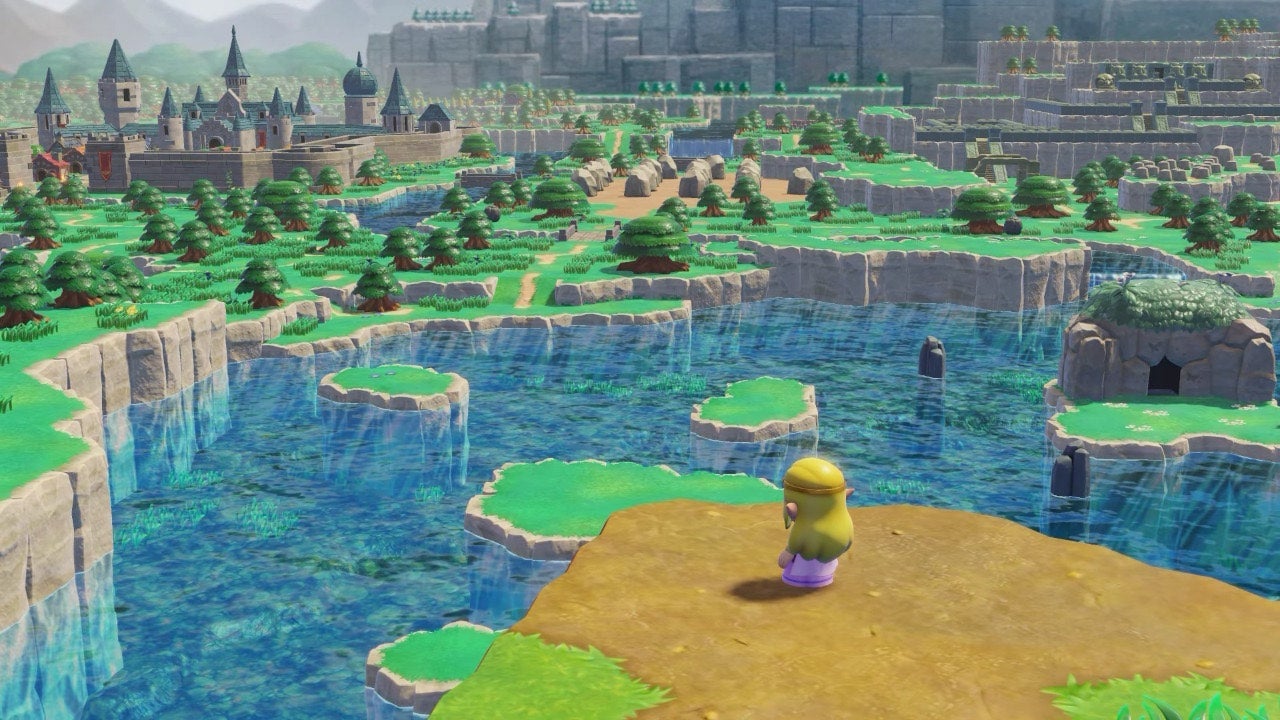
Between these two titles, we also experienced Link’s Awakening, a 2019 remake of a classic Game Boy adventure, which replaced the original’s pixel art with toy-like, dioramic visuals, aiming to capture the retro charm for a modern audience. The Legend of Zelda: Echoes of Wisdom takes this delightful art style and applies it to an entirely original story featuring our cherished Hyrule princess, Zelda. It also endeavors to merge the player-driven creativity and problem-solving elements from both Breath of the Wild and Tears of the Kingdom with the classic top-down Zelda gameplay, and it largely succeeds.
Echoes of Wisdom’s narrative sees Hyrule threatened by dark rifts that consume the land, trapping its inhabitants, including our familiar green-clad hero Link, in a frozen time-space continuum. Zelda, accompanied by her fairy-like companion Tri, embarks on a quest to dispel these rifts and free those ensnared. With Link himself caught in one of these rifts, it's up to Zelda, for the first time in a mainline game in the series, to save the land on her own.
Order The Legend of Zelda: Echoes of Wisdom: Best Buy | Humble Bundle
Screenshot: Nintendo / Kotaku
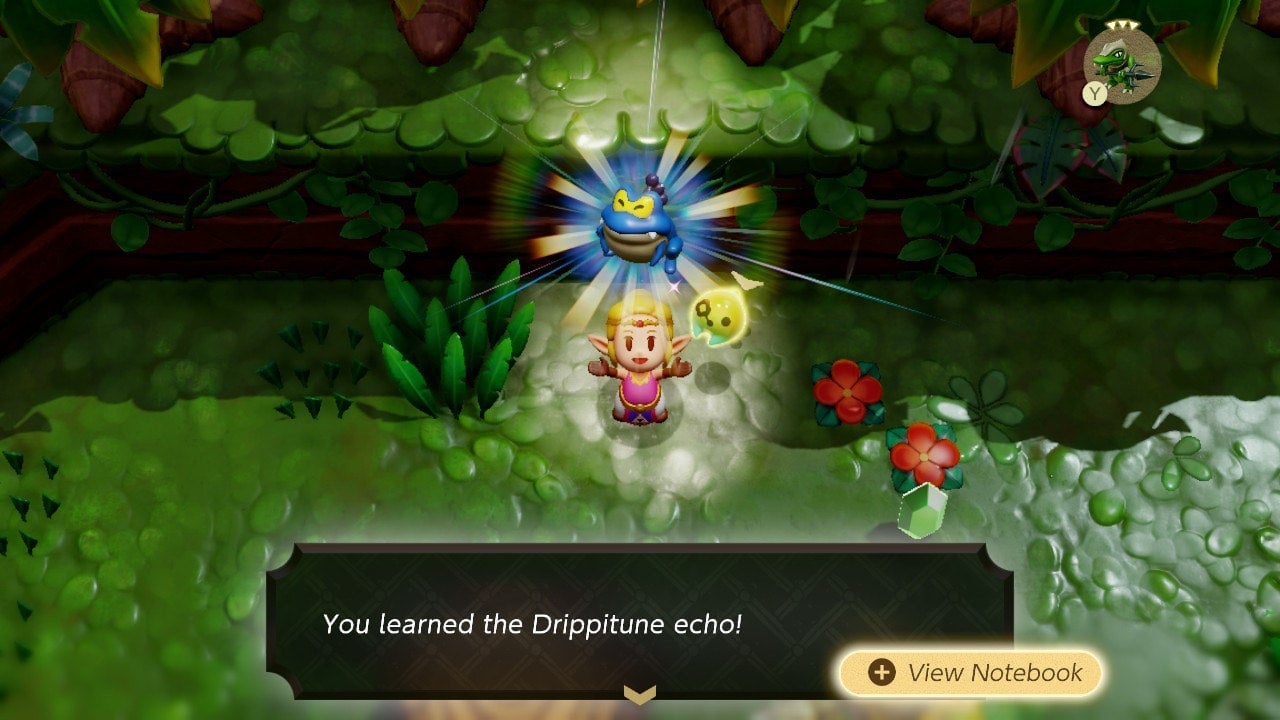
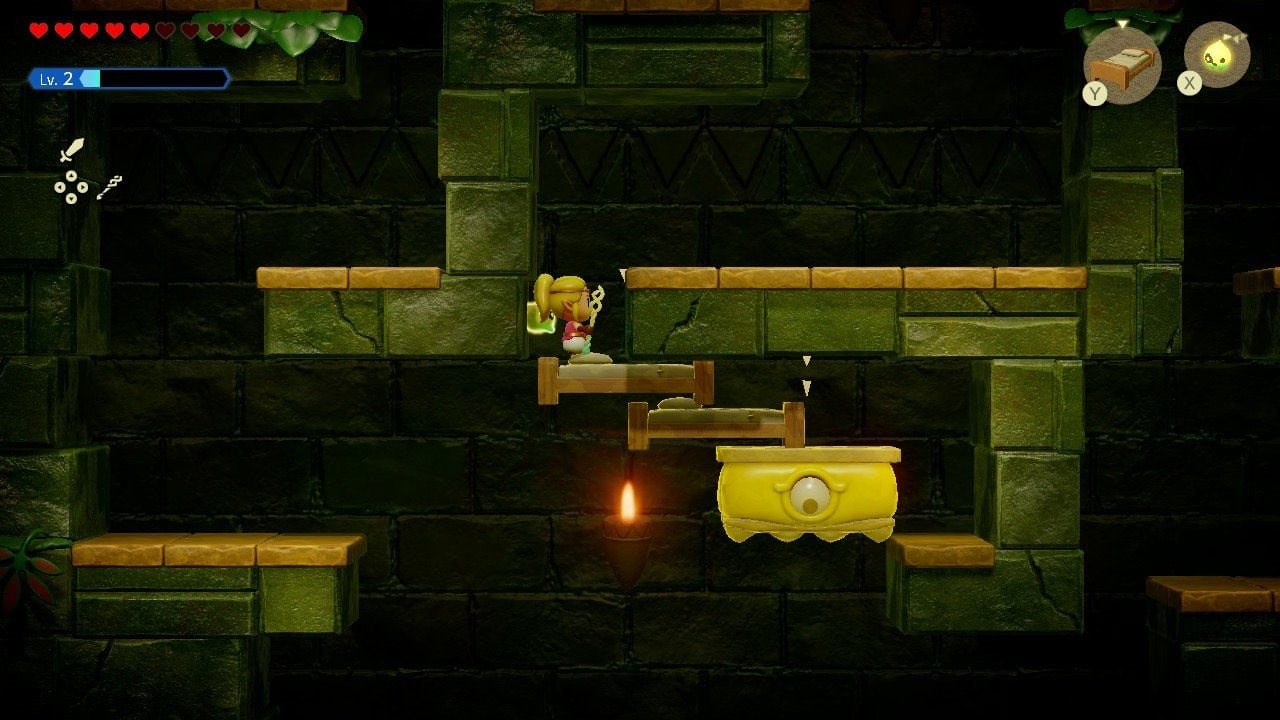
The main difference between playing as Zelda and stepping back into Link’s boots is that she doesn’t engage enemies directly with a sword and shield, at least not typically. With Tri’s magic, Zelda can create “echoes,” which are replicas of items and monsters she encounters throughout Hyrule. She can summon objects like beds, tables, and chairs, as well as creatures like electric-force-field-inducing blobs and spear-wielding goblins (or moblins, as they're known in Hyrule). This is where Echoes of Wisdom’s open-ended creativity comes to life.
When navigating the game’s dungeons and puzzles, my go-to tactic was often stacking beds to form a makeshift bridge for crossing wide gaps. This mirrored a strategy I employed in Tears of the Kingdom, where I would join logs to create a bridge. While this was effective in the early stages, I eventually had to devise more inventive solutions in later dungeons. For instance, when gaps were too wide for my bed bridge, I stood at the edge of my incomplete structure and used an echo that, when picked up, blew a windstream opposite Zelda’s direction, propelling her far enough to reach the other side. When your solutions actually work, there's a profound sense of achievement, and Echoes of Wisdom delivers these rewarding moments in abundance, leaving you feeling satisfied and confident throughout.
As Echoes begins, Tri’s magic is limited, imposing a cap on how many echoes can be active at one time. However, the game’s progression feels quite organic; as Tri becomes more adept, she and Zelda clear more rifts throughout the story, and the cap expands, allowing Zelda to summon more echoes simultaneously.
Echoes of Wisdom feels akin to a puzzle game, reminiscent of older series entries with intricately designed dungeons that require not just combat but also problem-solving. In this game, you can progress through them using her echoes, which serve almost like the key, traversal-aiding items you’d acquire in previous games.
Screenshot: Nintendo / Kotaku
To maintain that classic Zelda feel, our adventurous heroine has limited access to Link’s iconic swordfighter abilities. For a brief period, she can enter a “swordsman mode” that allows her to wield a sword, shoot arrows, and throw bombs, replicating Link’s actions when he was the protagonist. At times, this felt like a nod to long-time Zelda fans who wish to revisit Link’s gameplay. Within the context of Echoes of Wisdom’s mechanics, it feels quite overpowered, even if it's only active until Zelda’s energy meter depletes. Part of Zelda’s combat style involves using the echoes to handle battles for her. This means risking your bomb-making fish echo being destroyed by an enemy before it can detonate. The swordfighter mode essentially acts as a “press to win” button because Zelda can just spam bombs. Furthermore, Zelda can consistently consume smoothies, which she can craft with various ingredients found throughout Hyrule, to recharge her energy meter. This approach effectively allows her to enter and remain in swordfighter mode more frequently and for extended periods. Consequently, this unfortunately diminishes the utility of Zelda’s echoes, as swordfighter mode effortlessly dispatches even bosses.
Combat shines when you rely on echoes, and discovering new echoes is half the enjoyment of actually using them. Each time I defeated a new enemy, I was eager to scan them and create echoes of them. It felt like playing Pokémon, aiming to collect as many as possible. However, this leads me to Echoes of Wisdom’s most notable issue: echo management.
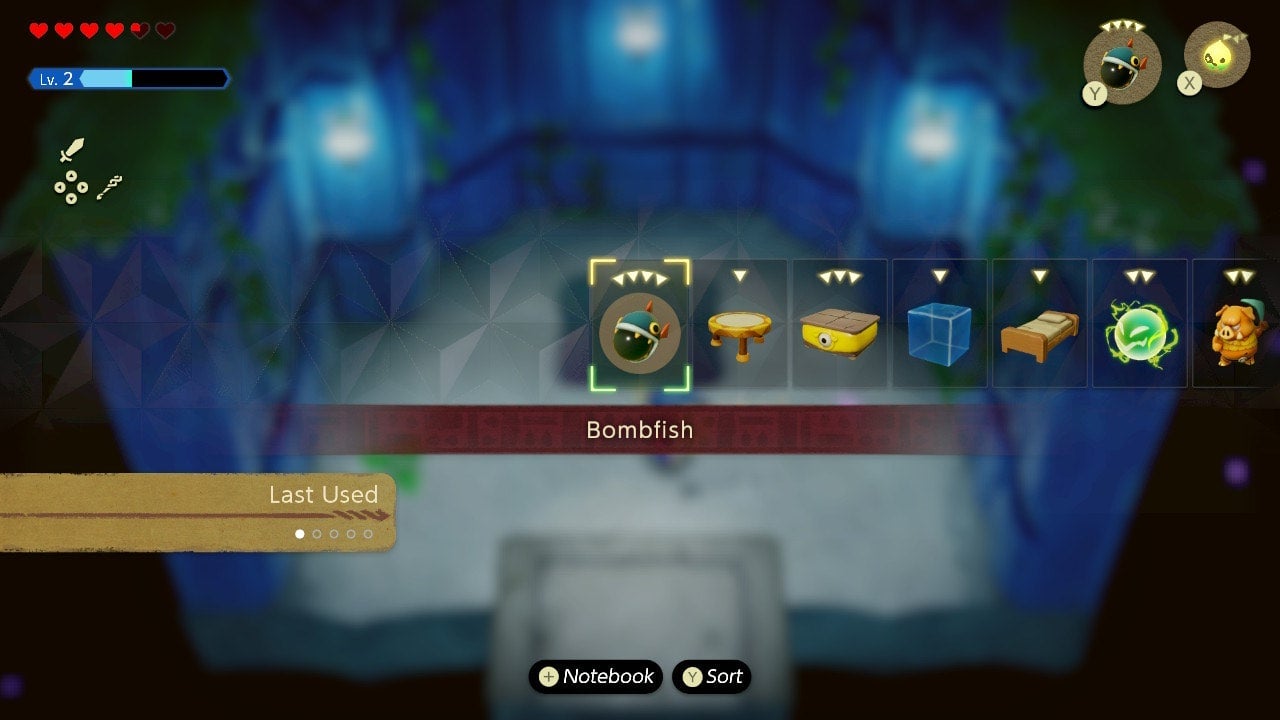
There are countless echoes, and cycling through the entire list to find the specific one you need for a particular situation is quite cumbersome. There are some helpful sorting options, such as organizing by your most recently used or the latest one acquired, but I wish the game allowed for manual organization of your echo collection.
Screenshot: Nintendo / Kotaku
Exploration also plays a significant role in Echoes of Wisdom. The map closely resembles that of A Link to the Past, serving as a kind of homage to the series’ history. The game is surprisingly lengthy, taking around 25-30 hours to complete the main story. It is packed with numerous side quests and optional dungeons. Some of these side quests are quick and straightforward, like locating and defeating a monster capable of summoning rain and showing it to a local resident, or finding missing chickens scattered throughout a town and returning them to a farm. Others, however, are quite intricate, including a multi-step one that ultimately rewards you with the powerful ability to construct robots with massive AOE attacks. They’re a huge advantage, especially in boss battles.
I felt that the rewards for completing side quests were much more worthwhile than in most role-playing games. While you might just earn more rupees to spend at shops, you’re also likely to discover a new echo along the way that could be beneficial later. In fact, some of the most valuable echoes are hidden in optional dungeons, making exploration even more rewarding. Early on, I encountered a giant plant that could launch itself into monsters, continuously dealing damage with its tendrils. It was an incredibly potent echo at that stage in the game, allowing me to easily defeat many of the early game bosses.
Switch
The Legend of Zelda: Echoes of Wisdom
Back of the box quote
“A terrific hybrid of past and future Zelda games”
Type of game
Action adventure puzzle escapade.
Liked
Cute art style, fun exploration, opportunities for player creativity.
Disliked
Slow movement speed, poor echo and inventory management.
Developer
Nintendo
Platforms
Nintendo Switch
Release Date
September 26, 2026
Played
30 hours to roll credits.
While exploration is engaging and rewarding, I do wish Zelda’s running speed was faster. She moves frustratingly slow, which can be incredibly irritating. She has a little spin move that doesn’t cause damage, but when combined with running, actually makes her move significantly faster than her normal sprint. So I was constantly mashing the right bumper button while moving to improvise a spin-dash whenever I was out in the wild.
Echoes of Wisdom successfully blends the essence of earlier Zelda games with the fresh creative direction of modern entries. By merging the classic key item progression of older Zelda games with the more contemporary, player-driven problem-solving of Tears of the Kingdom and Breath of the Wild, Echoes of Wisdom crafts something both familiar and unique within the series. Additionally, our long-suffering Hyrulian princess finally takes center stage, which is a refreshing change of pace.
Order The Legend of Zelda: Echoes of Wisdom: Best Buy | Humble Bundle