


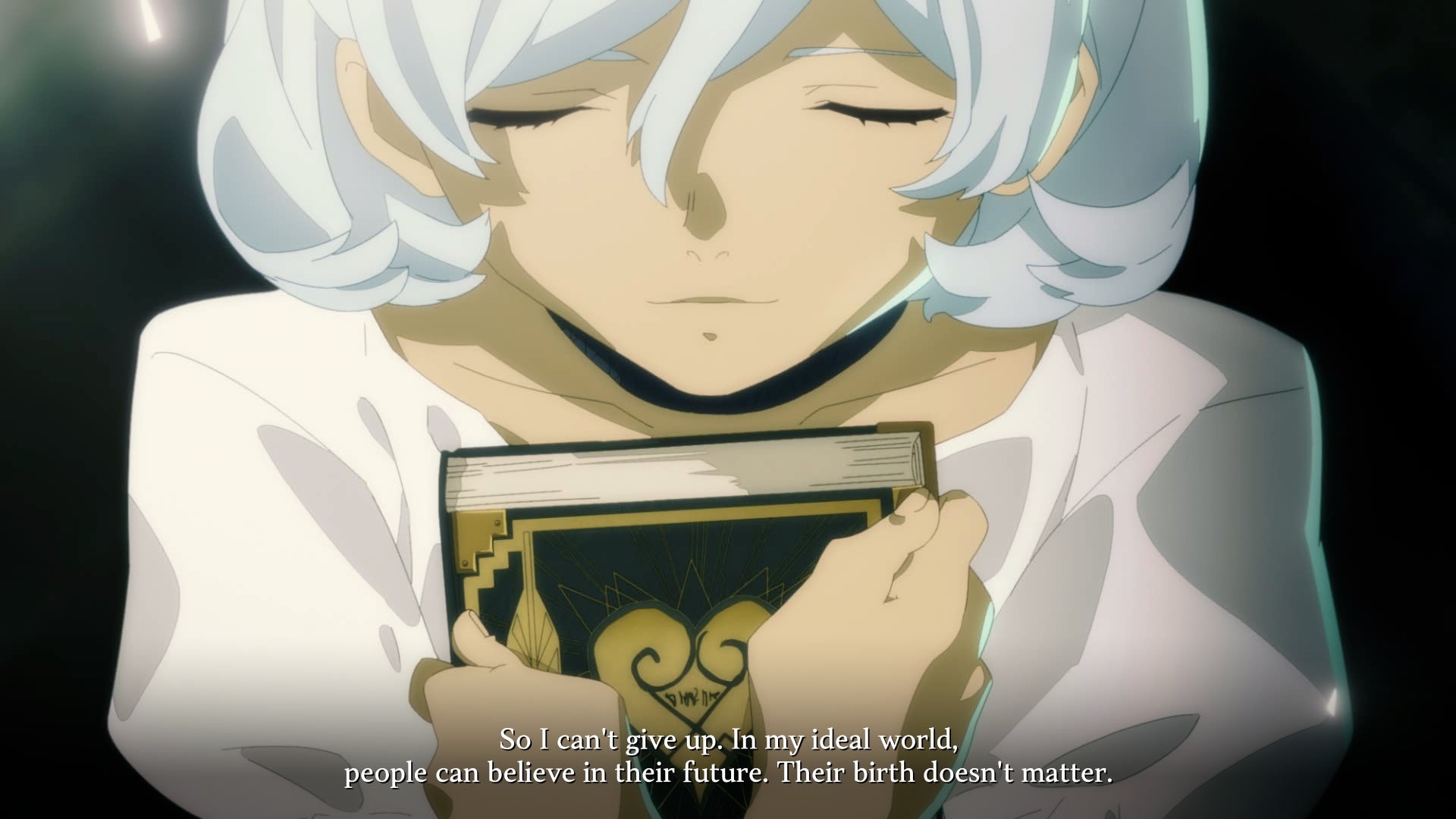
In the expansive journey of Metaphor: ReFantazio, spanning approximately 80 hours, the RPG’s protagonist is accompanied by a book as he traverses the mystical lands of the United Kingdom of Euchronia. This book presents an idealized cityscape of towering buildings where equality is enshrined in law. It’s evident that this narrative offers a pristine vision of our own world, and as our hero delves into its pages, he is invigorated with the ambition to transform his world to reflect the fantasy crafted by the author. As someone who often immerses deeply into fictional stories, Metaphor: ReFantazio captivated me almost instantly.
Emerging from the creators of the Persona series, this latest game communicates its themes with a refreshing directness, foregoing subtlety. Metaphor builds on the foundations of Atlus’ cherished life simulation RPGs, eloquently achieving its narrative goals more effectively than its predecessors. While it may not be as flawless as the utopia depicted in the novel, it’s a relief to encounter an Atlus game I can endorse without the usual reservations that accompany Persona titles, instilling hope for the company’s future endeavors, both within and beyond this newly crafted, rich universe.
Screenshot: Atlus / Kotaku
Contrary to what Atlus might suggest, Metaphor: ReFantazio offers a complex, explicitly political narrative, with the events in the United Kingdom of Euchronia serving as an allegory for real-world injustices and biases. The inhabitants of this universe are composed of eight distinct “tribes,” each representing a different humanoid race with unique cultures, traditions, and stereotypes influencing their societal roles. The protagonist, an Elda, exemplifies this dynamic, as his tribe has historically been marginalized under the existing world order.
Metaphor tackles the power dynamics of its world with an assertive approach. Upon entering the capital city of Grand Trad, I witnessed a beast-like Paripus pleading for their life as they faced execution in the town square without trial. Paripus claims of innocence go unheard, and those with the power to execute show no interest in probing deeper when an easy scapegoat is presented. To the horned Clemar and elf-like Roussainte observers, it’s merely a spectacle. For an Elda, the most despised tribe, blamed for the monstrous “human” creatures threatening their superiors’ safety, it serves as a stark reminder that one misstep could lead to a swift, merciless end.
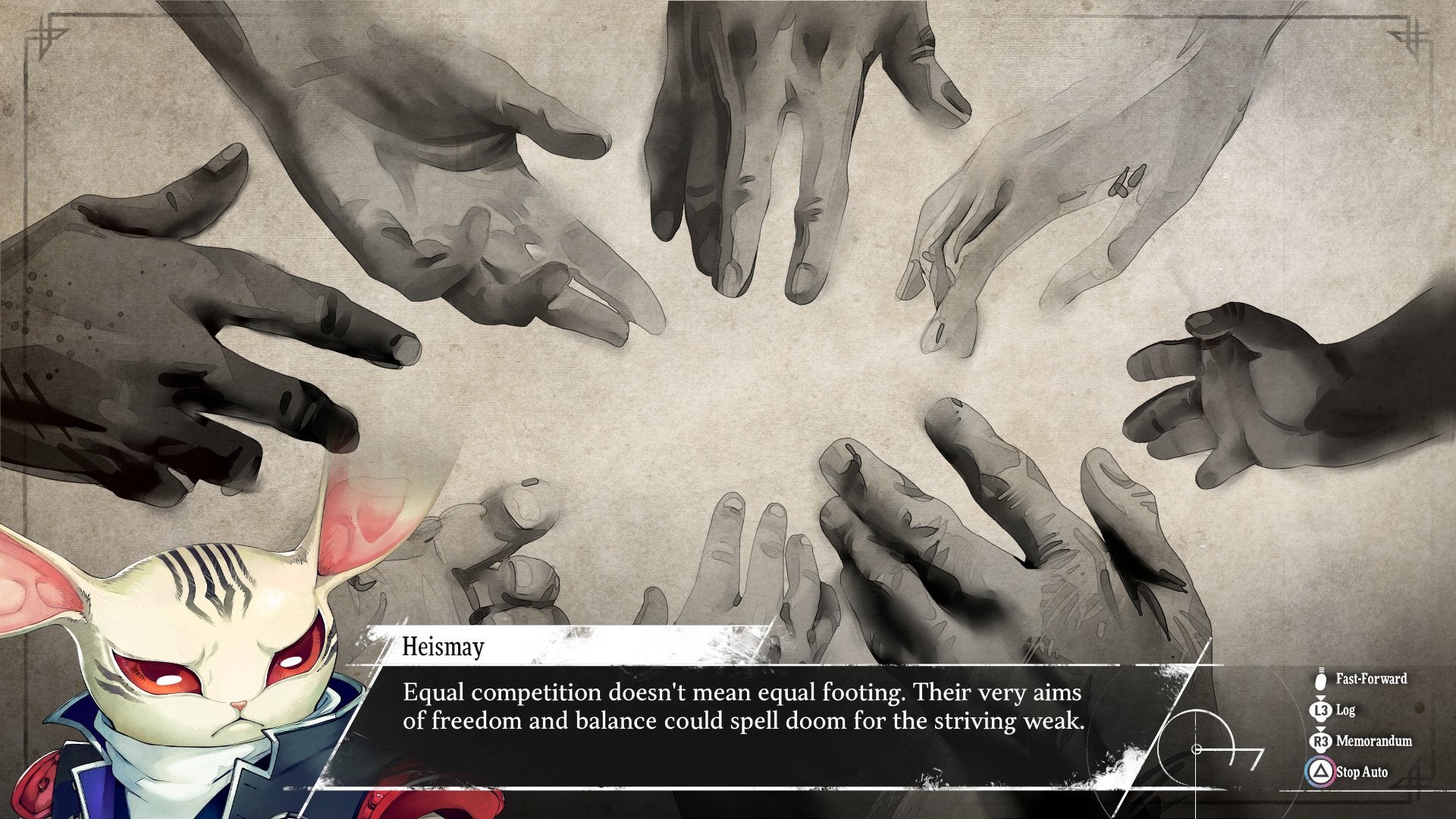
Atlus has never shied away from crafting metaphors for real-world struggles. In Metaphor, instead of employing the supernatural as in Persona, it constructs a dystopian fantasy mirroring reality. A recurring motif features the protagonist reading the novel he carries, illustrating a vision of what the world could be, starkly contrasted with its present state. Progress toward a utopian reality is no simple feat, and those living in this shared hellscape recognize that achieving ideals of a world without prejudice and injustice, where humanity is “one tribe” devoid of discrimination and oppression, might require erasing foundational cultural history. Metaphor acknowledges this conundrum, with characters occasionally highlighting this dilemma. When I presented the book to Eugief Heismay, he noted that the novel’s utopian vision seemed destined to fail, riddled with blind spots. But can we still aspire to it? That’s the goal.
Screenshot: Atlus / Kotaku
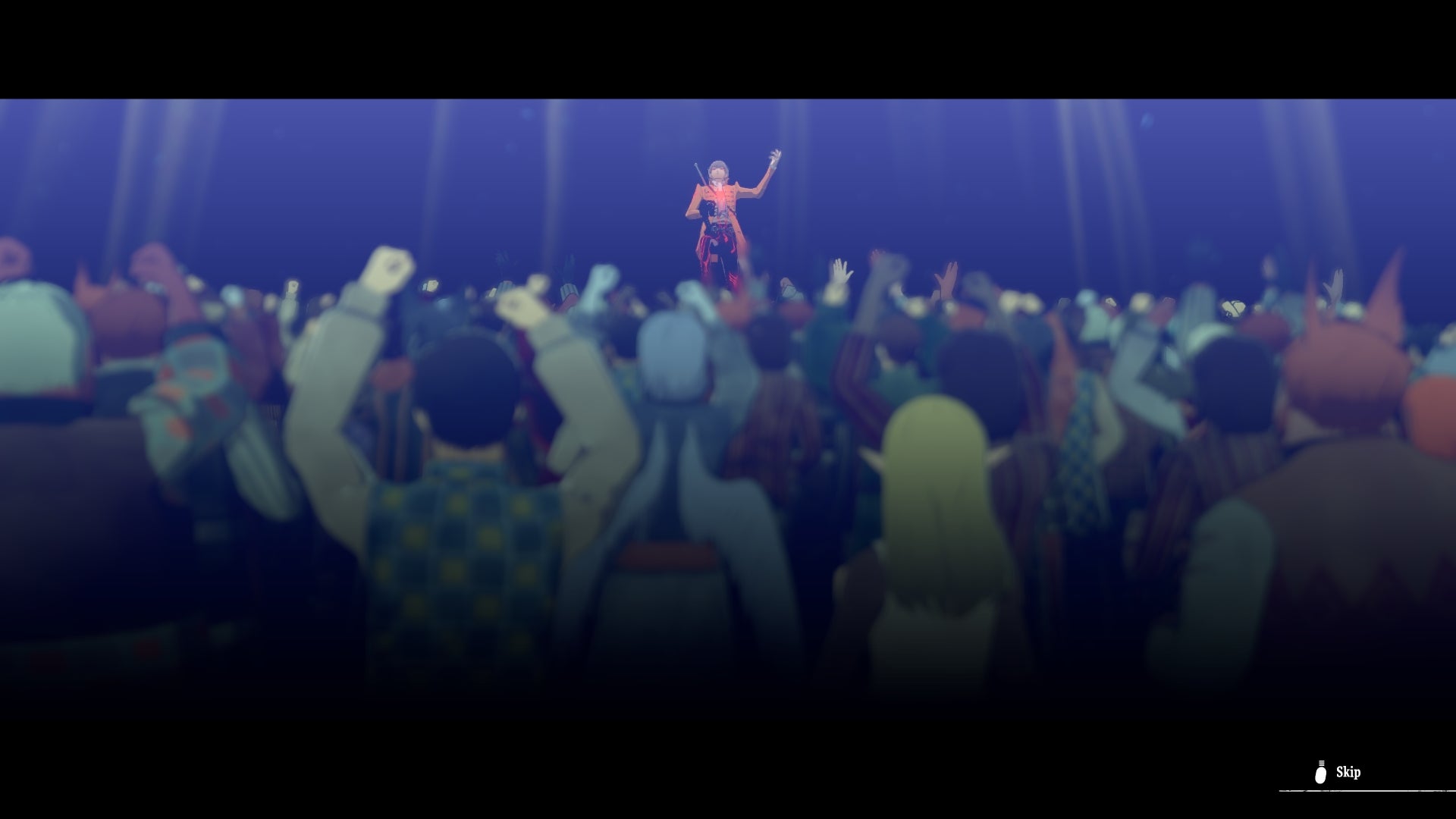
Metaphor is both a narrative about individuals striving to improve their world and an ideological statement on the significance of such efforts, offering more actionable ways to embody this ethos than the similarly themed Persona 5 did eight years prior. While it includes fantastical elements, the tale of people uniting with those willing to stand for what is right feels remarkably grounded. Central to Metaphor is an election, not decided by ballots, but by a magical force discerning the heart of every Euchronia citizen. The game opens with a bedridden king assassinated by antagonist Louis Guiabern, a prominent Euchronian military figure seeking to ascend the throne, dissatisfied with the royal family's rule. However, his plan is thwarted by a spell left by the king, enveloping the country and ensuring leadership is chosen by the people, preventing forceful ascension to the throne.
This is where Metaphor’s twist on Persona’s social mechanics comes into play. Building relationships across the country secures my place in the election, thwarting Louis' underhanded tactics to secure victory. As a political drama, Metaphor understands that the path to political prominence starts at the grassroots level and that those in power often overlook those at the bottom. By the time contenders for Euchronia's crown reach the election's highest ranks, they've already forgotten the average citizens who elevated them.
Screenshot: Atlus / Kotaku
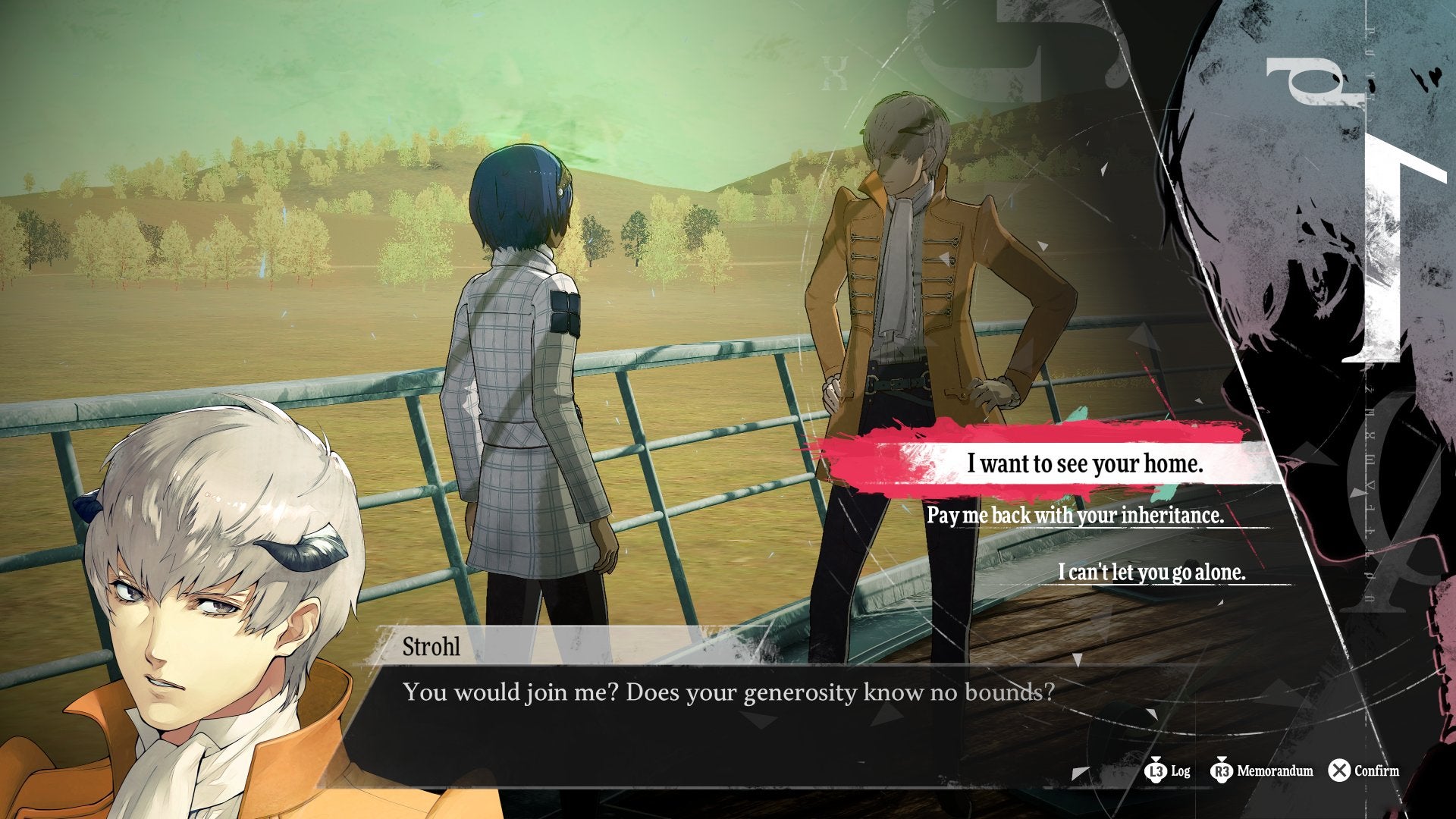
These political truths resonate more profoundly because Metaphor’s follower relationships are among the best-written stories in Atlus’ catalog. In a way, the game feels like Persona with a more concise editor. The social link-style relationship building compresses conversations into a brisk eight encounters rather than the ten of Persona games. Each follower I connected with throughout Metaphor enriched the world and offered new perspectives I wouldn't have considered without them. Additionally, there are only 14 followers, compared to the two dozen in Persona 5 Royal. This ensures none feel like filler, and even the least compelling characters contribute to Metaphor’s themes. Maria, the child of a soldier killed in action, provides a child's perspective on this harsh world. Bardon, a local leader in Martira, illustrates the challenges of working locally with familiar people rather than pursuing lofty goals of claiming the crown.
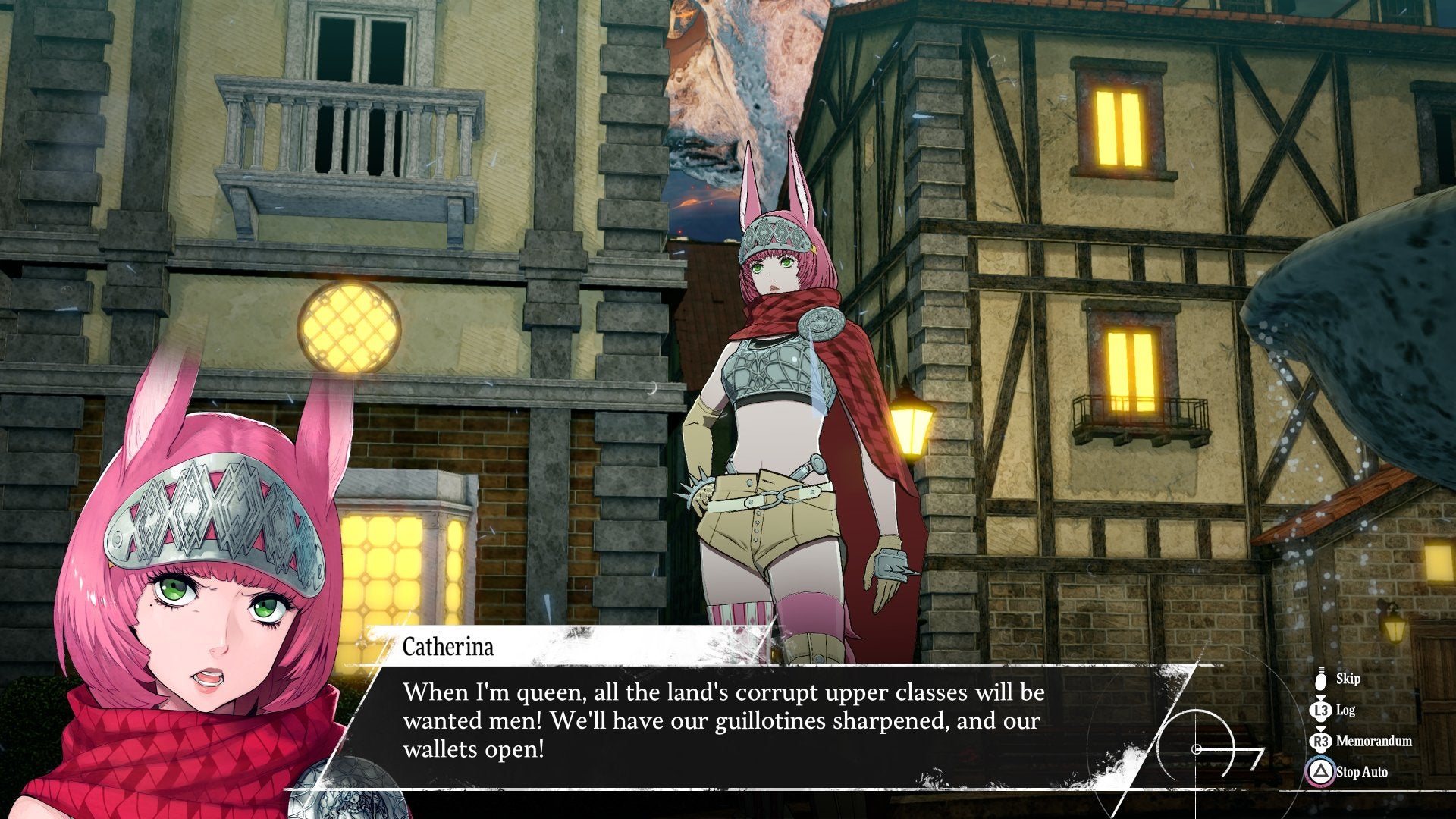
The one character that stood out negatively is Catherina, the Paripus bounty hunter also vying for the throne. While entertaining, her arc diverges awkwardly from Metaphor’s established views on power dynamics and societal oppression, leading to a disconnect with the game’s themes. Despite aiding my election campaign, this storyline soured my perception of the relationship.
Screenshot: Atlus / Kotaku
Navigating the social simulation elements also involves managing daily activities. I had opportunities to undertake bounties during my free time, leading to indistinct dungeons with challenging bosses. However, I often spent that time engaging with Euchronia’s citizens. Metaphor employs a social stats mechanic, similar to Persona, that locks dialogue options and relationship progression behind attributes like “wisdom,” “tolerance,” or “eloquence,” which can be improved by interacting with townsfolk and reading books.
Metaphor consistently seizes opportunities to educate players about its world through those most affected by it. Conversations with a mask-wearing Mustari, for instance, filled knowledge gaps and allowed me to enact change for them in-game. Even during seemingly mundane activities, Metaphor refines Persona’s systems to build its world, ensuring that even on days when I felt unproductive, I gained significant insights from interacting with a street acquaintance.
Screenshot: Atlus / Kotaku
Winning the hearts and minds of the populace is only half the battle. Although strengthening my relationships helps develop my team into their best selves, my path to the throne is paved with monster battles. Metaphor: ReFantazio may not be explicitly a Shin Megami Tensei game, yet it shares the same challenging DNA. Initially, I wasn’t sold on its turn-based battle system, which seemed simplistic, relying on exploiting weaknesses for significant damage, lacking the energizing complexities of Persona’s combat. However, as I unlocked new abilities and faced tougher foes, its complexities emerged, engaging me more than its predecessors.
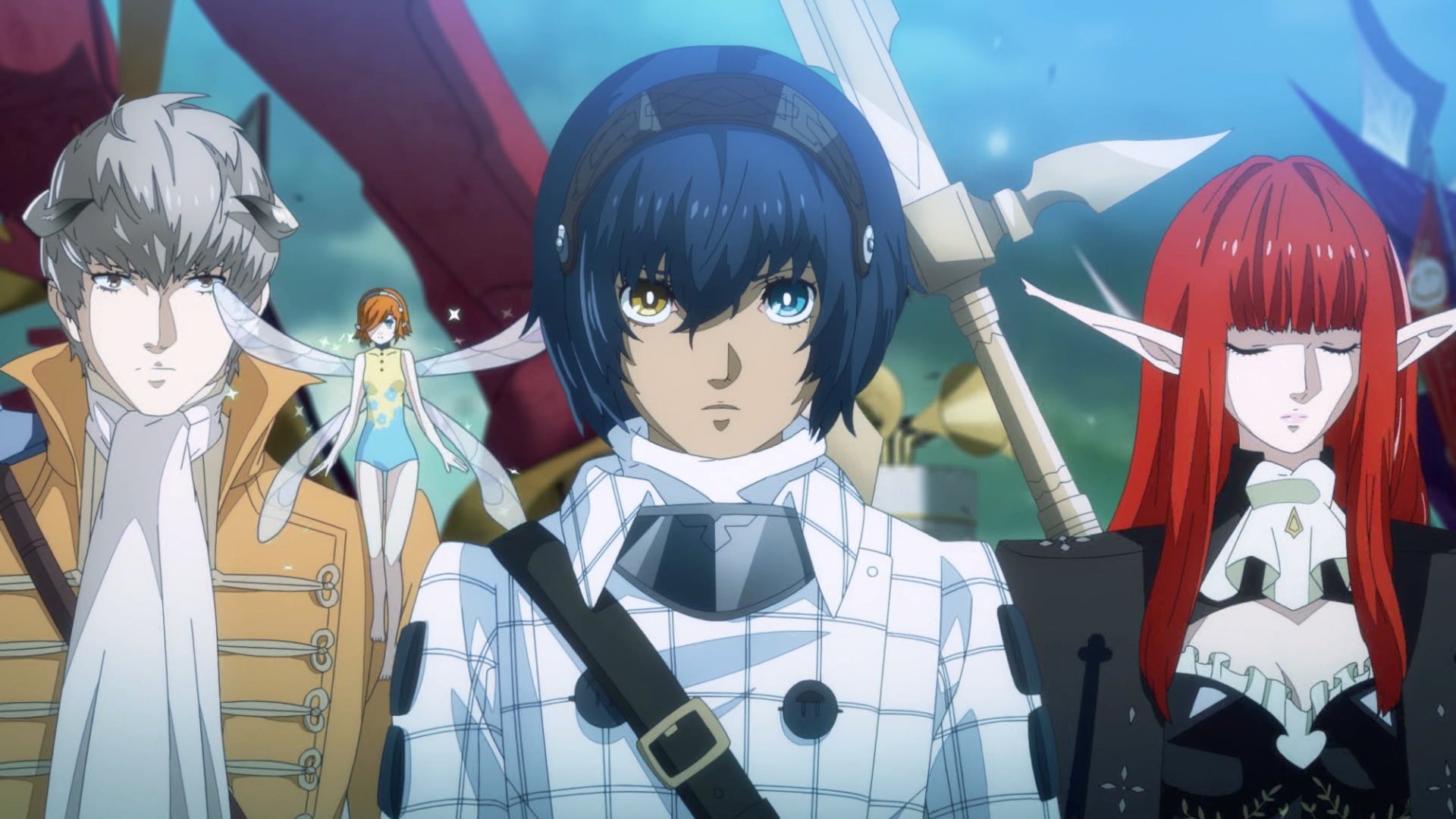
While Metaphor effectively utilizes some of Persona’s core elements, it also feels formulaic at times. The Persona summoning mechanic is replaced by Archetypes, essentially classes you can switch between during your journey. The cast experiences “awakenings,” mirroring Persona 5 awakenings, complete with emotional surges, voices declaring newfound strength, and gruesome heart-ripping scenes. These moments are striking, but the studio’s formula is evident. However, Archetypes don’t function like Personas in combat, despite their similar origins. Any character can assume any role in Metaphor, even if some characters’ stats suit specific roles. The Roussainte guardian Hulkenberg is suited for tank roles, while the Mustari priestess Eupha excels in magic-based Archetypes. Throughout Metaphor, I generally kept characters in roles aligned with their design, though there’s freedom to experiment and develop characters into any role with effort.
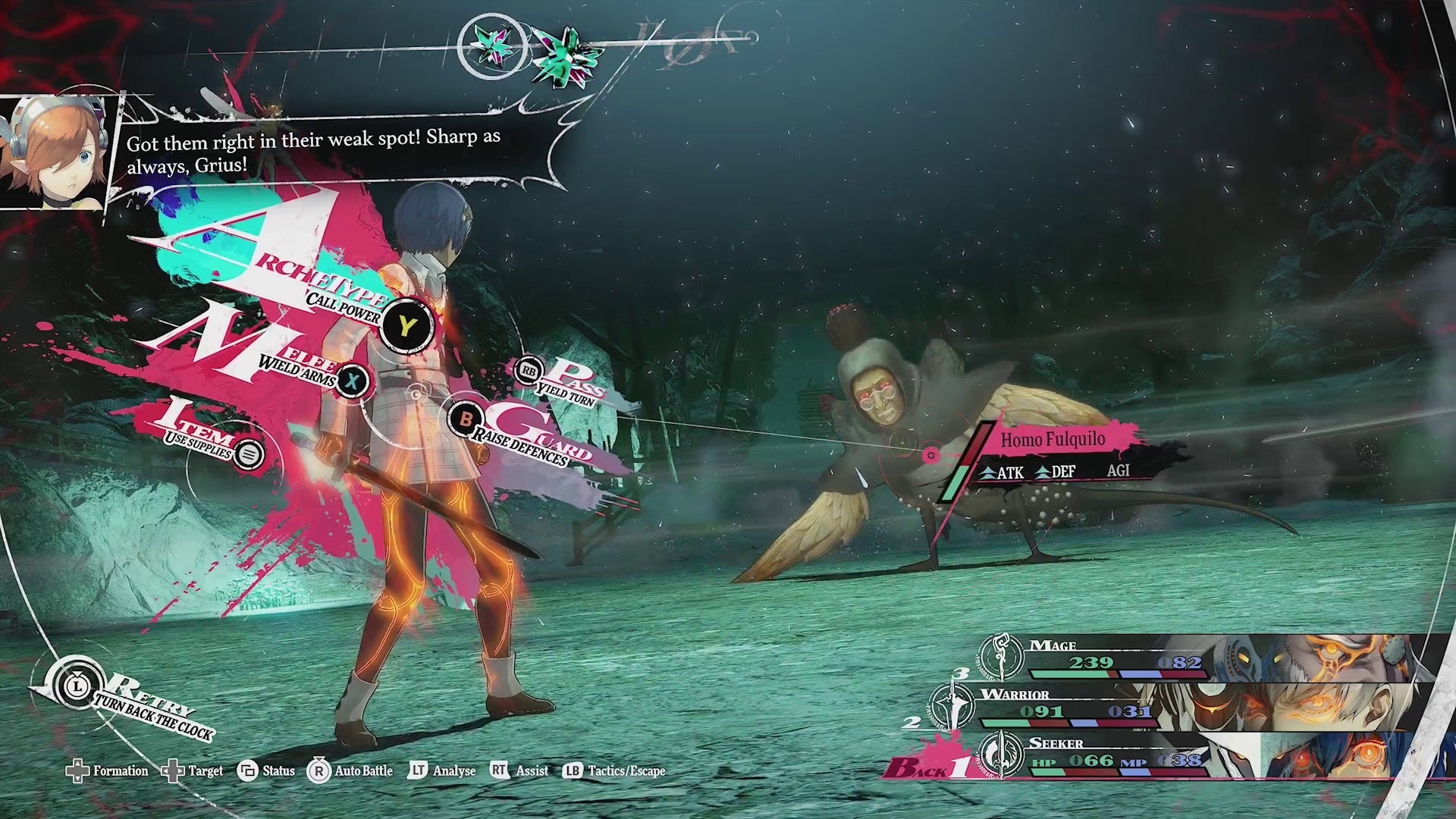
Image: Atlus
The vast utility between Archetypes allows for greater player expression than the games it builds upon. Support roles like the Commander utilize the frontline and backline mechanic, enabling tactical decisions to sacrifice defense or melee damage based on distance from an enemy. Some Archetypes, like the Summoner and the Masked Dancer, offer unique mechanics, the former summoning creatures into battle and the latter using spell-casting masks. However, traditional RPG roles like Warrior and Healer prevent overwhelming complexity. Metaphor introduces new elements gradually, ensuring players develop a strong understanding of systems before accessing most Archetypes, enabling team synergy. Although I wish for mid-battle Archetype pivots like Final Fantasy X-2, Metaphor encourages experimentation.

Screenshot: Atlus / Kotaku
At first glance, Metaphor’s turn-based battles may seem straightforward. You exploit an enemy’s weakness, but unlike in Persona, the character exploiting the vulnerability doesn’t get an extra turn. Instead, it increases your team’s round of turns before passing to the enemy. Turn management is the core mechanic, with every action involving risk and reward, and you can lose actions for missing attacks or have your round cut short if an attack is repelled. The same applies to your foes. Some of my favorite Archetypes and abilities focused on not only dealing damage but reducing enemy actions. By the game’s final stages, I equipped Heismay with a passive ability ending opponents’ turns if they missed an attack. With heightened evasion, I defeated powerful bosses by denying them a chance to retaliate. Metaphor’s Archetype system is full of strategic opportunities like this, rewarding players who explore them.
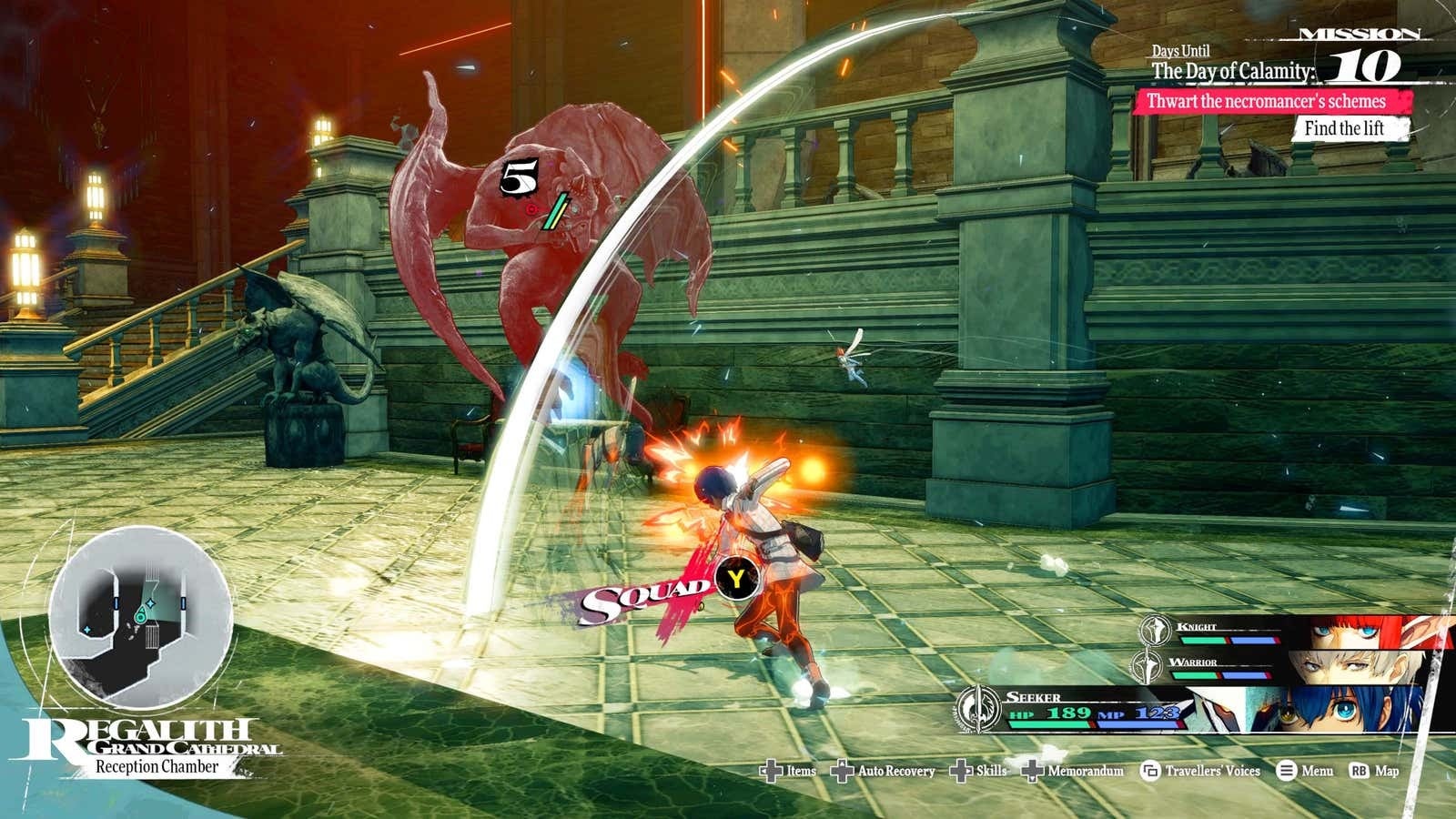
Image: Atlus
One of the best enhancements to these systems is how Metaphor allows you to bypass turn-based battles for significant portions of the game. Atlus introduces an action system letting you defeat weak foes in the overworld, still gaining experience and rewards. Depending on your protagonist’s equipped Archetype, this can be more challenging, as weapon choice determines proximity to enemies. If strong enough to defeat an enemy on the field, you save time by avoiding loading into a turn-based fight. With multiple party members and Archetypes, Metaphor could have been a monotonous grind, but this change makes it breezy, and I can’t imagine Atlus removing it. Spending nearly 80 hours in this game, I can only speculate on the additional grind hours needed to reach the end without this feature.
I’ve often compared Metaphor to other Atlus games, and I think it’s justified both because it builds on Persona’s systems and because it’s the first new franchise from this team in some time. Systemically, it offers much to consider, and its turn-based combat is a compelling evolution of Shin Megami Tensei and Persona. However, it stands out by subverting typical pitfalls of the team’s past works. Early on, Neuras, an older gentleman and the group’s ship pilot, is shown excitedly in the background as a famous young woman greets the party. I braced for the typical skeevy old man trope, only for him to bypass her and geek out about her ship instead. While Persona 4 and 5 focused on self-acceptance and fighting for change, they still found time to belittle queer individuals and mistreat women. Metaphor feels like a more mature story, not due to its Game of Thrones-style dark fantasy, but because it avoids unnecessary denigration, consistent with its themes of fighting against injustice.
Screenshot: Atlus / Kotaku
These themes are woven into every scene and relationship, surfacing most poignantly whenever the protagonist opens his fantasy novel. As he reads alongside his new companions, they vocalize the author’s ideals. To those yearning for a better world, nothing Metaphor presents is necessarily groundbreaking. It’s not new for a story to depict individuals embedded in oppressive systems beginning to change when presented with an alternative path. Similarly, it’s familiar for those most affected by oppression to point out the naivety in well-meaning visions of a better world. To those engaged in the struggle, Metaphor may resemble the Barbie monologue of progressive ideals. However, it’s reassuring to see these values upheld when they are needed most.
Metaphor feels like a game of its time. Atlus may not wish to draw direct parallels between its story of a nation amidst a high-stakes election and the current American political landscape, but its portrayal of citizens’ anxiety about the world, their belief that responsibility ends with voting, and their retreat into fiction while holding public figures to high standards feels fitting. Today, moments in Metaphor that emphasize our need for more than blind faith in those we empower serve as a necessary wake-up call for some in reality.