


I'll admit, I had become jaded. Dragon Age has a well-known tendency to introduce new protagonists with each installment, often treating previous game's significant conflicts as mere stepping stones for the next narrative. Yet, with 2014’s Inquisition, it felt more crucial than ever for BioWare to break this pattern, especially given the game concluded with a dramatic cliffhanger. Our hero, the Inquisitor, was locked in a battle of ideologies with Solas, the elven mage party member who, at the end of the game, is revealed to be an elven god. Surely, I thought, replacing the protagonist now and sidelining the hero who had engrossed us in this conflict would be a disservice to a story I’d eagerly anticipated for a decade. I'm pleased to say I was mistaken. After completing Dragon Age: The Veilguard, I felt a sense of hope for Dragon Age that had been missing for a long time.
Don’t be misled. The Veilguard is rife with contrivances as it justifies leaving the hero who initiated this war behind. Although they do appear in the story, as BioWare has publicly confirmed, this marks the second time the series has essentially transferred one hero’s struggle to a new protagonist. As these narratives have grown more personal, introducing a new hero in each game has become increasingly difficult to accept. The Veilguard’s relative disinterest in maintaining previous cross-game continuity is apparent from the moment you open the character creator and notice that only three choices from past games are integrated into its storyline. However, this disinterest does not compromise players’ world state integrity, as BioWare goes to great lengths to avoid mentioning any character or plotline that isn’t directly related to the events unfolding in new protagonist Rook’s perspective.
Screenshot: BioWare / Kotaku
Despite the lack of substantial choice carry-over, Dragon Age: The Veilguard feels like the culmination of everything the series has hinted at in previous games. It offers a grand tour of locations we’ve only heard of since Dragon Age: Origins and explores lore concepts that have lingered in the background for years. It manages this while resolving a decade-long cliffhanger in a manner that met my expectations. Instead of constant, direct references to actions taken by players in games over a decade old, The Veilguard feels like a reorientation for both the franchise and BioWare as a studio. It may not be the story I originally desired, but it feels well-suited to provide the series with a fresh start.
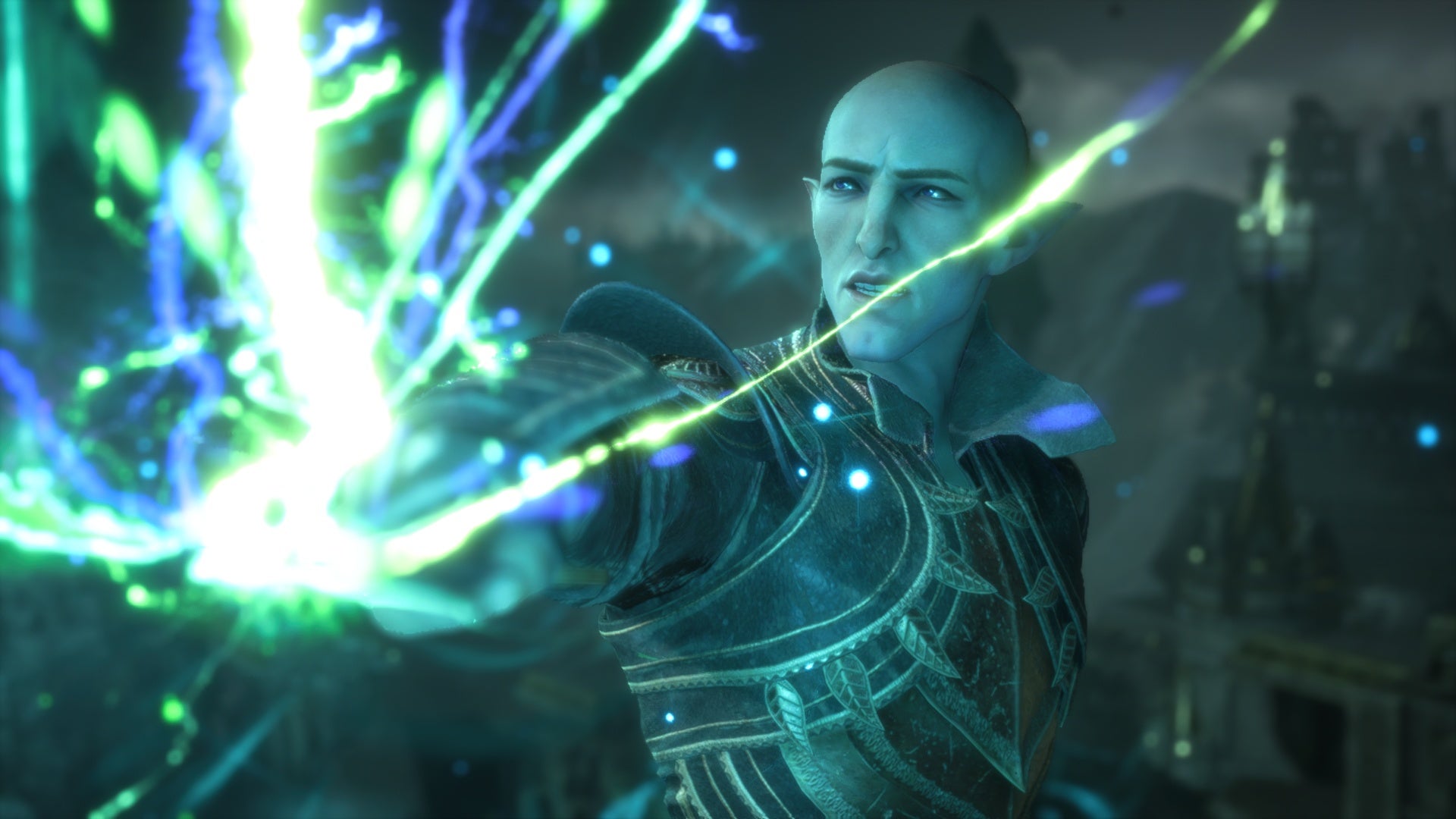
The Veilguard begins several years after Inquisition’s Trespasser DLC, in which Solas, having deserted his team at the end of the main game, reveals his plan to tear down the Veil, a barrier between the real world and the demon-infested Fade. His aim is to re-expose the elven people to its magic, allowing them to reclaim their long-lost immortality. Rook, a new hero recruited by fan-favorite storyteller Varric Tethras, uses their local knowledge to guide our old friend to a ritual site in the northern territories of Thedas, where Solas is attempting to finally fulfill his threat. At least, that’s how the situation initially appears. According to Solas (also known as the Dread Wolf and the elven god of lies), he wasn’t trying to destroy the Veil…yet. He was attempting to move two of the “Evanuris,” elven gods imprisoned behind the construct, as part of his plans. However, Rook and Varric’s interference with his ritual has unleashed these two tyrannical menaces onto the world and trapped Solas within the Fade, where he is left with only a weak connection to communicate with Rook. The god tasks them with stopping the Evanuris from subjugating the rest of the world under their ancient delusions of grandeur.
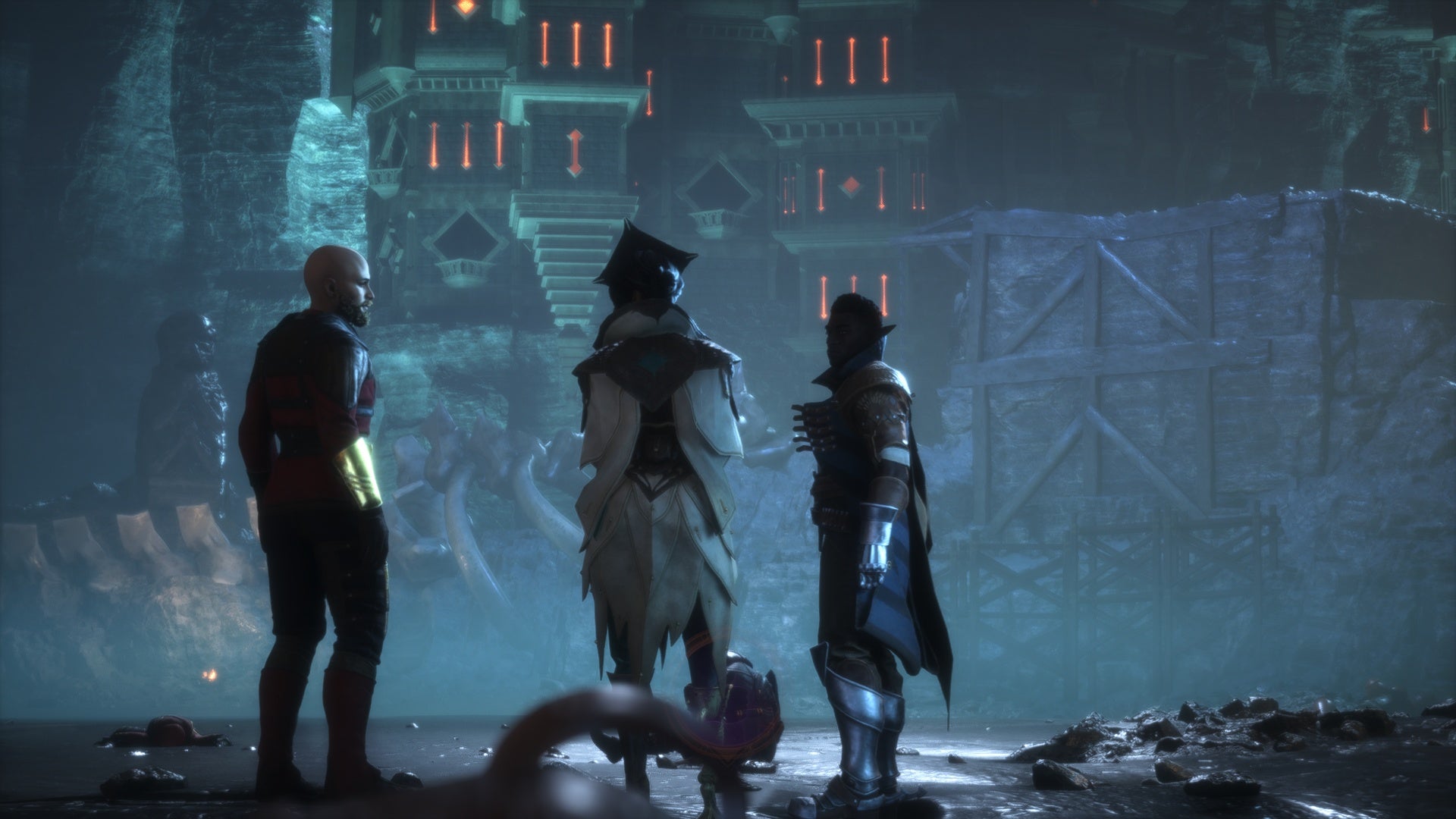
I have my reservations with Rook as a character forcibly inserted into a conflict that isn’t theirs, but to its credit, The Veilguard acknowledges that disconnect. Though it took several hours for me to be satisfied with its explanations, I don’t think the game would have resonated with me if it hadn’t at least been aware of what it would mean to switch heroes this time. Early on, it felt as though everyone, Varric especially, insisted that Rook was the right person for the task, citing the character’s mercenary history—determined by you—as evidence that they’re a significant player on the metaphorical chess board. While no one ever calls him by his real name, my Rook is a Tevinter mage named Emil Mercar. He is part of the Shadow Dragon revolutionary group fighting to abolish slavery in the country, so he naturally has connections in Tevinter that would make him a competent mercenary for hire. But are those the qualities of a leader? What role does he have in a fight against actual gods when heroes who have previously faced such odds are likely better suited for the task?
Screenshot: BioWare / Kotaku
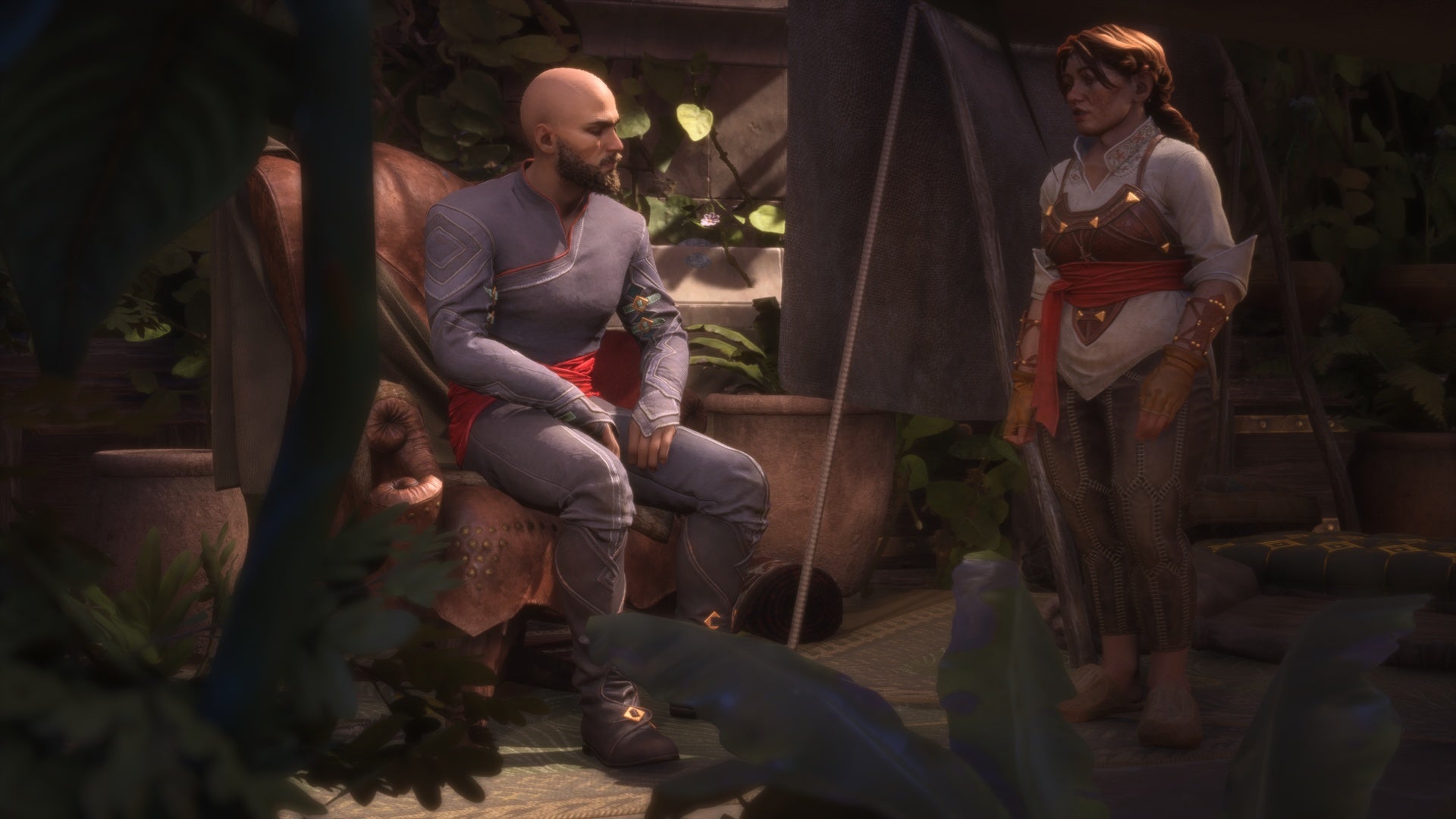
The answer, for my Rook, was that a leader never loses sight of those who follow and depend on them. When I chose the Shadow Dragons as my faction, my Rook’s history and ideals began to form in my mind, and The Veilguard consistently communicated that Thedas needed someone like him fighting for change. Returning to Dragon Age years later and transitioning from the self-serving character I’d played in Inquisition and the chaotic individual I was in Dragon Age II to this more noble hero was refreshing. It was an affirmation of how I’ve changed, but also of how Dragon Age has evolved for the better. Most BioWare games place you at the center of the universe, allowing you to manipulate figureheads and bend entire cultures to your whims. The Veilguard feels less malleable than previous games, but its choices feel more personal, as if the game truly believes in something and wants you to react to it, rather than reshaping itself into whatever you desire, like a toy designed merely to make you feel powerful and satisfied.
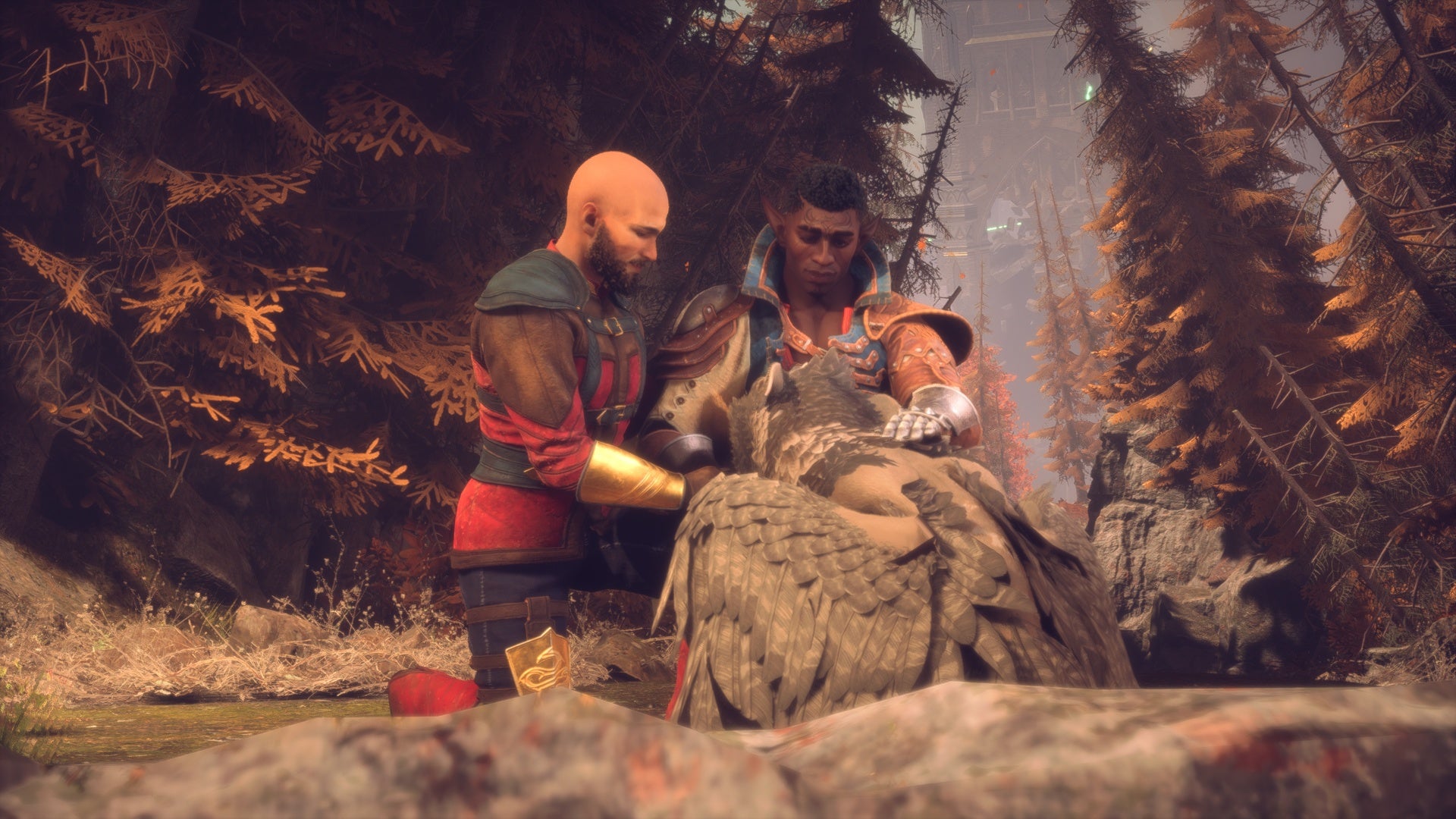
Some may be disappointed by the shift from more earth-shattering choices to more personal ones. However, having seen the series transform nuanced disputes into binary choices paved in violence, it’s gratifying to have a game that doesn’t reduce entire cultures into factions that are subsequently swallowed up in other conflicts. I was much happier to encourage Neve, the mage detective and my ally in the Shadow Dragons, to become a hopeful figure for the people of Tevinter, and to help my Grey Warden lover Davrin embrace his newfound role as a caretaker for a flock of once-extinct griffins, than I was resolving the world’s geopolitical conflicts with a mere wave of a hand. It was these connections with my party members that captivated me, as The Veilguard’s main plot often left me feeling indifferent for large portions of my roughly 60-hour first playthrough, with the elven gods driving it feeling like abstract enigmas of evil and Solas taking a backseat until pivotal climactic events. It was easier to focus on who I was collaborating with than the “why.” The Veilguard is largely a series of more intimate vignettes, with some major lore revelations nestled in the spaces between if you seek them out. At least until its final hours, when the plot accelerates and the finale starts delivering on all the prior buildup.
Screenshot: BioWare / Kotaku
That’s not to say that The Veilguard lacks world-altering stories and choices. Its companion stories alone delve into some mysteries that have lingered in the franchise’s background for years. Scout Harding, a supporting character in Inquisition who continues the Dragon Age tradition of such a character being promoted to party member, explores significant dwarven lore that I was thrilled to uncover, given they are often the most underserved race in the series. Bellara, the elven Veil Jumper fascinated by her people’s history, can set a course for their future. Emmrich, a necromancer, explores death as a cultural concept within the Dragon Age world above all else, rather than just offering another meditation on grief that could occur in any universe.
Most of The Veilguard’s biggest decisions arise from the relationships Rook establishes with those around them, and they have a broader impact than the game initially makes clear. When BioWare announced it was changing the game’s subtitle from Dreadwolf to The Veilguard to decenter Solas and reflect the game’s focus on the new cast, I was skeptical due to my investment in that story from a decade ago. But The Veilguard truly does feel like a character-focused story akin to the one BioWare presented in Mass Effect 2. The party parallels between the two series feel calculated and manifest in some truly stunning moments for its heroes. Though some previous Dragon Age party members still hold top spots in my heart, The Veilguard’s collection of companions is perhaps the most consistently engaging one BioWare has given us yet in this franchise. As I interacted with this crew, I had difficulty envisioning any of them fading into relative obscurity as some characters from Origins and Inquisition have over the years. Even the characters who I didn’t initially gravitate toward, like Bellara and the possessed assassin Lucanis Dellamorte, left a lasting impression on me by the end.
This is the first time a Dragon Age party has felt like a found family to me. I found fewer points of tension within the group, and even when I’d done something that could have been a dealbreaker for one of my teammates, it felt easier to smooth over than before. There are some standout haters and rivalries, but less of the whole “actively wishing death upon each other” dynamic than before. I was consistently surprised by the forms that relationships would take in The Veilguard, and how supportive the group was of one another as they dealt with their own issues. Romance blooms between members of the group, and I was delighted to offer advice and cheer them on as they supported my relationship with Davrin in return.
Screenshot: BioWare / Kotaku
Embedded in all these relationships is a deliberate effort to create something that feels culturally and identity-wise diverse within the Dragon Age universe. You can pursue romance with any party member regardless of your Rook’s gender or race, and those I didn’t pursue found love elsewhere, both with each other and with characters we encountered on our adventures. The Veilguard’s expansive character creator also allows you to choose a non-binary identity and pronouns and give your character top surgery scars, and in the game itself, you can explicitly declare that your Rook is trans and discuss that with other characters. Much of this is embedded in Dragon Age’s own lore and the cultures of its world, and these choices, if you take them, are treated as more than mere footnotes on a character sheet. BioWare has often been seen as a pioneer for more inclusive game design and storytelling in big-budget games, and The Veilguard feels like the most thorough the studio has ever been in letting you be who you want to be and explore that identity within the boundaries of its world.
Regarding characters, I must address the Inquisitor’s role in all this, so if you don’t want to know anything about that, skip the next four paragraphs. Like Inquisition before it, The Veilguard hands you a character creator and lets you remake your old hero so they can appear throughout the game. Dragon Age II’s Hawke was given the same treatment in Inquisition, accompanying you through a whole major story questline before promptly departing in the opposite direction, never to be heard from again (or getting trapped in the Fade depending on your decisions, but I digress).
The Inquisitor, meanwhile, is mostly a non-presence throughout The Veilguard. They appear a few times with a half-hearted explanation for why they’re okay leaving their archnemesis (or friend, or lover) to Rook, then they, too, throw up a peace sign and disappear for several hours before stopping by to encourage you to keep up the good work. Even as I spent my time getting to know Rook’s crew and growing to care for him as I had every other Dragon Age protagonist, the reminders that dealing with Solas shouldn’t have been his story struck a chord. I could live without references to the wars I’d settled and the people I met in the south. What bothered me most was every time someone reminded me that Solas was in my head and that the looming threat of his plan haunted my every nightmare, I thought not of the title “Inquisitor,” but of August Trevelyan, my own specific Inquisitor, the mage I left behind 10 years ago because this is Dragon Age. This is how things have always been, thus how they must always be.
Screenshot: BioWare / Kotaku
The Veilguard’s relative separation from the past feels more calculated than those divisions have felt in previous Dragon Age games. Even without many choices carrying over, its overarching story still feels like a solid continuation of what’s come before, despite it having to bend itself nearly to its breaking point to place Rook at the center. The old choices it does choose to import are more personal, as they’re used to color in the lines of a flattened Inquisitor. But there are no shades of my resentful atheist thrust into a holy war. Even his decision to disband the titular group, a choice that I made out of exhaustion and defiance, is merely a footnote in the short stories he tells my Rook. Yet he still cherishes his lover fighting for Tevinter’s freedom and, despite everything, views Solas as a friend worth saving. It’s as if I can see all those intricacies behind his eyes as he speaks, but I have to accept that I’m no longer steering them.
By the time The Veilguard was properly unveiled, I had reconciled with the fact that I wouldn’t be playing as the hero who should have led the charge against Solas. I had spent the decade between games knowing the shift was coming. Perhaps the Inquisitor’s minimal presence gave me the space to grow attached to Rook and define how he would differ from my last Dragon Age character. But every time I met up with the Inquisitor, I was reminded that the character who, ten years ago, I imagined would be facing Solas was just a puppet dragged out of a closet, a half-hearted fulfillment of an obligation BioWare seems unwilling to completely satisfy. I miss you, August. But I hope I don’t see you again in the next Dragon Age. I don’t think my heart could take it.