

During the dozen or so hours my friend and I spent on Split Fiction, the newest co-op game from It Takes Two developer Hazelight, we were continually amazed by its endless stream of creative ideas. This latest release, which seamlessly blends elements of fantasy and science fiction, feels as fresh and innovative as It Takes Two and A Way Out were when they first launched. It's quite impressive, considering Hazelight has been crafting these co-op adventures for nearly a decade now.
Split Fiction centers on two budding writers: Mio, who pens moody science fiction, and Zoe, a fan of bubbly fantasy tales. Though polar opposites, they are forced to tolerate each other's company for a day as they meet at Rader Publishing, each hoping to secure a book deal. The twist comes when the company requests they enter a virtual simulation of their own stories. Mio becomes suspicious and tries to escape, but accidentally gets pulled into Zoe’s simulation, sending the entire system into chaos. Now, with their narratives entwined, Mio and Zoe must navigate glitches scattered throughout and survive the perilous fictional worlds they've created.
Order Split Fiction: Amazon | Best Buy | CDKeys
Screenshot: Hazelight Studios / Kotaku
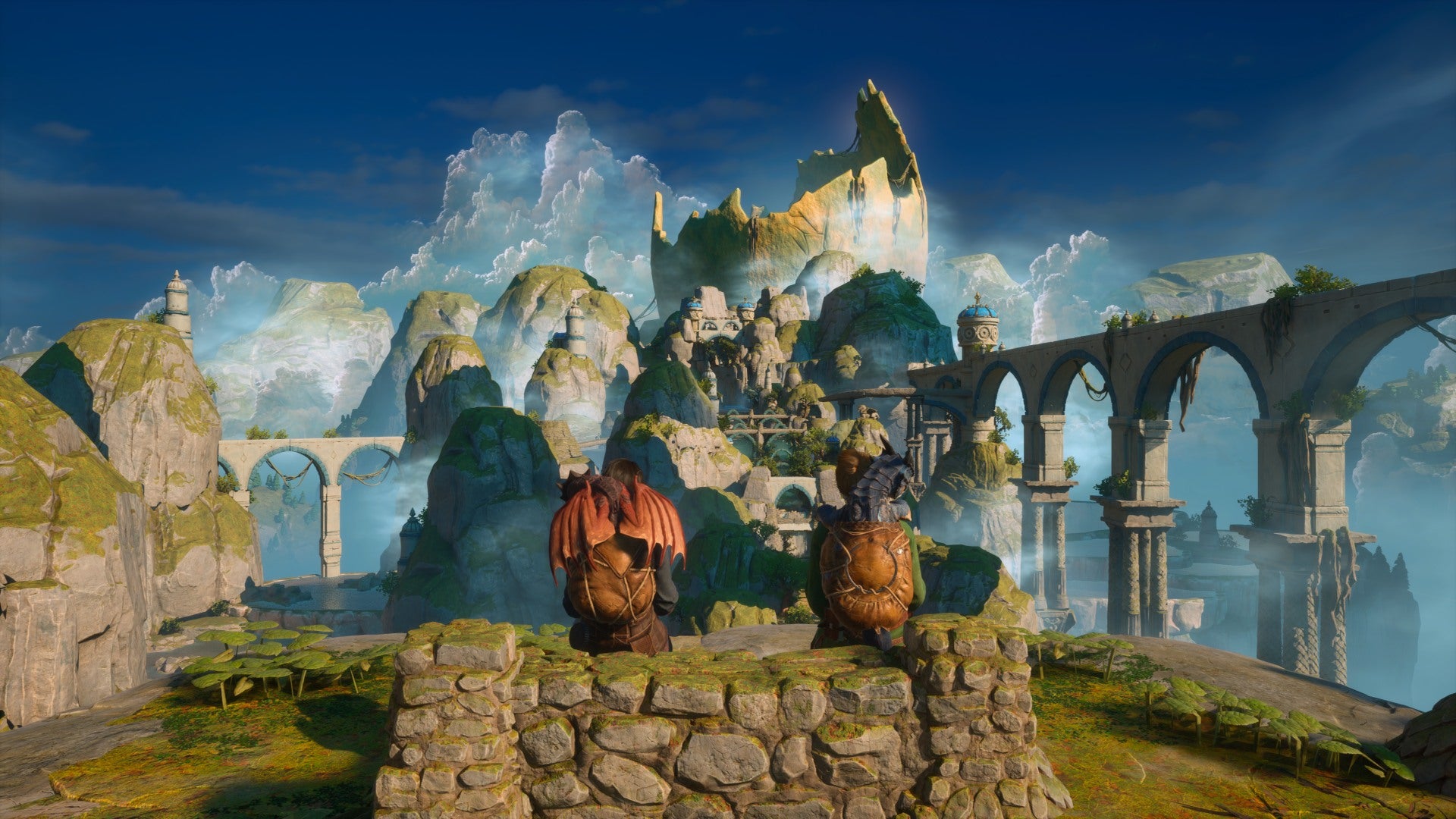
At first glance, Split Fiction’s seamless transition between science fiction realms and expansive fantasy landscapes feels fresh, though not entirely groundbreaking. Many of the stories Mio and Zoe traverse are somewhat generic, drawing obvious inspiration from sources like Mega Man and popular dragon fantasy books. Split Fiction isn't trying to be the next great American novel in video game form; it's more about using familiar aesthetics and archetypes as a backdrop for its gameplay mechanics. The aspect that resonates strongly is its relevance in the age of corporate-driven AI creations.
Mio, Zoe, and other writers arrive at Rader’s office eager for a publishing deal but instead find themselves trapped in a simulation designed to extract their ideas for corporate gain. Currently, AI algorithms are trained to plagiarize from creatives, presenting their output as original work, while those who profit from it justify this theft by claiming it levels the creative playing field. Although director Josef Fares seems hesitant to label this as the game’s core theme, preferring to highlight the friendship between the two women in interviews, the most powerful element of Split Fiction is the cathartic act of reclaiming artistic expression.
The game delves deeply into why Mio writes gritty sci-fi and why Zoe loves escapist fantasy. Confronting their stories means facing the emotional baggage tied to these worlds within their imaginations. We often discuss how AI technology steals from artists and writers, impacting their livelihoods. However, Split Fiction vividly illustrates how generative AI also strips away the human meaning behind the work. Sure, Rader’s machines might create an amorphous sci-fi story more quickly and cheaply than Mio, but without her personal experiences and traumas, it's merely capital C Content for consumption. While the narratives my co-op partner and I experienced may not win literary accolades, they were crafted by someone with dreams and a message. Battling through these stories to save them from a corporate machine imbues them with significance, even if they aren't inherently fascinating.
Screenshot: Hazelight Studios / Kotaku
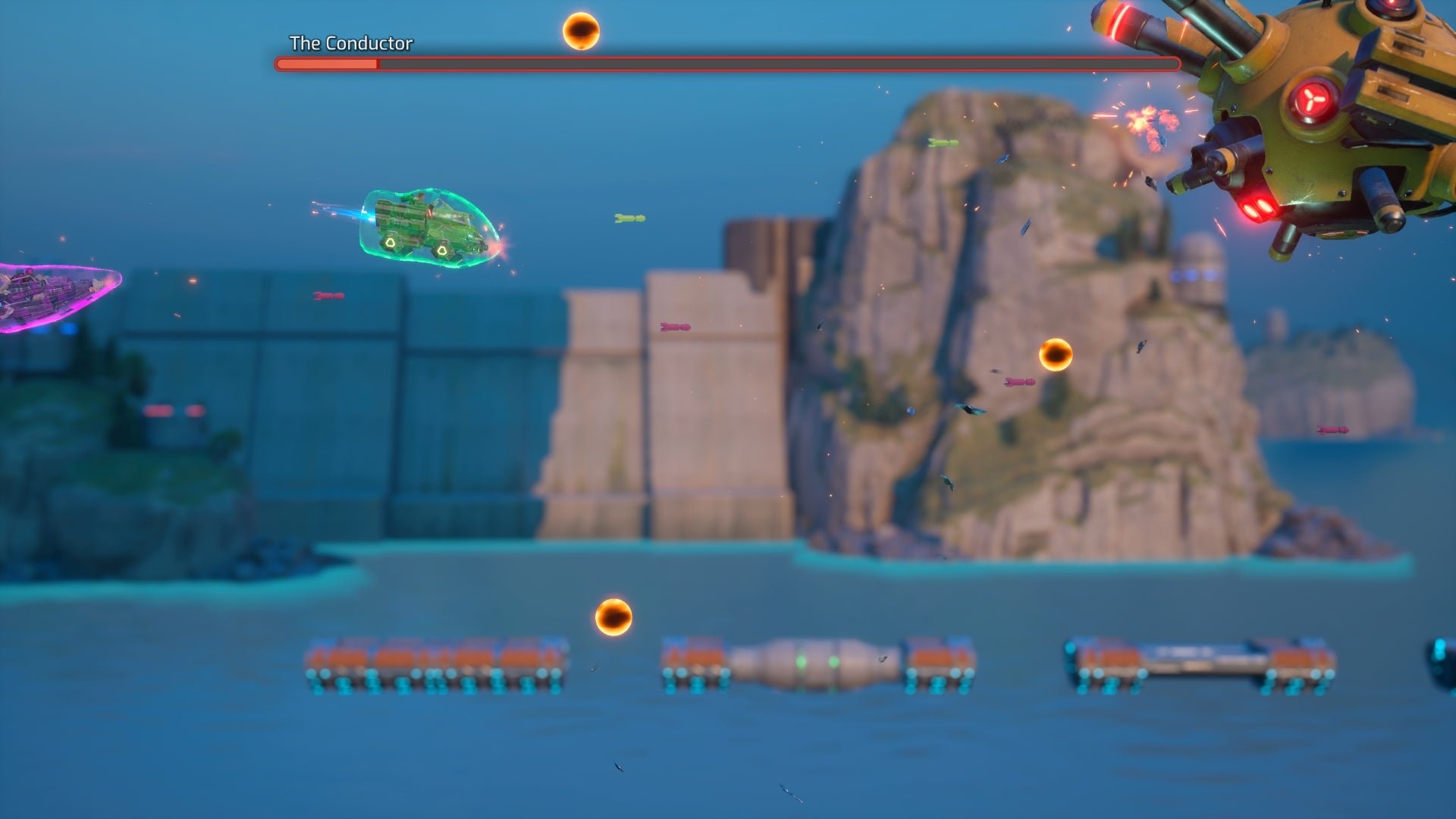
Using Mio and Zoe’s stories as a foundation, Split Fiction explores similar design concepts as It Takes Two. Each level transitions between genres and incorporates a core cooperative loop requiring collaboration with your co-op partner. As the game oscillates between fantasy and sci-fi, each level embraces a distinct subgenre, ensuring even two sci-fi levels feel entirely unique. Split Fiction is packed with engaging and challenging concepts that blend video game genres alongside literary ones. Many enjoyed It Takes Two with partners less familiar with video games, and Split Fiction encompasses so many gaming genres that it might initially seem daunting for those new to gaming, but its design ensures accessibility even for novices.
There are levels inspired by rhythm games and classic run-and-guns like Metal Slug, alongside high-speed bike chases, dragonback puzzle-solving, and unexpected side stories I won’t reveal here. What ties everything together is the intuitive design, facilitating smooth transitions between intricately crafted spaces and introducing new mechanics not seen before. The game adeptly escalates from teaching a new mechanic to showcasing innovative uses within a level, and the continual introduction of new tools and challenges remains delightfully surprising. Communication between players is crucial in Split Fiction, yet due to the clarity in level design, my partner and I often navigated complex cooperative maneuvers without needing to speak.
Screenshot: Hazelight Studios / Kotaku
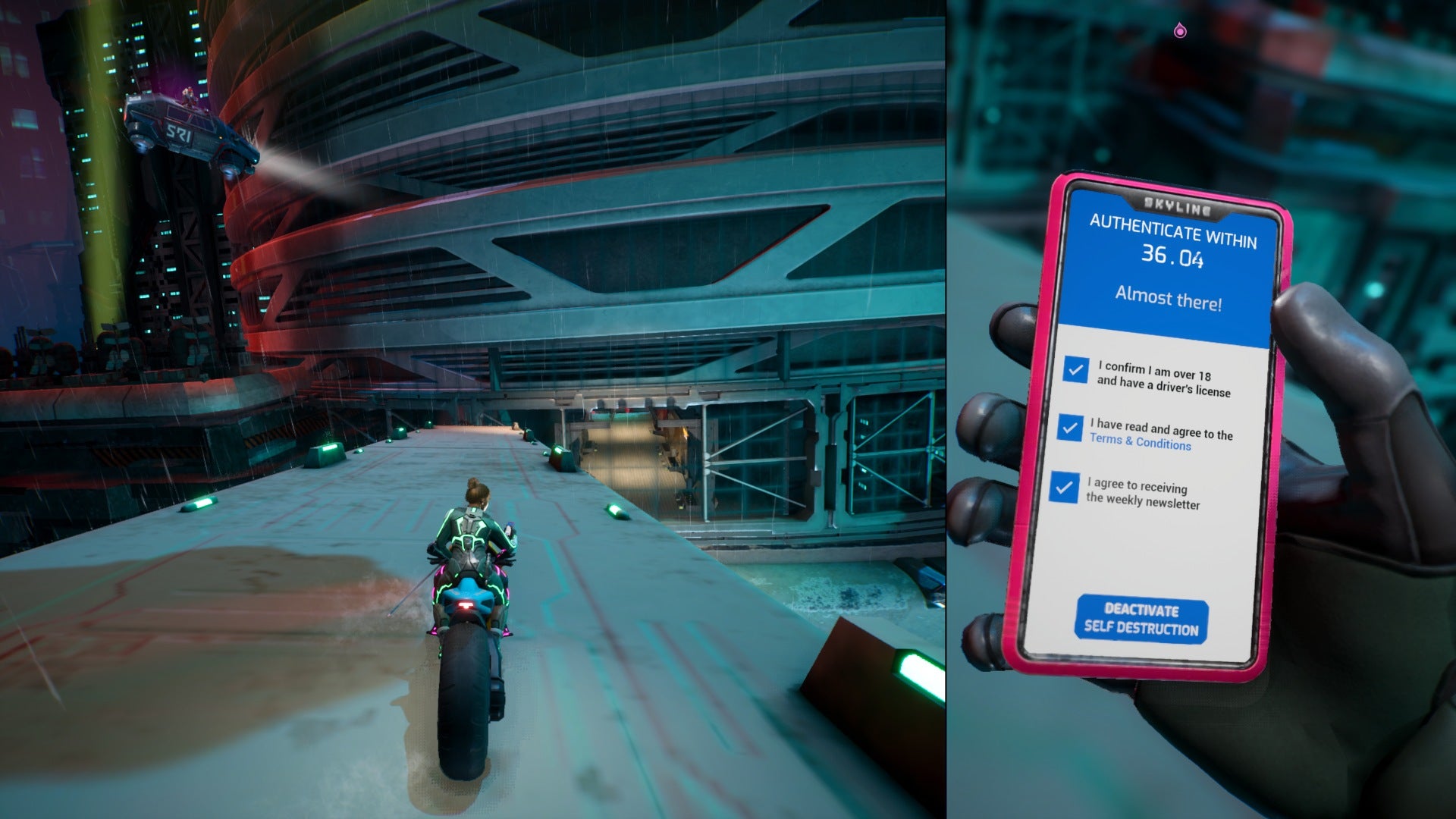
Countless standout moments in Split Fiction had my partner and me cheering as we tackled the challenges Hazelight presented. The game's willingness to embrace silliness, both within the edgy sci-fi narratives and epic fantasy sagas, was a constant delight. I was already enjoying Split Fiction, but the moment it truly resonated with me was during a Mio sci-fi segment. I was riding a motorcycle through a cyberpunk city, while my partner, seated on the back, attempted to disengage the bike's self-destruct order via a smartphone. The process included realistic captcha puzzles and other smartphone annoyances. It was in this segment that I realized Split Fiction would keep us guessing and perpetually engaged.
Many of these unexpected and amusing segments occur during side stories, optional vignettes from the writers’ subconscious dating back to their earliest writing memories. They might turn a dentist appointment into a horror story or create a puzzle-platformer involving pigs propelled by rainbow-powered farts. Split Fiction could have limited itself to sci-fi and fantasy levels and still been excellent, but I loved how it demonstrated that storytelling doesn't commence only when aiming for publication. Creative individuals often imagine stories from a young age, and if a machine were to extract these stories from someone’s mind, why would it only target those intended for a book?
Multiplatform
Split Fiction
BACK-OF-THE-BOX QUOTE
"Let's work it out on the remix." - Lorde
TYPE OF GAME
A co-op game that marries game and fiction genres.
LIKED
Incredible variety from moment-to-moment, charming leads, a pro-creative viewpoint on corporate meddling and AI slop, exceptional ending.
DISLIKED
Your enjoyment will be fundamentally tied to whether you find someone you can cooperate with.
DEVELOPER
Hazelight Studios
PLATFORMS
PC, PlayStation 5 (played on), Xbox Series X/S
RELEASE DATE
March 6, 2026
PLAYED
~12 hours
The one aspect of the game I won’t spoil but must praise is the final level. Throughout Split Fiction, I was curious how the game would give both its protagonists and their stories equal focus in the finale. Hazelight's approach to concluding the game is, without hyperbole, one of the most remarkable sequences I've ever experienced in a video game. At this point, the studio seemed to be showcasing its talents, and I’m a bit envious I’ll never relive it for the first time. That kind of unique feeling can't be extracted from a creative mind and sold as generic content. Split Fiction is a culmination of the design philosophies Hazelight has honed since A Way Out, and it feels like they threw everything they had at the wall, and it all stuck. It's a tribute to several video games, genre fiction, and the creative process itself. While Fares may believe people and AI should coexist in creative domains, when crafting games this inventive, is AI really necessary? I don’t think so.
Order Split Fiction: Amazon | Best Buy | CDKeys