


Assassin’s Creed Shadows, if you include every spin-off and mobile game, marks the 31st installment in Ubisoft’s enduring historical open-world series focused on stealthy assassins and hidden conspiracies. As a fan of the series, I was thrilled to dive into a new Assassin’s Creed experience set in feudal Japan. However, I was curious whether Ubisoft could genuinely refresh the series this time. The short answer is yes, they have indeed made notable changes. For the detailed explanation, read on.
Set to release on March 20, Assassin’s Creed Shadows is a third-person open-world RPG taking place in 16th-century Japan, a period marked by clan warfare for dominance over the nation. This era saw powerful lords commanding the island and employing Samurai to uphold order. It was also a time of significant transformations as outsiders, including religious missionaries and foreign traders, introduced gunpowder and new belief systems. This setting is perfect for an Assassin’s Creed game, allowing Ubisoft to intertwine the franchise's hallmark conspiracies and alternate history with the real turmoil and changes of that time.
Order Assassin’s Creed Shadows: Amazon | CDKeys | Best Buy
Distinct assassins engaging in similar missions
However, unlike most Assassin’s Creed games, Shadows offers the unique experience of playing through this historical narrative as two vastly different characters: The Black samurai Yasuke and the young female shinobi Naoe.
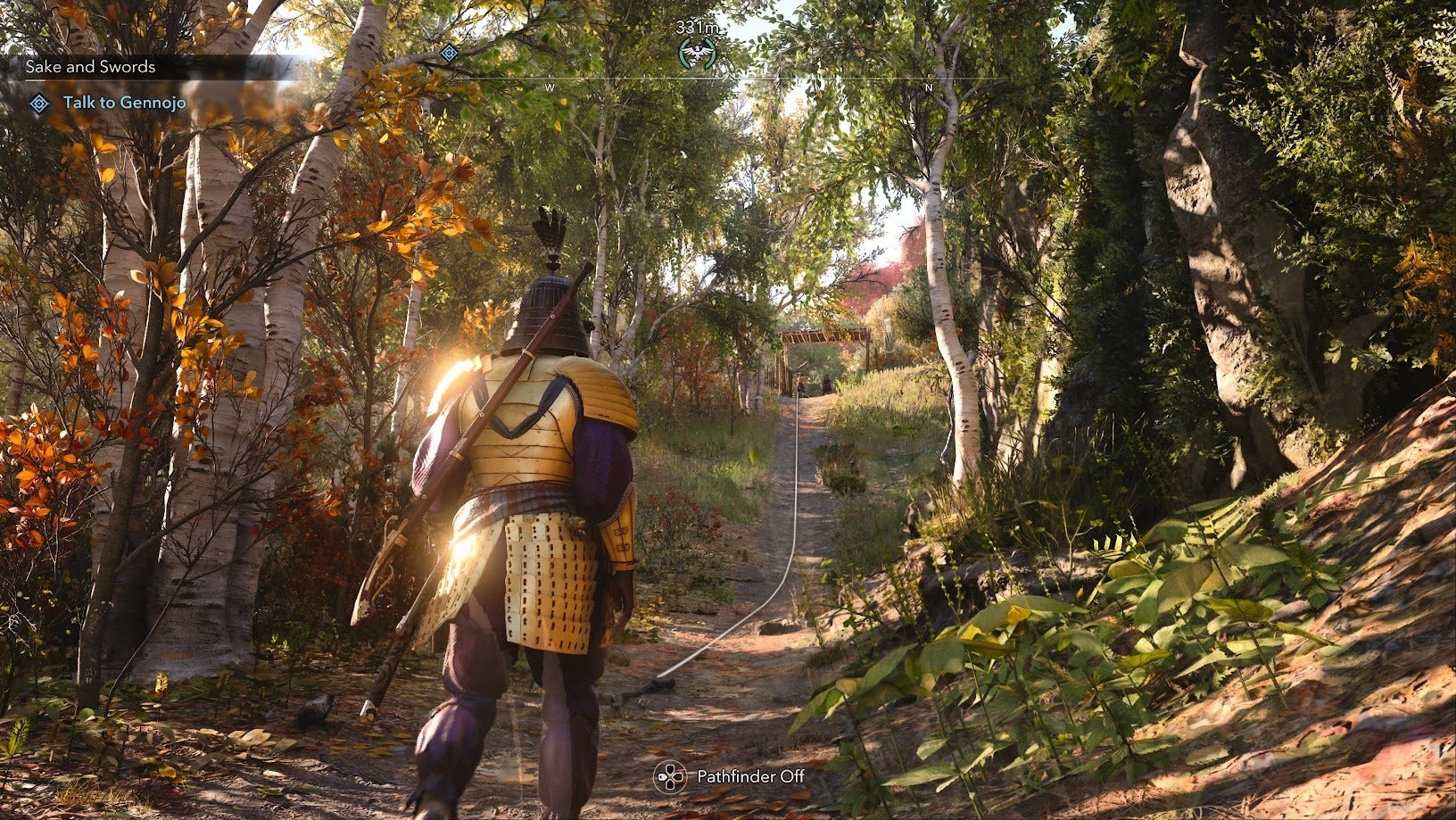
As a formidable and lethal samurai warrior, Yasuke can smash doors and confront large enemy groups with hefty swords and clubs, reminiscent of the main characters in AC Odyssey and Valhalla. Conversely, Naoe is a stealthy and nimble assassin capable of neutralizing an entire castle of foes without detection, akin to protagonists from earlier Assassin’s Creed titles like AC2 and Unity. While both characters can sneak and fight in tight spots, there are distinct limitations.
For instance, Yasuke cannot traverse ropes suspended over gaps; attempting to do so results in them breaking and him falling. On the other hand, Naoe is unable to break down locked doors, necessitating stealth or finding a key. These differences made switching between them enjoyable and provided a refreshing change of pace whenever monotony set in. Bored with stealth? Switch to Yasuke to single-handedly tackle an army. Tired of combat? Play as Naoe to parkour to sync points or solve traversal puzzles throughout the world.
Although they explore and fight differently, both are united in their quest for vengeance against the powerful and aspire to bring peace to Japan. The manner in which these two eventually collaborate and the ensuing awkwardness is something players will need to discover on their own. But once they join forces and begin assembling their own league of assassins, I found their interactions delightful. Their evolving relationship, which gradually blossoms into a strong friendship, is one of my favorite aspects of the game. Despite the challenges they face, these two warriors find moments to smile, laugh, and support each other and their diverse makeshift family.
Yasuke, in particular, might become my favorite Assassin’s Creed protagonist since Bayek in Origins. He is a noble, kind-hearted, and determined individual who seeks to assist others and do what is right. As the game unfolds his backstory, revealing his losses and his broader connections to the Assassin’s Creed universe, I became deeply invested in his journey. Although there are more details to share, they remain under embargo. (Additionally, there are exciting lore connections with the Assassins and Templars that superfans will appreciate encountering.)
In short, Yasuke is an outstanding character, and his race and history significantly influence the game’s narrative about assassins, lords, samurai, invaders, and conflict.
Multiplatform
Assassin's Creed Shadows
BACK OF THE BOX QUOTE
"Neither snow nor rain nor heat nor gloom can stop the stabbing."
TYPE OF GAME
Open-world third-person action-adventure RPG & history simulator
LIKED
Main characters, seasons, gorgeous open world, stealth improvements, breaking stuff
DISLIKED
Samey quests, boring base building, doesn’t take advantage of dual protags enough
DEVELOPER
Ubisoft Quebec
PLATFORMS
Xbox Series X/S, PS5 (Played), PC
RELEASE DATE
March 20
PLAYED
About 50 hours on PS5 Pro. Completed the main quest and epilogue.
Regrettably, the way the story unfolds in Shadows results in a lull between the thrilling first 12 hours and the captivating final 10 hours, where the pacing feels slower and less engaging. During this middle stretch, you often find yourself repeating a cycle of tracking a hidden target—part of a larger, influential group—and then completing a series of quests before finally assassinating them. While some quests, like one where Naoe must blend in at an elegant tea party, are memorable and distinct, the majority follow a formula of “Go somewhere, retrieve an item or eliminate someone, repeat.” These quests aren’t necessarily bad or frustrating, but they tend to be forgettable, leaving little impression the day after playing.
A contributing factor is Ubisoft’s design choice to make most quests playable as either Naoe or Yasuke. While this accommodates players who favor one character over the other, it also necessitates that quests be completable by two very different types of characters, resulting in less distinct experiences.
Conversely, when Ubisoft embraces the dual-character dynamic, it leads to some remarkable adventures. Some main quests offer choices, such as: Do you prefer to stealthily eliminate snipers as Naoe, or engage in ground combat as Yasuke? Other quests, though too few, allow you to play as both characters, each performing unique actions that ultimately converge into a larger event.
It’s unfortunate that many main and side quests don’t fully leverage Naoe and Yasuke’s dynamic, though I understand Ubisoft’s intention not to overly compel players to use one character. Still, when Ubisoft does embrace the dynamic, it results in standout moments.
Sneaking and smashing
For a series long focused on stealth, it’s surprising that for many years, you couldn’t even crouch manually in these games. (That feature was introduced in Unity.) And until now, hiding in shadows or going prone was impossible! This changes with Assassin’s Creed Shadows, offering the best stealth gameplay in the series.
While I do miss some of the social stealth mechanics from earlier games—like blending into crowds or sitting on a bench with NPCs—the ability to crawl through dark areas undetected more than compensates.
Early on, I was infiltrating a castle to eliminate two powerful samurai and loot a rare chest. I leapt from a rooftop to strike a target, only to be spotted by an unseen person. In a panic, I remembered I could go prone, which I did before crawling into nearby shadows. Thanks to this new feature, I was safe. The guard lost interest, and I could whistle to lure my target into the shadows and carry out my mission. If you haven’t played the Assassin’s Creed games but have played other stealth titles, this might not seem notable. But for Assassin’s Creed, this is a new and welcome addition that works exceptionally well.
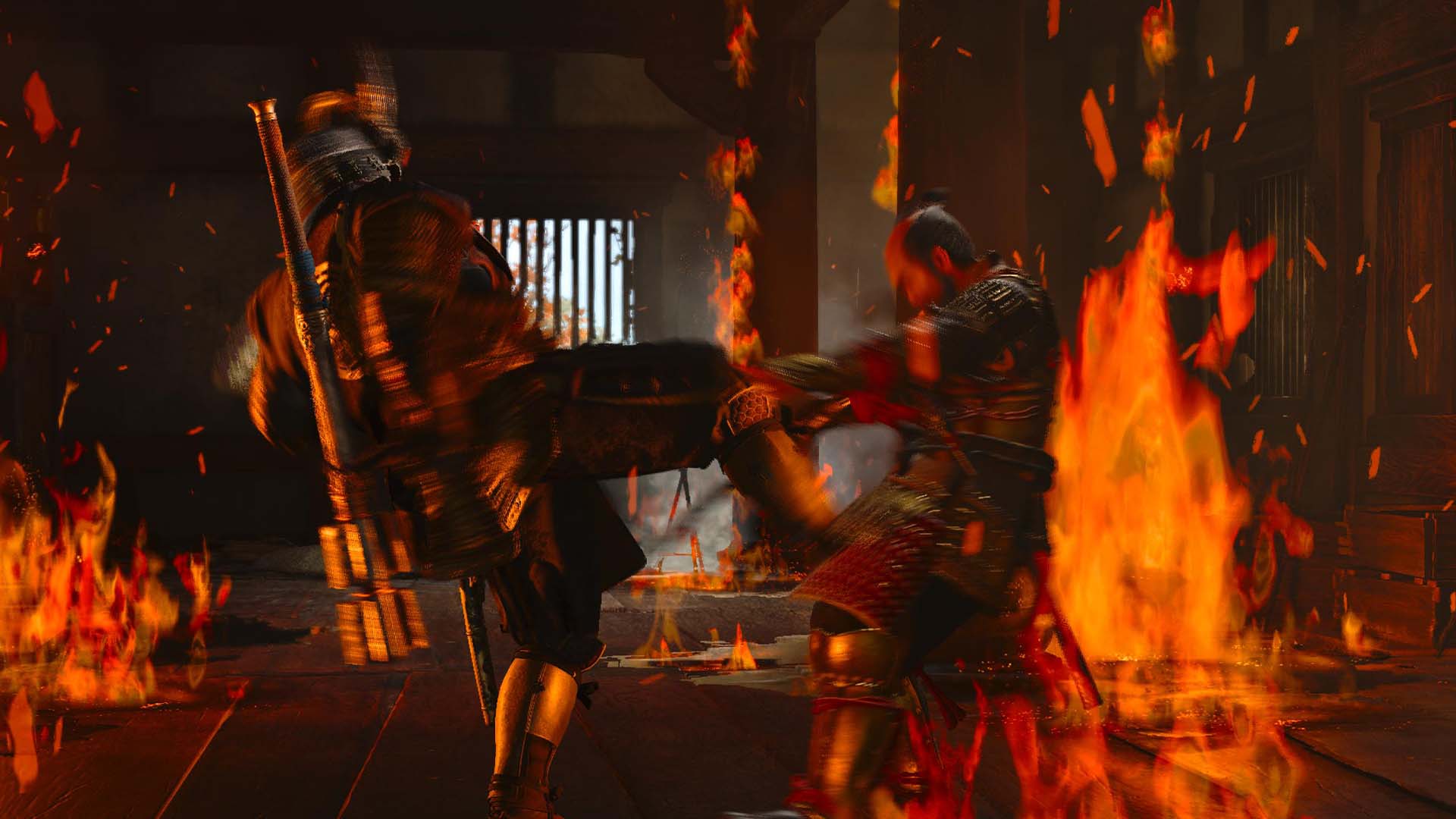
Another significant addition in Shadows is the dynamic and destructible environment, contrasting with the static sandboxes of previous games. Playing as Yasuke, I stormed another castle (there are a lot of castles to invade in Shadows) and engaged in a fight with guards inside a building. As we clashed, the room was destroyed—props were demolished, paper-thin walls and doors shattered, and candles and lanterns were knocked over, dimming the area.
Screenshot: Ubisoft / Kotaku
This destruction isn’t merely cosmetic; it significantly impacts gameplay. At one point, while sneaking through bushes as Naoe, I blundered and had to fight a guard in close quarters. Early in the game, without all abilities unlocked and gear upgraded—yes, this is another RPG Assassin’s Creed game with skill trees, XP, lootable weapons, upgrades, and passive abilities—I swung my sword wildly. I defeated the guard but inadvertently cut down the bushes I was hiding in, leaving myself exposed. With no cover and more guards arriving, I swiftly escaped to a nearby roof using Naoe’s grappling hook.
The dynamic environment, combined with new stealth options, makes Shadows feel distinct from most other Assassin’s Creed games. Yes, you still climb towers and use Eagle Vision (though Yasuke can’t) in a historical setting. This remains quintessential Assassin’s Creed. However, the world now reacts to your actions in unprecedented ways, allowing you to sneak around in ways past assassins could only imagine, opening up new avenues for completing missions and eliminating targets.
A dull village in a breathtaking world
It’s frustrating when developers and publishers claim their game worlds are characters in their own right, only to deliver yet another city or forest. In Assassin’s Creed Shadows, however, the world truly feels like a third character, playing a vital role in Yasuke and Naoe’s adventure. It’s a stunning, expansive world with one notable blemish that I’ll discuss shortly.
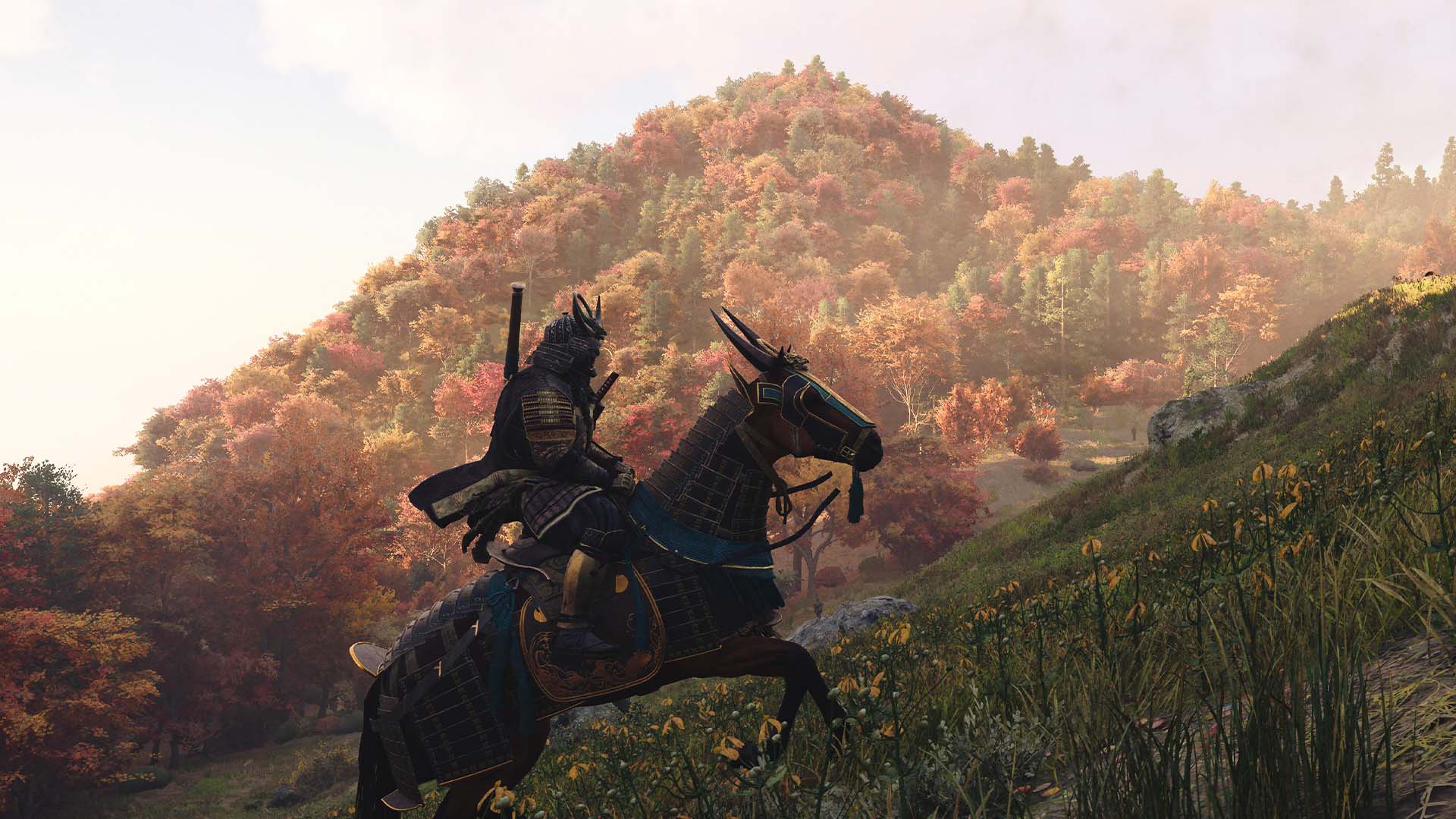
The standout feature of Shadows’ Japan is its dynamic seasons. Winter brings snow, blizzards, and frozen rivers; spring brings blossoming trees, frequent thunderstorms, and thawed rivers. Summer offers bright days, lush green fields, and buzzing insects, while fall transforms the map into a sea of orange and yellow leaves beneath grey skies.
It’s remarkable how much the map changes in Shadows, and even more so that these changes occur dynamically, independent of story progression or quests. Occasionally, this leads to odd moments, like characters speaking outdoors during a thunderstorm or disappearing into snow during a cutscene. However, 90 percent of the time, the dynamic seasons function seamlessly, periodically altering the game’s atmosphere.
Seasons also affect gameplay. In spring, you might traverse a region quickly, but in winter, knee-deep snow slows you down. Blizzards and heavy rain offer better cover for stealth. Even icicles, which only form in winter, can be used to your advantage if dropped on unsuspecting guards.
These seasonal changes make Shadows—already a visually stunning open-world game with vast draw distances and intricate details—appear even more beautiful. I captured numerous screenshots while playing because I was consistently amazed by the world’s color and diversity. A valley that feels cold and icy in winter becomes a breathtaking palette of orange, brown, and yellow in fall, with winds scattering thousands of leaves. It’s as if Ubisoft created four distinct, massive open-world maps, each a visual delight.
Screenshot: Ubisoft / Kotaku
This is a first for Assassin’s Creed, and one of the first open-world action games I can recall that achieves this. I’ll miss the seasons in Shadows whenever I return to static open worlds stuck in eternal summer or winter.
Now, about that blemish in the gorgeous map: As Naoe and Yasuke build their league of assassins, they also construct a headquarters that evolves into a small village populated by allies. Including a village-building sim in Shadows is an odd decision. While interacting with it unlocks valuable features and abilities, it ultimately became my least favorite part of Shadows.
Initially, I enjoyed decorating my base with items and pets I discovered, but after a few hours, it became clear there wasn’t much else to do there.
Occasionally, you can converse with allies, but these characters become less interesting once you’ve completed the quests to recruit them. In the world, they’re engaging; at the base, they mindlessly wander around your creations, occasionally stopping to chat. The base feels empty and static, the opposite of the vibrant world of Shadows. After 50 hours, the best thing I can say about your HQ is that you can largely ignore it once you’ve upgraded key buildings.
Assassin’s Creed Shadows doesn’t completely overhaul the franchise’s core. You still climb towers, eliminate targets, and explore historical settings.
However, it does refresh everything surrounding these core elements. You might climb a tower in winter to see a different landscape than in summer. You can now stealthily sneak as an agile assassin or burst through doors as a samurai tank. This results in one of the most dynamic, enjoyable, and visually stunning open-world games I’ve played this generation, and one of the best Assassin’s Creed titles in years.
Order Assassin’s Creed Shadows: Amazon | CDKeys | Best Buy
.