

Clair Obscur: Expedition 33, developed by Sandfall Interactive, marks their debut with a game full of potential. This French RPG draws inspiration from iconic Japanese games like Final Fantasy and Persona, yet it incorporates Paper Mario-style timing elements and introduces a variety of original mechanics, making the gameplay both engaging and modern. While the game has its frustrations, I found myself wishing to play it even as I drafted my initial review. That speaks volumes. Now, I'm writing a review that, to avoid spoilers, can only touch upon the surface of this intriguing, melancholic, and extraordinary RPG.
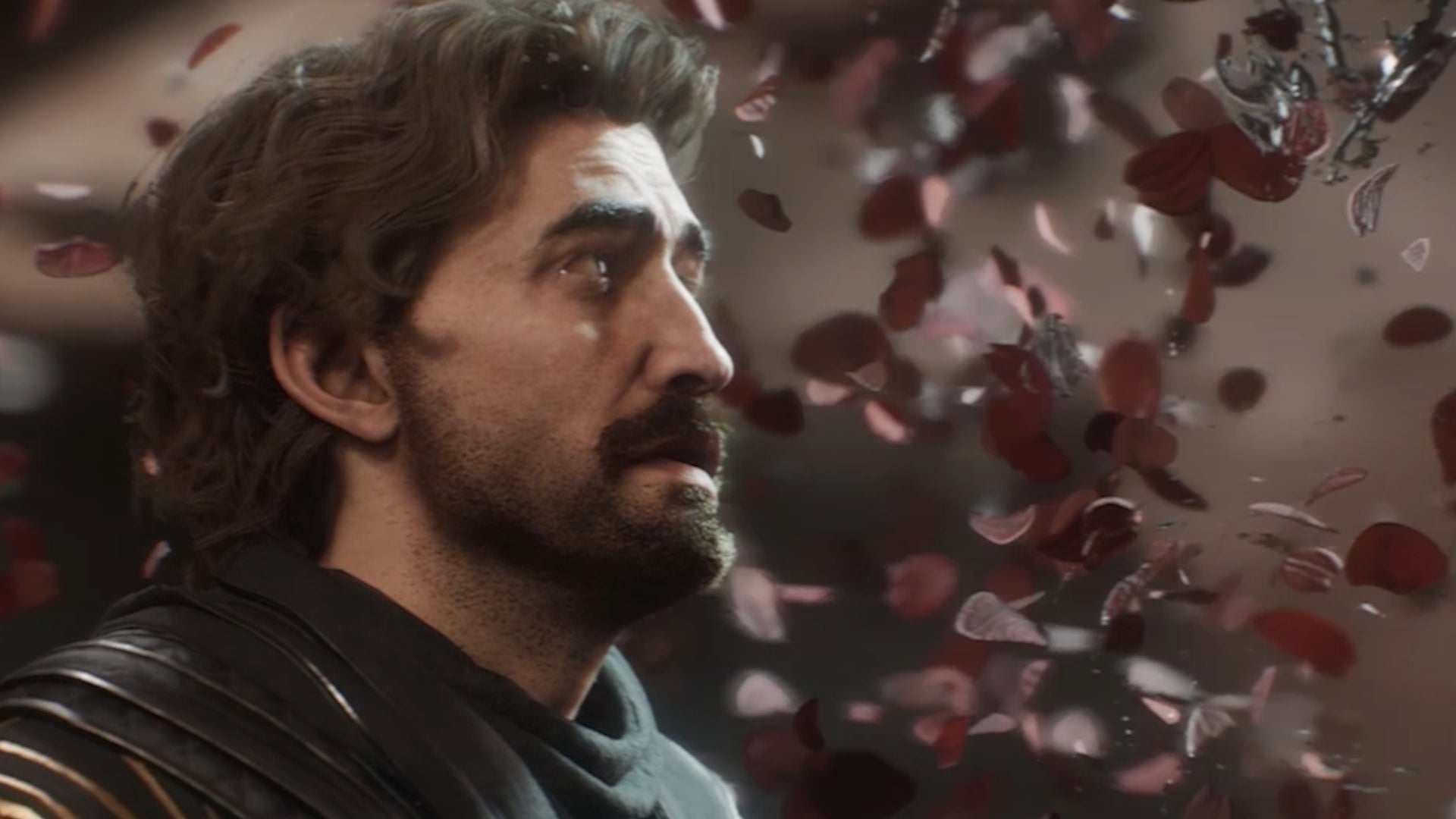
Clair Obscur follows a group of young adventurers embarking on a quest to find the Paintress, a deity-like figure who inscribes numbers on a monolith visible from across the world. As each number decreases, human life expectancy shortens, with people turning to dust upon reaching the designated age. To halt the Paintress’s impact on human lifespan, those in their final year form expeditions aiming to confront and eliminate her. The 33rd expedition features seasoned characters like the swordsman and gunslinger Gustave, the mage Lune, and the rapier-wielder Maelle, who courageously set out on this formidable journey.
Despite significant setbacks, the expeditions push onward. Their goal isn't driven by the belief that they can stop the Paintress; rather, they aim to pave the way for future expeditions that might succeed. Gustave, the group’s de facto leader, often remarks, “for those who come after” during battles or while documenting their journey. As I traversed various regions of the game’s expansive world, I discovered remnants from past expeditions. Participating in an expedition is seen not as self-preservation but as a sacrificial mission to enable the next one. Clair Obscur is stark, melodramatic, and filled with intense moments that make the team's efforts seem futile. Yet, despite the bleakness, the expedition continues.
Screenshot: Sandfall Interactive / Kotaku
The game's core premise intrigued me, but the blend of different genres sometimes creates a disorienting experience. It shifts from a steampunk setting with makeshift technology to a magical underwater realm where breathing and walking are possible. This eclectic mix is evident not only in the world but also in its inhabitants and a diverse soundtrack that spans orchestral to dubstep. As you journey from home to the Paintress, you encounter mythical creatures and remnants of ancient societies. Initially, this diverse mix may seem to lack a clear identity, but later reveals in Clair Obscur add depth to its narrative.
The world is so captivating that I often find myself distracted by the urge to explore and uncover its history, yet the game sometimes forces unnecessary detours. One major issue has been the absence of a mini-map in dungeons, towns, and custom locations. As someone who struggles with directions, navigating unfamiliar caves or villages without guidance is frustrating. Last year, 1000xResist added a map after players expressed difficulty navigating its hub. I hope Clair Obscur follows suit, as I've been hugging walls to avoid getting lost.
This might seem like a minor complaint given how RPGs encourage exploration, but it reflects my broader frustrations with Clair Obscur. The game is rich with ideas but lacks clear direction. There's no map for travel, items hint at mechanics with unfamiliar terms, and tutorials are scarce. It took me 20 hours to understand the Lumina system, which allows perk distribution across characters. Initially, I thought I had missed a system introduction, but a friend pointed me to its location in the complex menus, where the game finally offered a tutorial. My attention span wasn't the issue; the game simply presented the term “Lumina” without explanation. Once I understood its use, battles became significantly easier. Clair Obscur has many ambitious ideas, but it occasionally feels overwhelmed by them, failing to simplify and clarify its complexity for new players.
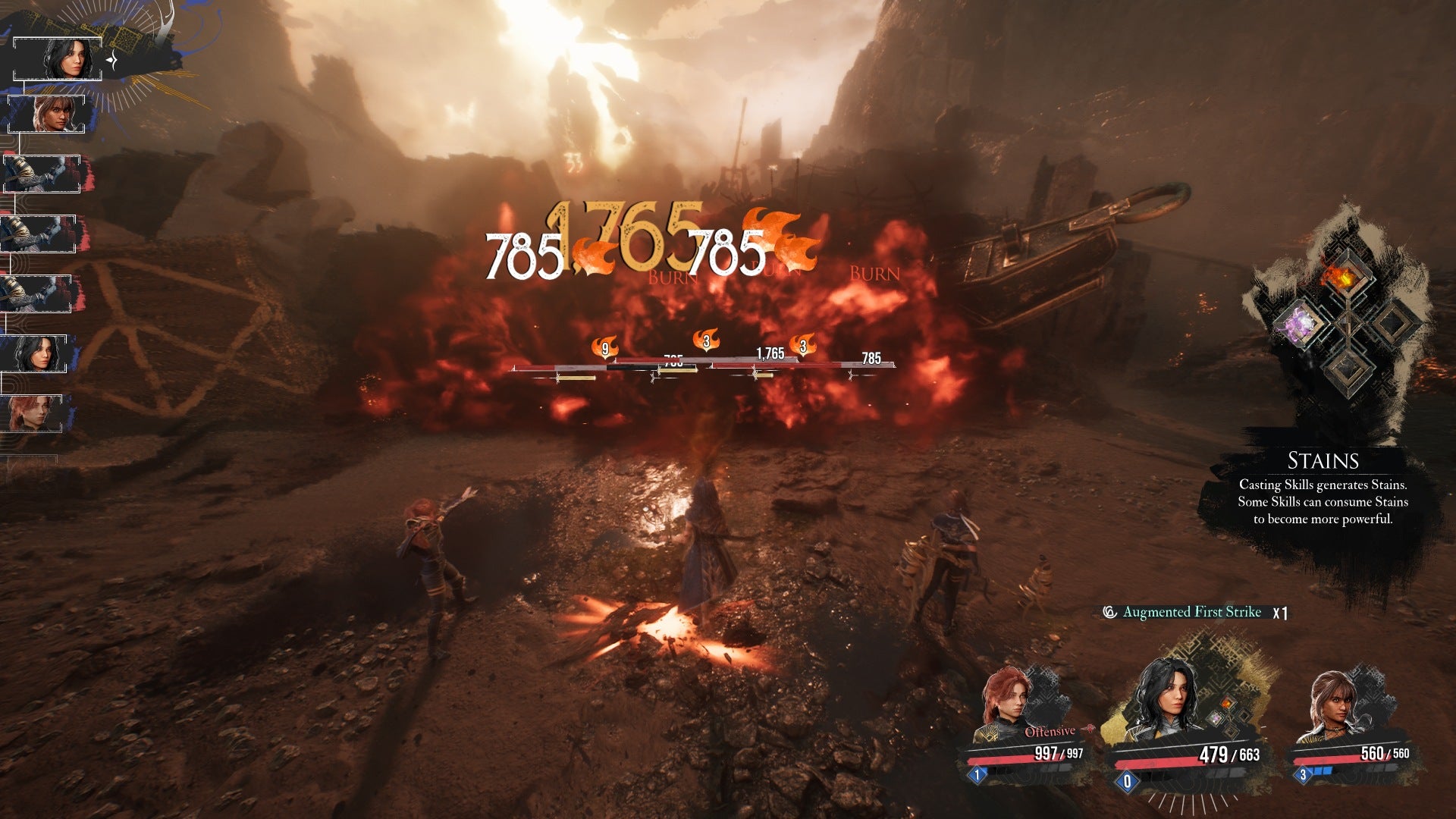
Additionally, the various monsters encountered on my journey added to the challenge. Clair Obscur draws melodramatic inspiration from Final Fantasy, but it’s the return to turn-based systems that I’ve missed for years. On the surface, its battles resemble typical turn-based RPGs with elemental affinities and status effects, yet each character’s unique mechanics create opportunities for party synergy.
For instance, Maelle's stances affect her damage output or intake, but they’re dictated by the previous turn's abilities. Attack and defense stances exist, along with a third, Virtuose Stance, which doubles her next attack's damage. Maelle transitions between these based on attacks and their synergy with status effects. One attack shifts her into Virtuose Stance if targeting a burned enemy, but after attacking, she reverts to her default stance. Normally, setting up her superpowered stance takes several turns, but I unlocked an attack that maintains Virtuose Stance for the next turn, allowing repeated powerful attacks.
Screenshot: Sandfall Interactive / Kotaku
The more I mastered each character’s unique abilities, the more I appreciated Clair Obscur’s rhythm. Gustave possesses Overcharge, a potent ability using his prosthetic arm to unleash an electric blast, but it requires charging over turns. Equipping him with Pictos, which provide extensive passive abilities beyond basic stat changes, enabled him to gain charges by evading enemy attacks. Against a formidable boss that periodically assaults the team, I could unleash Overcharge swiftly.
I was consistently amazed by the customization options and how they foster strategic play. Each character's skills are designed to complement others, allowing ample room for experimentation. Turn-based RPGs can often lead to repetitive elemental weakness targeting or grinding for power, but Clair Obscur offers systems that encourage creativity without becoming overwhelming. Even lesser-used characters like the scythe-wielding Sciel have intricate mechanics that could form the foundation of another game’s battle system. Despite their complexities, these systems harmoniously integrate.
The element tying everything together is the timing-based moves reminiscent of Paper Mario. Every attack in Clair Obscur can be manually dodged or parried. Dodges have wider timing windows, while parries can lead to strong counterattacks. However, enemies often unleash combos requiring consecutive parries, introducing a risk-reward dynamic. When enemies land hits, they’re impactful. Defensive moves aren’t just an option; they’re essential for survival.
Conceptually, this adds engagement to even mundane encounters, but in practice, the dodge cues lack consistency. Each enemy has unique combos, movements, and sometimes attacks requiring specific evasive techniques. While this keeps players alert, the precision of dodge windows and poor telegraphing can be frustrating. Although I grew up on action and fighting games and consider myself adept at rhythm, Clair Obscur’s integration of these techniques lacks clarity, particularly when the cinematic camera obscures incoming attacks.
Clair Obscur isn’t traditionally challenging, but missed dodges can lead to severe consequences. Despite this, its systems offer rewarding experimentation. Perhaps most rewarding are the plot twists and world-building elements crafted by Sandfall Interactive. The final act has been divisive among fans and critics, and while I’m still processing it, I plan to share detailed thoughts on Kotaku soon. My initial, spoiler-free impression is that although the ending may be a drastic shift for some, it’s thought-provoking. Clair Obscur’s innovative ideas and varied execution make it a fascinating and worthwhile game to explore, and even after finishing it, it continues to challenge my thoughts. Even if it doesn’t fully succeed in its execution, it’s undeniably intriguing.
Sandfall Interactive consists of seasoned talent, yet as a new team, it’s still finding its way. Despite some frustrations, the polish and vision evident in Clair Obscur suggest a promising future for the team. I eagerly anticipate what they’ll create next.