

Death Stranding 2: On The Beach operates on two major assumptions for anyone diving into Hideo Kojima's new cinematic post-apocalyptic open-world delivery simulator—sorry, strand-type game. Firstly, it assumes you've played the original game and have a good grasp of its events. Secondly, it assumes you enjoyed all of that and are eager for more. Much more. If those assumptions resonate with you, as they did with me, Death Stranding 2 promises a peculiar, entertaining, albeit uneven, yet undeniably memorable 30 to 50-hour journey. Here's my take: If you found the first game too lengthy, bizarre, perplexing, or dull, you'll absolutely despise Death Stranding 2: On The Beach.
Summarizing the events of Death Stranding and setting up Death Stranding 2 is a daunting task. Trust me, I'm grappling with it as I write. Even Death Stranding 2, with its “recap” of the prior game, struggles to encapsulate what transpired. Yet, here goes!
So, what exactly is Death Stranding 2 all about?
In essence, the realms of the living and the dead have become enmeshed, nearly pushing humanity to extinction due to eerie ghost-like entities lingering on Earth. Contact one of these “beached things,” or BTs, and a massive explosion ensues, obliterating anyone caught in its path. Except for Sam Porter Bridges, the protagonist portrayed by Norman Reedus. As a “repatriate,” Sam cannot die. He perpetually returns from the other side, granting him unique abilities that allow him to reconnect isolated human settlements via the Chiral Network, a super-fast internet powered by the netherworld.
In the original game, with the aid of a special baby in a pod, Sam managed to reconnect the entire United States. However, he was betrayed by his adopted sister, who turned out to be a supernatural entity intent on triggering a new extinction event. Fortunately, Sam persuaded her not to use the connected populace to end the world, defeated a guy named Higgs who conspired with Sam’s sister, and escaped with the baby, now growing healthily outside the pod.
Following all that? Great, because I’m moving on with the rest of this review.
That’s where Death Stranding 2 picks up. Sam is residing with the baby, now a toddler, enjoying a peaceful life of solitude in Mexico. But after a catastrophic event leaves Sam at rock bottom, a friend from the previous game, Fragile (Léa Seydoux), arrives with a new mission for Sam: Connect all of Australia to the Chiral Network and potentially save the nation from annihilation. Thus, Sam embarks on an even grander journey across a vast open world teeming with diverse biomes, cargo to transport, wildlife to capture, and adversaries to evade or confront. All in the quest to unite Australia and perhaps, in the process, confront some personal traumas with a quirky group of allies forming Sam’s found family.
Describing Death Stranding 2 as having a lot going on is an understatement. The sequel's narrative is laden with numerous moving parts, making it challenging to follow. Death Stranding 2 includes an in-game encyclopedia for reference, even during cutscenes, which is helpful. However, the core issue is the plethora of plot threads occurring simultaneously, with the game struggling to balance them or provide each one sufficient screen time. This extends to the characters as well.
Throughout Death Stranding 2, we encounter familiar faces like Fragile and Heartman and new characters, including Tarman, Dollman, Rainy, and Tomorrow. (Yes, really.) I appreciated all of them and their interactions. Unfortunately, these characters—apart from Dollman, who accompanies you on the entire Australian journey—seem underutilized, primarily appearing in the game's cutscenes, which are neither as frequent nor as lengthy as one might expect from a Kojima game.
Death Stranding 2 emphasizes Sam not being alone. His inner circle assures him that they are there for support during his arduous quest to connect the continent, find peace, and seek answers about the special baby. Yet, they were largely absent as I spent countless hours connecting Australia.
I won’t spoil the ending, but much of Death Stranding 2’s final act is devoted to unraveling hidden identities, secret plans, and shocking betrayals. A notable aspect of Death Stranding 2’s closing hours is that amidst all these twists, you finally spend more time with the characters. They even start assisting Sam during gameplay.
However, with its dependence on plot twists and grand revelations, the final stretch feels less like an exhilarating conclusion to an epic saga and more like an author realizing they have only a few pages left to tie everything up. It’s chaotic. It’s bizarre. I’ll never forget the ending. There are at least three moments so outrageous, I wish I could share them, as they are some of the most astonishing scenes I’ve encountered in a video game. Yet, Death Stranding 2 doesn’t stick the landing. Nor does it provide a satisfying resolution to the game's central question: Should we have connected? Ultimately, the game seems to answer with a resounding “Maybe.” It was a memorable yet unsatisfying way to conclude my 50-hour journey.
Despite a messy finale and some frustrating narrative pacing issues, I still relished my time with Death Stranding 2. Why? Because, dear reader, I absolutely love delivering cargo.
Saving humanity with infrastructure and organization
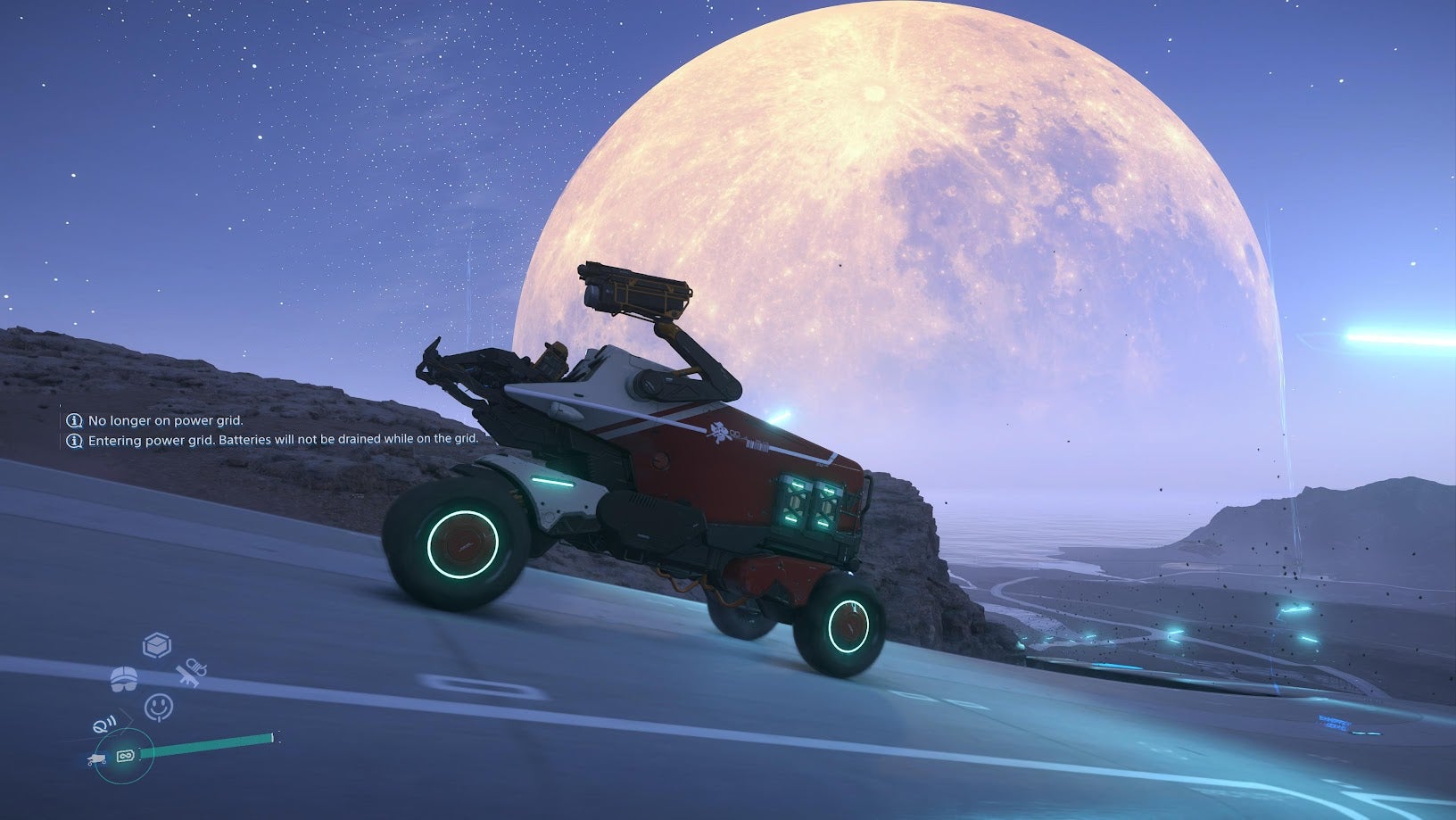
Beyond Death Stranding 2’s cutscenes and character moments lies the heart of the game: Traversing a sprawling, beautifully rendered digital Australia. Sometimes I trekked across snowy peaks or waded through flooded rivers on foot. Other times, I drove a large van along highways rebuilt by me and other online players. Occasionally, I traveled in style via a network of monorails I helped establish. Regardless of how I traversed Australia, I was nearly always burdened with various pieces of cargo on my back
This is Death Stranding 2. This is how I spent 80 percent of my time. All the eccentricities seen in the game’s marketing and trailers comprise a small fraction of the actual gameplay. Even the game’s eerie ghost monsters, BTs, can mostly be circumvented by taking detours, being cautious, and checking the weather through your in-game map.
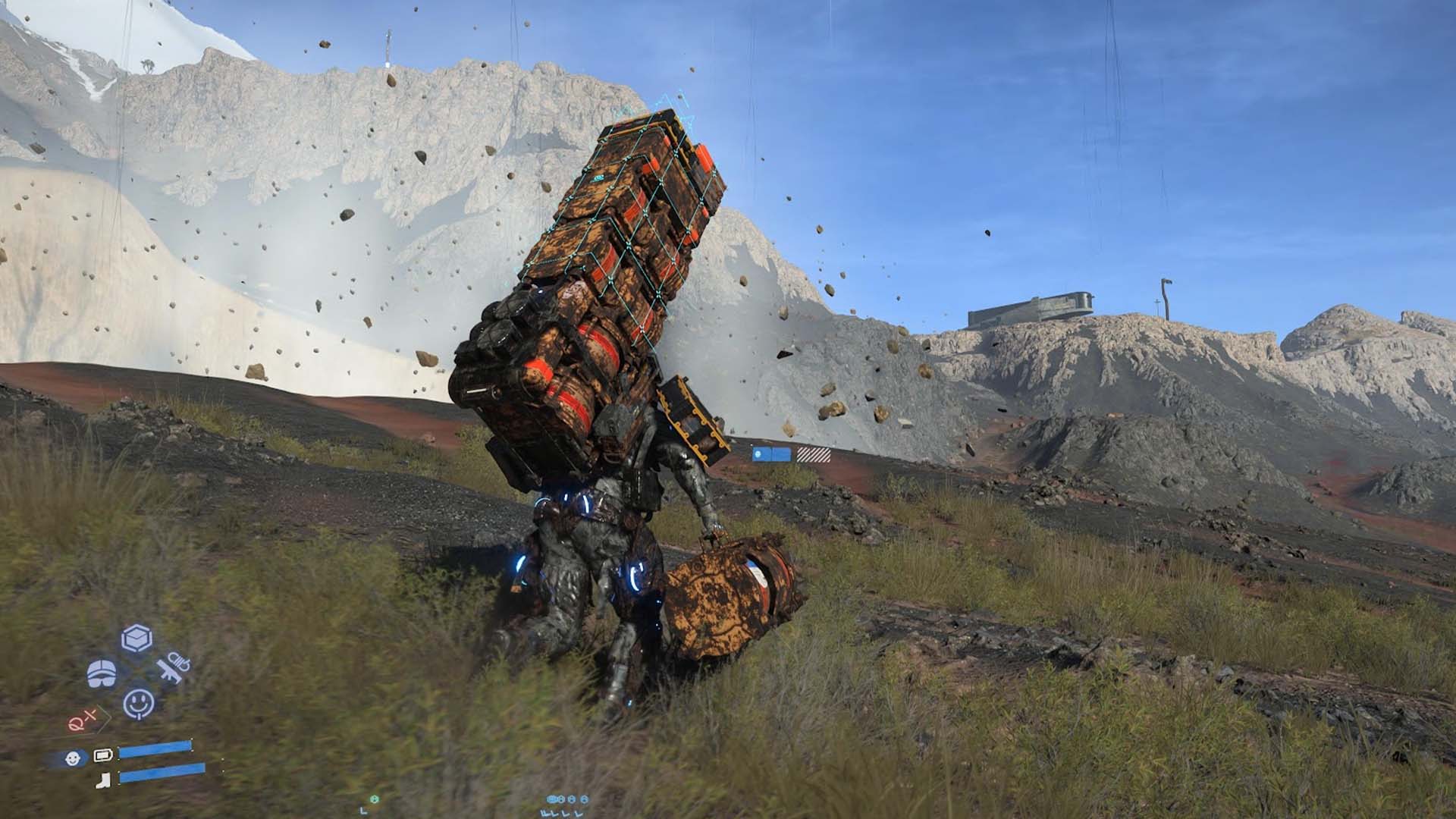
I spent entire play sessions journeying across Australia, ferrying supplies between fortified cities and isolated outposts. It wasn’t exactly normal—with holographic signs left by other players and a companion trapped in a small wooden doll’s body—but it was serene. It was often quite relaxing. Reflective. I found myself deep in thought during these travels, sometimes getting lost in contemplation about the world. Then I’d slip on wet rocks, watching my carefully stacked cargo tumble off Sam and down a cliff or into a river, prompting a frantic scramble to salvage it all.
That’s what makes delivering cargo so rewarding. When you pick up packages to deliver, they aren’t simply stored in a menu until drop-off. Instead, you must stack them on Sam’s back. Each package adds weight and affects balance. You can restack or secure your cargo, but every journey remains a delicate balance between reaching the destination swiftly and safely.
PlayStation
Death Stranding 2: On the Beach
BACK OF THE BOX QUOTE
"Come for the weird stuff, stay for the cargo simulator."
TYPE OF GAME
Post-apocalyptic open-world strand game with asynchronous multiplayer features
LIKED
Australia looks great, exploration is awesome, delivering stuff rules, totally bonkers.
DISLIKED
Characters aren’t around much, the ending isn’t satisfying, story is paced poorly.
DEVELOPER
Kojima Productions
PLATFORMS
PS5
RELEASE DATE
June 26, 2026
PLAYED
57 hours, finished the main campaign and did a ton of side content.
Throughout all these deliveries and hikes across the country, I interacted with other players via the return of Death Stranding’s asynchronous multiplayer. To be clear: At no point do you ever directly interact with another player in the game. You aren’t ever jumping into someone’s world and helping them pick up packages or fight nasty monsters. Instead, you interact with players by leaving behind messages and signs. Or building structures that make your life and their lives easier.
For example, I spent a few hours one weekend morning jamming out to Kojima’s wonderful selection of in-game music and installing ziplines across a range of snowy mountains. Some other players had already set up ziplines, but the network wasn’t complete. It was a long process, involving multiple trips to different locations via van and on foot. I had to gather up materials, avoid baddies, scale incredibly tall cliffs, and deal with cold weather that sapped my stamina and forced me to take rests.
By the time I was done, I had created a vast spiderweb of Chiral-network-powered ziplines that allowed me and other players to easily reach multiple delivery locations in minutes while also avoiding enemy mercs and monsters.
Every so often, I would get notifications in the left-hand corner of the screen letting me know that someone had used my ziplines or other structures I’d crafted. In Death Stranding 2, as with the last game, you can also “Like” or “Thumbs Up” everything players build and leave behind. Seeing those likes flood in when I built a useful shelter, zip, or even a section of road or monorail felt good.
I hate to admit that. It provides a similar feeling to when a viral tweet fills your feed with likes. But in Death Stranding 2, there are no angry comments, racist posts, or slurs. Just lots of likes. It’s a social network built around helping everyone out and being nice. In 2026, that’s a wonderful gift to give the world. Thank you, Kojima.
Inside Death Stranding 2 are two wolves…
The problem, though, is that Death Stranding 2: On The Beach isn’t just a really fun and satisfying delivery simulator that lets you build infrastructure and spread positivity on a chiral social network. It’s also a Kojima-directed game, so it contains sneaking around and combat as well as long speeches and confusing plot twists. In the first game, it felt like these two parts of the experience—the cargo sim and the weird Kojima stuff—worked well together.
Here, thanks to a bigger map that offers more ways to deliver packages and more ways to “connect” to other players, the cargo sim part of Death Stranding has become even more dominant. And it makes the Kojima-y stuff feel more out of place and unnecessary.
Screenshot: Kojima Productions / Kotaku
I don’t care that much about reconnecting Australia using a Q-Pid device to form a Plate Gate using built-up Chiralium as directed by an AI-powered supercomputer controlled by a private company that employs Fragile and Tarman while dodging a vengeful enemy from our past using the other side and the dead to his advantage. I just want to deliver more packages. Build more roads. Help more people. Get more likes.
Death Stranding 2’s ending seems to hint at a big change for any future sequel. And believe me, I want another game. I want a whole new world to explore while rebuilding local infrastructure and delivering boxes of cargo. I want to once again scramble down mountains on foot, managing my stamina and health. I want to slowly climb up a tall mountain, reach the top, leave a funny sign for others to like, and build a zipline to my next destination. I want to jump across rivers on a motorcycle using ramps built by players I’ll never meet. And I want to do all that while liking people’s creations and receiving little dopamine hits from their thumbs-up notifications.
But I’m not sure I want to go through another chapter in Death Stranding’s convoluted, messy, and often contradictory universe. Especially if the next game’s ending is as unsatisfying as Death Stranding 2’s finale.
Sure, the bizarre moments are amazing to watch on screen. So much money in Death Stranding 2’s development budget was put into some of the silliest and strangest ideas. And that’s all wonderful. I love it. But it doesn’t make up for the fact that so much of the game feels, ironically, disconnected from what you actually do in Death Stranding 2: On The Beach. Or that it all ends so poorly. But I guess I can always build more ziplines and roads and get the satisfaction of a job well done.
.