

Do you believe in magic? How do you envision its appearance and essence? In Dungeons of Hinterberg, magic is a palpable reality. In areas where it has emerged, monsters drawn from local legends have manifested, and otherworldly dungeons have surfaced. Quiet mountain towns have transformed into bustling centers of activity, with each seemingly "ordinary" location serving as a reminder of the magic absent in the lives of many.
Such is the backdrop for Luisa, our protagonist, as Dungeons of Hinterberg begins. A disenchanted junior associate at a law firm, Luisa decides to leave behind her mundane and unfulfilling existence, seeking the tangible magic of Hinterberg. And let me assure you, Dungeons of Hinterberg is brimming with enchantment. Throughout 20 hours of exploring its dungeons, interacting with its inhabitants, and traversing the diverse terrains of the Alps, I found myself utterly captivated. While it has its quirks, it unquestionably stands as my feel-good game of the year so far, offering a delightful indie take on the classic Zelda style.
A Refreshing Escape
The core of Hinterberg’s allure lies in its simplicity. Each day typically begins with a brief conversation with another character before you set off on an adventure to one of Hinterberg’s regions to explore a dungeon. You then hike through the scenic park (depicted in stunning pop art) in search of one of the game's 25 dungeons, eventually entering one. Upon completion, you return to town, where you can shop for potions, gear, and upgrades, and engage with the townsfolk and fellow tourists through a straightforward Social Link system. This cycle repeats, keeping the experience fresh and engaging.
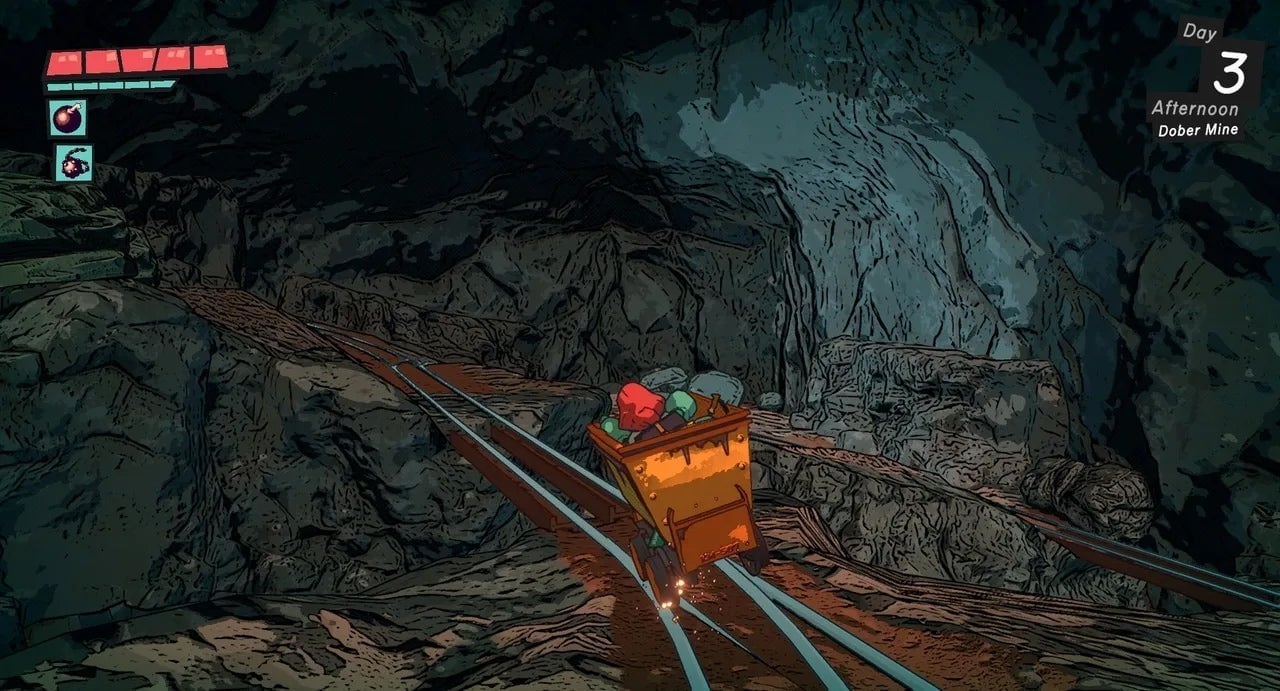
By trimming away much of the filler and excess that often burden larger games, Hinterberg is able to focus on its most polished features, notably its dungeons. Each of the 25 dungeons offers a unique twist, starting off simple and evolving into grander challenges. An early dungeon guides you from encounter to encounter via minecart, while later ones may present multi-stage auto-scrollers on river rafts or puzzle boxes with mind-bending perspectives akin to Fez or Monument Valley. Some dungeons emphasize puzzles over encounters, or vice-versa, but each provides a refreshing experience that fans of dungeon-centric games will likely appreciate.
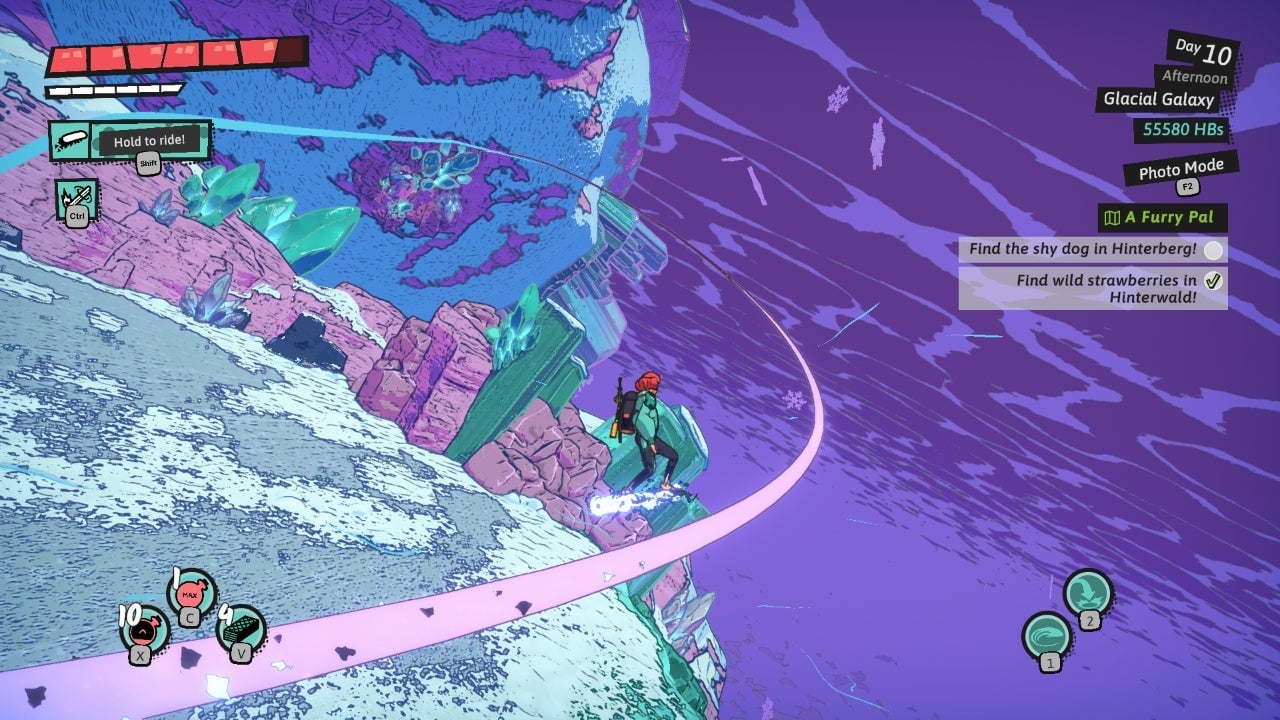
A screenshot showing Luisa skating on a rail in one of Dungeons of Hinterberg’s later levels. Screenshot: Microbird Games / Curve Games / Kotaku
When it gains momentum, Hinterberg’s puzzle elements are a delight. They're never so abstract or convoluted as to leave you completely baffled, but they do require concentration. Solutions are usually nearby, prompting you to ponder for a moment to piece together the necessary steps. As someone who can be a bit blunt, I adore this approach to puzzle design. Hinterberg’s puzzles are intuitive, and many build upon each other, gradually increasing in complexity as you progress. This allows you to evolve and learn the game's design language naturally, creating a sense of harmony with the challenges. In many puzzle games, I find myself struggling against obstacles until I overcome them, but in Hinterberg it felt more like I was working in tandem with the puzzles, achieving a mutual sense of understanding.
One of Hinterberg’s unique aspects is its inventive use of conventions and camera angles to dynamically shift perspectives. One level might present itself as a 2D platformer, another could resemble an action-RPG like Diablo with an isometric view, and some of my favorite levels are set in a snowy region, drawing inspiration from Super Mario Galaxy’s level design. It even includes a Lost Woods-style dungeon reminiscent of Zelda, its primary influence. While Hinterberg retains its core identity through these changes, it embraces a vibrancy as it pays homage to these genres and specific games, becoming a celebratory and triumphant pastiche of its diverse inspirations.
Regarding combat, although Hinterberg’s dungeons heavily borrow from Zelda , its combat notably draws from Dark Souls, albeit less punishing. You have light and heavy attacks that can be combined into simple combos to stagger or topple enemies. When not attacking, you'll be dodge-rolling diligently and managing your stamina and MP gauge, tied to two abilities that change based on the current region. The highlight is the super-effective attack conduits, which have cooldown timers rather than gauges and can be swapped almost anytime. While this may sound familiar, it's because it works, and Hinterberg doesn't deviate from this proven formula for player comfort. In a game filled with novelty, it's a bit disappointing how straightforward the combat encounters become.
Multiplatform
Dungeons of Hinterberg
Back-Of-The-Box Quote
"We come to this place for magic."
Type of game
Like The Legend of Zelda if it slayed and was deeply European.
Liked
Magical art style, nuanced story, excellent dungeons.
Disliked
Repetitive combat, slight technical jank.
Developer
Microbird Games
Platforms
PC (played), Xbox Series X|S
Release Date
July 18, 2026
Played
About 20 hours, including time devoted to side quests and social links.
More Than Meets the Eye
As Luisa, who has embarked on a journey to become an adventurer—known as a slayer—explores and interacts with the townsfolk, it becomes evident that magic isn’t everything the brochures and marketing portray. Magic arrived in Hinterberg and reshaped the town, now led by a mayor determined to commercialize the magical experience and promote it to as many people as possible. Theresa, who manages the inn where Luisa stays, has never seen more success thanks to the constant influx of tourists, but it comes at the cost of persistent noise. Not literal noise, though an adventurers' club is just around the corner from the inn. Instead, it's the noise of gears turning beneath the surface, threatening to drown out Hinterberg’s residents who once had a say in their town's affairs, all for the sake of profit.
Luisa, who befriends various individuals in town and benefits from these relationships through the social system, gradually becomes an advocate for their collective interests. As she gets to know people like the blacksmith Hannah, Luisa uncovers a conspiracy that threatens to unravel Hinterberg, whose leadership has tried to capture and sell magic. Hinterberg’s "coziness" conceals a harsher reality, offering commentary on the lengths we go to for money or power.
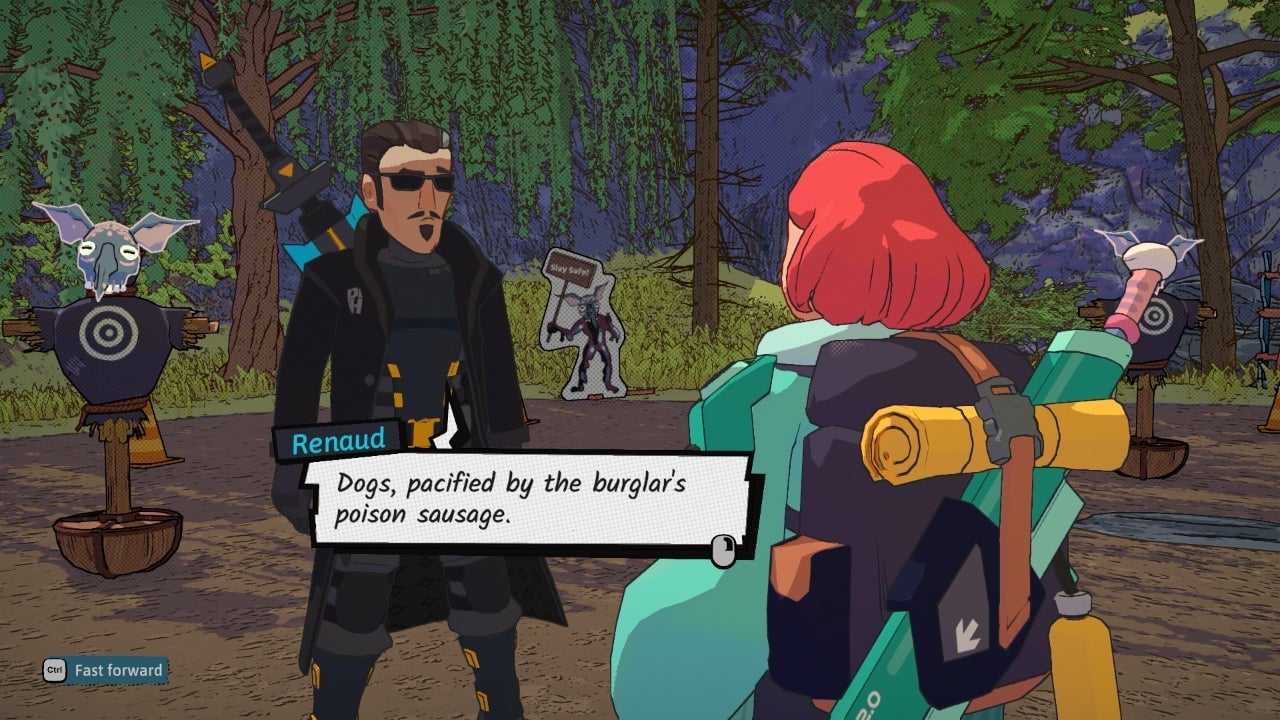
A screenshot of Luisa talking to Renaud, one of Dungeons of Hinterberg’s more eccentric slayers. Image: Microbird Games / Curve Games / Kotaku
I truly appreciated the depth with which Hinterberg narrates this story, taking unexpected turns. The game is acutely aware of Luisa’s role as a tourist and acknowledges how she and many others are part of the problem affecting the village. Whether seeking fame, a fantasy-fulfilling escape, or a means to confront personal issues, everyone looks to Hinterberg and its magic for personal solutions, yet seldom contribute to the town or its people. Instead, Luisa and her peers arrive and take. If magic were real, Hinterberg suggests we would likely exploit it, and perhaps we’re better off without it. Maybe what we truly need is to reflect on our lives and those around us and consider how we can collectively improve, rather than relying on the magical or divine for solutions.
10/10, Would Return
Despite Hinterberg reminding me to confront my problems instead of fleeing them, I’d eagerly return to this game repeatedly. The stunning portrayal of the Alps is hard to overemphasize, and I was enchanted by simply traversing its beautiful trails. Its exceptional dungeon design only enhances the joy of immersing myself in its magical world. Like the best vacation spots, I am eager to be drawn back into Hinterberg’s allure and indulge in its wonders for a long time to come.